
Crochet Tutorials

Ready for a new crochet stitch, technique, or pattern? You’re in the right place! Browse all the crochet tutorials, or select a category from the dropdown menu. What will you learn today?


How to surface crochet over seams
Visible seams can make or break the overall look of a project, particularly if multiple colors are involved. In this ...More
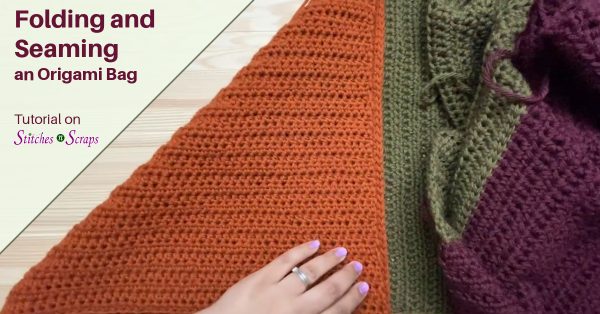
Folding and Seaming an Origami Bag
With some simple folding and seaming, you can turn a plain rectangle into an origami bag! This tutorial is designed ...More
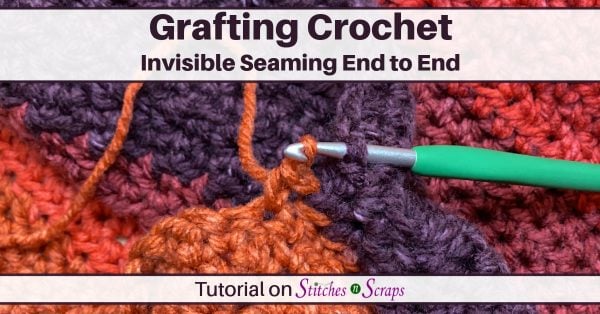
Grafting Crochet end to end - Seamless Join
Have you ever wanted to invisibly join two pieces of crochet, end to end? Do you want to add length ...More
Slip stitch surface crochet over color changes
Do you like crisp, clean stripes? Want a smooth transition from one color to the next? Try working slip stitch ...More
Steampunk Cyanide - Crochet Blanket Square video tutorial on Stitches n Scraps
Steampunk Cyanide is a 12-inch square full of cogs, doodads, and other thingamajigs. This crochet blanket square video tutorial will ...More
How to Crochet the Flower Stitch
Learn how to crochet the flower stitch! Make 3-dimensional flowers that pop up off your fabric, and see some ways ...More
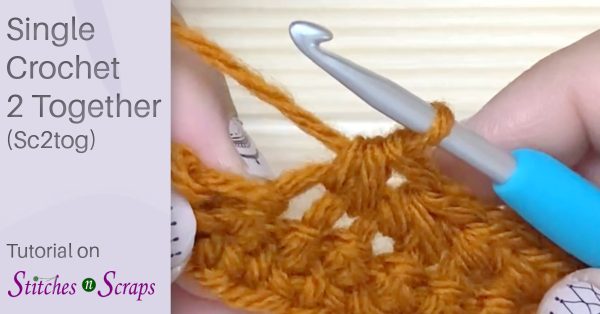
Single crochet 2 together decrease
Decreases create shaping and curves in your crochet projects. Learn how to decrease from 2 stitches to 1, with a ...More
Invisible Join for finishing crochet in the round
Make your final round flawless! Joining your last round to finish a crochet project can leave an unsightly bump. The ...More
Chainless Starting Double Crochet Tutorial on Stitches n Scraps
Straighten your double crochet rows with the chainless starting double crochet (csdc) stitch. Eliminate those floppy edges and gaps by ...More
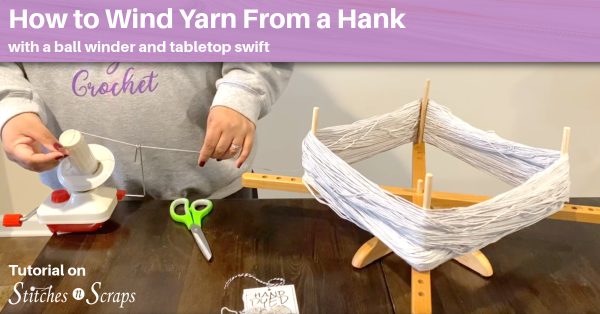
How to Wind Yarn from a Hank, with a ball winder and tabletop swift.
Some yarns, particularly hand dyed or artisan yarns, come in hank format. These yarns need to be wound into a ...More
How to surface crochet over seams

Surface Crochet Over Seams

Visible seams can make or break the overall look of a project, particularly if multiple colors are involved. In this tutorial, learn how to surface crochet over seams to create a sharp, clean transition!

How to surface crochet over seams

This content is protected by copyright. See this Terms of Use / Copyright page for more information.

This post contains sponsored content and/or affiliate links. If you click an affiliate link and make a purchase, I may get a commission.

Bag Along CAL

The sample shown in this video is the Felted Origami Bag. This is the first pattern in the 2022 Bag Along CAL. See the full schedule and learn how to join in the fun, in the main Bag Along CAL post.

Felted Origami Bag - free crochet pattern on Stitches n Scraps

WeCrochet provided the Wool of the Andes Bulky yarn that I used for the origami bag design. In the video you will see the colors Masala, Thyme, and Currant.

Wool of the Andes yarn for bag 1

Why Surface Crochet Over Seams?

This surface crochet is pretty, but do you really need it? In many situations you can use an invisible seaming method, or even a decorative seam. Surface crochet is still a nice decorative touch, but not exactly necessary in those cases. It’s helpful though, for those situations where you need to make two different types of transitions match.

The bag shown in this video has an unusual construction, which ends up placing a sewn seam and a crocheted color change next to each other. You can sew as carefully as you like, but the seam is never going to look exactly like the color change. For this bag, I wanted both to look as similar as possible.

Seam between color a and b sections

One answer would be to crochet each color separately and sew everything together, and surface crochet is another option. In an earlier tutorial, I showed you how to surface crochet over the color changes. Now let’s look at how to surface crochet over the seams.

A note about hook size

Even and fairly loose tension is key when you surface crochet over seams. You can use the same size hook as your project, or you may even want to go up a size. Experiment and see what looks best to you. If your fabric puckers, go up a hook size. If it looks floppy or flares out, go down a hook size.

How to Surface Crochet Over Seams

Direction of work

Surface crochet slip stitches make V shapes that open in the direction of the work. So looking at a row of surface crochet, the points at the bottom of the V point to where you started, and the openings at the top of the V point to where you end.

A row of surface crochet with an arrow showing the direction of work

If you’re trying to match your surface crochet over seams, pay attention to which direction you want your stitches to go. This will determine which end of the seam you want to start with.

Scroll down for the video tutorial.

Starting the seam

Seams can be open on the end, with no fabric next to them like at the opening of this bag. Or, they can be closed on the end, like at the bottom corner of the bag.

When starting at an open end of a seam, make the first stitch wrap around the edge. Start by placing a slip knot or twisted loop on your hook, outside of the fabric.

Starting at a closed corner

Then work your first slip stitch. This brings the working yarn over and around the edge for a smooth finish.

Starting at a closed corner

When starting at a closed end of a seam, there’s nothing to wrap around. Instead, put your working yarn under your fabric, and use your hook to pull up a loop.

Starting at a closed corner

Either way, be sure to leave enough of a tail to weave in later.

Slip stitch surface crochet

Spacing the slip stitches

In my example, I used fairly evenly spaced whipstitches in my seam. I was then able to make one slip stitch over each stitch. If you used a different type of seam, or if your seam stitches are too far apart, you may have to experiment with different placements.

Placing stitches over a seam

The important part is there needs to be something under each stitch to hold it in place. Be sure not to stick your hook into the same space twice.

Making the slip stitches

Keep the working yarn behind your work, and insert your hook into the seam. Yarn over and draw up a loop, then draw that loop through the loop that was already on your hook. This completes a surface crochet slip stitch.

Making a surface crochet slip stitch

Repeat across, as evenly spaced as possible. The slip stitches should cover the seam, creating a nice smooth edge.

Surface crochet over a seam

Finishing the seam

When ending at an open end of a seam, work one more slip stitch over the edge of the fabric, so that the yarn wraps around the edge. Then fasten off and weave in the end.

Finishing a row of surface crochet at an open end

When ending at a closed end, there’s nothing to wrap around. Simply fasten off and weave in your end.

Ending a row of surface crochet at a closed corner

Surface Crochet Over Seams video tutorial

Watch this video on YouTube

Share this tutorial on Pinterest! Here’s an image perfect for pinning:

How to surface crochet over seams

Rate this surface crochet video!


Do you want the best of Stitches n Scraps delivered right to your inbox? Don’t miss a stitch – Subscribe now!

Folding and Seaming an Origami Bag

Folding and Seaming an Origami Bag

With some simple folding and seaming, you can turn a plain rectangle into an origami bag! This tutorial is designed to go along with my Felted Origami Bag pattern, but the same techniques can be used with any knit or crochet rectangle.

Folding and Seaming an Origami Bag

This content is protected by copyright. See this Terms of Use / Copyright page for more information.

This post contains sponsored content and/or affiliate links. If you click an affiliate link and make a purchase, I may get a commission.

Bag Along CAL

The sample shown in this video is the Felted Origami Bag. This is the first pattern in the 2022 Bag Along CAL. See the full schedule and learn how to join in the fun, in the main Bag Along CAL post.

Felted Origami Bag - free crochet pattern on Stitches n Scraps

WeCrochet provided the Wool of the Andes Bulky yarn that I used for the origami bag design. In the video you will see the colors Masala, Thyme, and Currant.

Wool of the Andes yarn for bag 1

Starting Rectangle

In order for this folding and seaming technique to work out, it’s very important that the rectangle be 3 times as long as it is wide. If your rectangle is not the correct 1:3 ratio, the sides won’t meet up like they should when you fold it.

Bag 1 in progress

For the bag in the video, I divided the rectangle into 3 squares of different colors. This makes it super easy to see where the folds should start and end. If your rectangle does not have these color changes, you may want to divide the long edge into 3 sections with stitch markers.

Folding and seaming steps

Following this diagram, fold two opposite corners in to create a parallelogram shape. The top left corner folds down, and the bottom right corner folds up. The short side edges should each cover 1/3 of the longer side edges.

folding an origami bag - first 2 folds

Then fold that parallelogram in half across the middle.

folding an origami bag - third fold

Finally, seam the edges indicated on the diagram. You will have one seam on each side of the bag.

Seaming an origami bag

Clipped corners and the handle

The sample bag in the video has unique, “clipped” corners. I attached these to a small crochet tube to create the look I wanted for the handle.

Handle fully attached

You can connect your corners with any type of handle you like, and they don’t need to be clipped to make the bag work. In fact, you can skip the handle altogether and just sew the corners together with nothing in between!

Folding and seaming video tutorial

Watch this video on YouTube

Share this tutorial on Pinterest! Here’s an image perfect for pinning:

Folding and Seaming an Origami Bag

Rate this folding and seaming video!


Do you want the best of Stitches n Scraps delivered right to your inbox? Don’t miss a stitch – Subscribe now!

Grafting Crochet end to end - Seamless Join

Grafting Crochet End to End – Invisible Seaming Tutorial

Have you ever wanted to invisibly join two pieces of crochet, end to end? Do you want to add length to the beginning of a project? You can! Grafting crochet ends together creates a perfectly invisible seam. Learn how in this tutorial!

Grafting Crochet end to end - Seamless Join

This content is protected by copyright. See this Terms of Use / Copyright page for more information.

This post contains sponsored content and/or affiliate links. If you click an affiliate link and make a purchase, I may get a commission.

End to end

In this tutorial we’re specifically looking at grafting starting and ending crochet edges together. We’ll seamlessly join the top row of the piece we are currently crocheting, and the bottom of a row of a second piece.

Two ends of fabric to be joined.

It is also possible to graft side edges together seamlessly, but that’s for a separate tutorial!

When grafting crochet is useful

Have you ever made a sweater or sleeve from the bottom up, and then wanted to add more stitches to the bottom? Just crochet a separate piece and graft it on.

What if you want to work a tube, but without working in the round? Grafting the top and bottom edges of a rectangle together makes a seamless tube, with the stitches going around the circle instead of perpendicular to it.

Textured Stripes Pillow

I used this technique in my Textured Stripes Pillow pattern. It allowed me to join the ends of a rectangle together to make a tube, so that the pillow has no visible top or bottom seams.

Textured Stripes Crochet Pillow

For the side seams, I used the nearly invisible mattress stitch. Check out my mattress stitch for crochet side edges tutorial for more information.

Join as you go

This is a “join as you go” type of seam, in the sense that we are going to be crocheting the last row and joining the second piece at the same time. As we crochet each stitch on one piece, we’ll join it to the bottom of the stitch on the other piece. For a truly seamless join, check the direction of the work before you start.

If you’ve been turning your work (in rows or turned rounds) for the rest of the project, you’re going to want it to look like you turned your work at the seam as well. On the piece that you’re working into the bottom edge of, make sure the wrong side is facing you.

wrong side row

You’ll have the right side of the row you’re working on, followed by the wrong side of the row you joined into, just like if you had crocheted it. If you are working in rounds and not turning your work, then make sure the right side of that row faces you instead.

Grafting the crochet pieces together

Most crochet stitches have a V shape on the top. The loop that is already on your hook before you start your stitch becomes that V. On the next row, you work into the V of the stitch below – the bottom legs of your stitch wrap around that V.

How stitches are connected

To graft crochet ends together, we need to get that V from the stitch we are making through the bottom legs of the stitch that will be above it. So before starting a stitch, first pull the loop currently on your hook through the bottom legs of the corresponding stitch on the second piece.

Pull yarn through legs

Now that you have connected the stitch from the second piece, crochet whatever stitch you need on the first piece. Continue doing the same thing across until you have joined all the stitches.

This will leave you with the starting chain still visible on the back. Carefully pull out each chain, making sure the stitch that was worked into it is now properly connected to the stitch below it. When you reach the end, simply weave in the tail.

Pull out chain

Grafting Crochet End to End video tutorial

Watch this video on YouTube

Beyond Basic Stitches

In this video I have shown only basic stitches (sc and dc being grafted onto an hdc row). Grafting is possible with other types of stitches as well. The general idea is to look at what part of the stitch should be passing through the legs of the stitch above it, and make sure to pull that part through.

For example, let’s look at a shell. Several stitches on the row above connect to one stitch on the row below.

Shell with legs from 4 stitches

To graft this, pull your working loop through the legs of ALL the stitches that should be connected.

Hook through legs of all 4 stitches

Stitches worked into chain spaces are a bit trickier. They connect into the space below the chain, not into the V of the chain itself. To accomplish this, you need to cut the working yarn, making sure you leave enough to finish your row. Then pull both the working loop and the working yarn all the way through the legs of the stitch above.

chain and tail pulled through legs

With enough practice, you’ll soon be able to graft any type of stitch to any type of stitch! It’s all about reading your work to see where and how they should connect.

Grafting Crochet end to end - Seamless Join

Rate this Grafting Crochet tutorial video!


Do you want the best of Stitches n Scraps delivered right to your inbox? Don’t miss a stitch – Subscribe now!

Slip stitch surface crochet over color changes

Surface Crochet Over Color Changes

Do you like crisp, clean stripes? Want a smooth transition from one color to the next? Try working slip stitch surface crochet over color changes!

Slip stitch surface crochet over color changes

This content is protected by copyright. See this Terms of Use / Copyright page for more information.

This post contains sponsored content and/or affiliate links. If you click an affiliate link and make a purchase, I may get a commission.

Bag Along CAL

The sample shown in this video is the Felted Origami Bag. This is the first pattern in the 2022 Bag Along CAL. See the full schedule and learn how to join in the fun, in the main Bag Along CAL post.

Felted Origami Bag - free crochet pattern on Stitches n Scraps

Featured in this tutorial – Knit Picks Wool of the Andes Bulky yarn

WeCrochet provided the Wool of the Andes Bulky yarn that I used for the origami bag design. In the video you will see the colors Masala, Thyme, and Currant.

Wool of the Andes yarn for bag 1

Why Surface Crochet Over Color Changes?

This surface crochet is pretty, but do you really need it? In most situations, a normal color change is neat enough that surface crochet may feel like an unnecessary, extra step. It’s helpful though, for those situations where you need to make two different types of transitions match.

The bag shown in this video has an unusual construction, which ends up placing a sewn seam and a crocheted color change next to each other. You can sew as carefully as you like, but the seam is never going to look exactly like the color change. For this bag, I wanted both to look as similar as possible.

Seam between color a and b sections

One answer would be to crochet each color separately and sew everything together, and surface crochet is another option. In this tutorial I’ll show you how to do the surface crochet at the color change. In a separate tutorial (coming soon), I’ll show you how to match this with surface crochet over the seam.

A note about hook size

Even and fairly loose tension is key when you surface crochet over color changes. You can use the same size hook as your project, or you may even want to go up a size. Experiment and see what looks best to you. If your fabric puckers, go up a hook size. If it looks floppy or flares out, go down a hook size.

How to Surface Crochet Over Color Changes

Starting with a slip knot

The surface crochet should be done on the right side of the fabric. You can start your surface crochet with a fresh piece of yarn by making a slip knot or twisted loop and putting it on your hook.

Starting with the working yarn

Want fewer ends to weave in? You can sometimes use the working yarn from the first color instead. This is how I did it for the bag and in the video.

Don’t change colors and fasten off as normal. Instead, you want to leave the loop of your first color “active” so you can pick it up and use it for the surface crochet. Place a stitch marker in the working loop of your first color to secure it and remove your hook. Then join the new color in the first stitch.

secure loop with marker

After you finish working the first row in your new color, secure that loop with a stitch marker and remove your hook once again. Now place your hook back in the loop of the first color, and you’re ready to start the surface crochet. You should be working on the right side of the fabric.

Put first color back on hook

This method ONLY works if you change colors after a wrong side row. Otherwise, your working loop will be on the opposite edge and your slip stitches will end up on the wrong side of the fabric.

Slip stitch surface crochet

Keep the working yarn behind your work. Insert your hook into the first stitch of the row below. This is the same spot the first stitch of the new color was worked into.

Placement of first sl st

Yarn over and draw up a loop, then draw that loop through the loop that was already on your hook. This completes a surface crochet slip stitch.

Making first sl st

Repeat in each stitch across. The slip stitches should cover the edge between colors, creating a nice smooth border.

finished surface crochet

Surface Crochet Over Color Changes video tutorial

Watch this video on YouTube

Share this tutorial on Pinterest! Here’s an image perfect for pinning:

Slip stitch surface crochet over color changes

Rate this surface crochet video!


Do you want the best of Stitches n Scraps delivered right to your inbox? Don’t miss a stitch – Subscribe now!

Steampunk Cyanide - Crochet Blanket Square video tutorial on Stitches n Scraps

Crochet Blanket Square Video Tutorial – Steampunk Cyanide

Steampunk Cyanide is a 12-inch square full of cogs, doodads, and other thingamajigs. This crochet blanket square video tutorial will show you, step by step, how to crochet this fun square. Follow along with the free written pattern!

Steampunk Cyanide - Crochet Blanket Square video tutorial on Stitches n Scraps

This content is protected by copyright. See this Terms of Use / Copyright page for more information.

This post contains sponsored content and/or affiliate links. If you click an affiliate link and make a purchase, I may get a commission.

Steampunk Cyanide crochet blanket square pattern

This video tutorial is designed to be used along with the written pattern. You will find stitch counts for each round, as well as notes and other pattern details in the written version.

Featured in this video – Red Heart With Love yarn

Yarnspirations provided the Red Heart With Love yarn for this pattern.

Red Heart With Love yarn

A note about hook size

You may notice that I’m using a different sized hook than the one listed in the written pattern. I’ve found over the years that I tend to crochet more loosely than most people. So I always recommend a larger hook size in my patterns than the one I’ve actually used. If the size or yarn amount needed is important to you, be sure to check your gauge!

Crochet blanket square video tutorial

Watch this video on YouTube

Want to jump to a specific section? Click on the timestamp below to be taken to that spot in the video! These links open on YouTube, in a new window or tab.

Share this crochet blanket square video tutorial on Pinterest! Here’s an image perfect for pinning:

Steampunk Cyanide - Crochet Blanket Square video tutorial on Stitches n Scraps

Rate this crochet blanket square video!


Do you want the best of Stitches n Scraps delivered right to your inbox? Don’t miss a stitch – Subscribe now!

How to Crochet the Flower Stitch

How to Crochet the Flower Stitch

Learn how to crochet the flower stitch! Make 3-dimensional flowers that pop up off your fabric, and see some ways to customize them for different looks. The stitch starts and ends in the same place, so you can make a whole row or round of flowers without needing to cut your yarn for each one.

How to Crochet the Flower Stitch

This content is protected by copyright. See this Terms of Use / Copyright page for more information.

This post contains sponsored content and/or affiliate links. If you click an affiliate link and make a purchase, I may get a commission.


The flower stitch is a technique, rather than a specific stitch. You can customize the stitch by changing almost any aspect of it, including the size, shape, and number of petals.

Crochet Flower Stitch Base

Before you can crochet the flower itself, you need to have a base row to work into. In most cases, the flower stitch is worked around the posts of 2 double crochets.

Select base stitches

You can use half double crochets to create a shorter and fatter flower, or you can use trebles to create a taller flower. For this tutorial, we’re sticking with double crochets.

First Half of the Flower Stitch

Identify the two stitches you want to use as the base of your flower. Start by working around the 2nd stitch. Work a front post slip stitch around the post of this stitch.

insert for front post stitch

Next, we are going to make the first half of the flower around this same post. You may find it helpful to turn your work sideways and fold the remaining stitches back and out of your way.

fold work over to isolate base

Working around the same post, (chain 2, 2 double crochet, chain 2, slip stitch). This is the first petal

one petal

Repeat this process twice more, to make a total of 3 petals.

First 3 petals

You can work more or fewer petals if desired, and you can shape them differently by using a different combination of stitches. However you form your petals, half the petals of the flower should be worked around this 2nd base stitch.

2nd Half of the Flower

Next, we need to repeat this process on the first of the 2 base stitches.

The other base stitch

Rotate your work so that you can work around that post in the same way as you did the 2nd one. Make sure when you do this that your working yarn is hanging freely and is not tangled up in your petals. If you’re right handed, this will mean rotating your work clockwise. Slip stitch around the post of the 1st base stitch.

sl st on first dc

Work 3 more petals around this stitch, just like you did around the other stitch.

finished flower

Now you have 6 petals and your flower is complete!

Spacing Between Flowers

Unless you want the flowers to overlap, you’re going to need some space between them. This is usually accomplished by working some chains and skipping a few stitches, to get to the position of the next flower. You can also work other stitches between your flowers. Here I have 2 chain spaces, separated by a single crochet.

Place flowers a few stitches apart

I find that 4-5 stitches total between flowers is a good spacing that doesn’t look crowded.

Crochet Flower Stitch Video Tutorial

Watch This Video on YouTube

How to Crochet the Flower Stitch

Rate this Crochet Flower Stitch tutorial!


Do you want the best of Stitches n Scraps delivered right to your inbox? Don’t miss a stitch – Subscribe now!

Single crochet 2 together decrease

Single Crochet 2 Together Decrease (Sc2tog)

Decreases create shaping and curves in your crochet projects. Learn how to decrease from 2 stitches to 1, with a single crochet 2 together stitch. This stitch is abbreviated as sc2tog.

Single crochet 2 together decrease

This content is protected by copyright. See this Terms of Use / Copyright page for more information.

This post contains sponsored content and/or affiliate links. If you click an affiliate link and make a purchase, I may get a commission.


Parts of a Single Crochet

Let’s start by breaking down how a normal single crochet works. It has 2 main steps to it. First, you insert your hook into whatever stitch or space you are working into, and you pull up a loop.

pull up first loop

Then, with 2 loops on your hook, you finish the stitch by doing a yarn over and pulling it through both loops.

Single Crochet 2 Together Decrease (sc2tog)

For this decrease, we want to start with 2 stitches and end up with 1. So we start 2 separate single crochet stitches, and then finish them together as though they were one.

First Step

Start by doing the first step only, of both single crochets. Insert your hook into the first stitch, and pull up a loop. You now have 2 loops on your hook just like you did for a normal single crochet.

Now before moving on to step 2, do the first step of the next single crochet as well. Insert your hook into the next stitch, and pull up a loop. You should now have 3 loops on your hook.

pull up loop in 2nd st

Step 2

We started 2 separate stitches, by doing the first step of each. Now let’s turn those 2 stitches into one, by finishing them together. The second step of a normal single crochet is to yarn over and pull through both the loops on our hook. In this case we have 3 loops, so yarn over and pull through all 3.

finished sc2tog

The sc2tog decrease is complete, and our 2 stitches have become one!

Other applications

You can work an sc2tog anywhere you can work a normal single crochet. It does not have to be in adjacent stitches. For example, you could work the first half, then skip a bunch of stitches and work the 2nd half in the next stitch. This creates a pinched/folded opening out of the skipped stitches.

multiple skipped stitches

This can be useful for things like amigurumi features, pleats, or other similar shaping needs.

You can also work an sc2tog into spaces instead of stitches, or into any combination of spaces or stitches. You can even do it between stitches! All you really need is 2 different locations of some kind to work into.

Single Crochet 2 Together Decrease (sc2tog) Video Tutorial

Watch This Video on YouTube

Single crochet 2 together decrease

Rate this Sc2tog tutorial!


Do you want the best of Stitches n Scraps delivered right to your inbox? Don’t miss a stitch – Subscribe now!

Invisible Join for finishing crochet in the round

Invisible Join for Crocheting in the Round

Make your final round flawless! Using a slip stitch to join the last round of your crochet project can leave an unsightly bump. The invisible join technique eliminates the bump for a smooth, seamless finish.

Invisible Join for finishing crochet in the round

This content is protected by copyright. See this Terms of Use / Copyright page for more information.

This post contains sponsored content and/or affiliate links. If you click an affiliate link and make a purchase, I may get a commission.


The slip stitch join

The traditional way to finish working in the round is to join your last round with a slip stich. Unfortunately, this creates a visible bump at the join.

Crochet circle finished in the traditional way, with a slip stitch.

The invisible join

Instead of the slip stitch, we can sew our final round closed for a more seamless finish. This method creates a loop that mimics the tops of the other stitches, and eliminates the unsightly bump.

crochet circle with a seamless join

The shape of a stitch

Notice how the top of a stitch is formed. The yarn comes out of the center of the previous stitch, goes under both legs of the next stitch, and then goes back down through the center of the previous stitch again. This is the path we are going to follow.

shape of a stitch

Fasten off

Fasten off first. Note that you do not need to draw the yarn through your working loop to fasten off. This creates an extra chain that you don’t need. Just pull your working loop up big until the yarn end comes out. Place your tail on a yarn needle, and we’re ready to join.

Under the next stitch

The yarn is already coming out of the center of our last stitch. Since we’re working in the round, our next stitch is the first stitch of the round. Insert your needle under the entire top of that stitch. It should go under both legs.

Under the next st

For this technique, it does not matter if you go under from back to front, or from front to back. Either way will work.

Down through the middle

After going under the first stitch, it’s time to go back down through the middle of the last stitch. This finishes the V shape we’re looking for. Insert your needle down through the middle of the stitch and out the back.

back down the middle

While you could go under just the one back loop, I prefer to catch at least 2 loops. This helps to secure the yarn and keep your tension steady. You have now created a new stitch top and joined your final round.

under 2 loops

Tighten the join

Pull on the tail to tighten the join, but don’t pull too hard. You want your new stitch to be the same size and tension as the rest of the stitches.

finished join

Invisible Join Video Tutorial

Watch This Video on YouTube

Invisible Join for finishing crochet in the round

Rate this Invisible Join tutorial!


Do you want the best of Stitches n Scraps delivered right to your inbox? Don’t miss a stitch – Subscribe now!

Chainless Starting Double Crochet Tutorial on Stitches n Scraps

Chainless Starting Double Crochet (csdc)

Straighten your double crochet rows with the chainless starting double crochet (csdc) stitch. Eliminate those floppy edges and gaps by starting your row with a stitch that looks just like a normal double crochet. No turning chains needed!

Chainless Starting Double Crochet Tutorial on Stitches n Scraps

This content is protected by copyright. See this Terms of Use / Copyright page for more information.

This post contains sponsored content and/or affiliate links. If you click an affiliate link and make a purchase, I may get a commission.


The traditional chain 3

Traditionally, you start a double crochet row by chaining 3. This “turning chain” then counts as your first double crochet. While this gives you the height you need, it doesn’t actually look like a double crochet. It’s thinner, and tends to leave a bit of a gap before the next stitch.

A chainless way

The chainless starting double crochet uses no turning chains. Instead, it uses the working loop to create a double crochet stitch. This results in a much neater look, with no gap at the edge.

A swatch with a csdc on one row and a ch 3 on the row below it.

The parts of a double Crochet

For our purposes here, let’s break the double crochet stitch up into 3 steps.

  • Yarn over
  • Insert hook into indicated stitch and pull up a loop
  • (Yarn over and pull through 2 loops on hook) twice.

The chainless starting double crochet has an equivalent step for each of these three.

How to work the csdc

Pull up your working loop to approximately the height of a double crochet stitch. You can compare it to your other double crochet stitches as a guide. Hold this loop firmly against your hook with your finger so that it can’t move. Do not let go until it says so in these instructions, otherwise you may have to start over.

make loop tall for csdc

Step 1: Yarn over

Turning your hook towards you and then around the back, in a counterclockwise motion, wrap your hook around this working loop. Now you have the original loop, plus this extra wrap that is going to serve as a yarn over.

yo for csdc

Step 2: Pull up a loop

This one doesn’t change from a normal double crochet. In this case, we’re working into the first stitch, so insert your hook into the first stitch, yarn over and pull up a loop just as you would for a normal double crochet. Remember not to let go of the twisted loop on your hook while doing this, or you will loose your yarn over.

3 loops on hook for csdc

You should now have something resembling 3 loops on your hook.

Step 3: Pull through 2, twice.

Yarn over and pull through the first two loops on your hook. This is the loop you pulled up in step 2, and the “yarn over” you created in step 1. Now you can let go of the loop you were holding in place.

first pull through csdc

Yarn over and pull through the remaining 2 loops on your hook. Now you have a completed, chainless starting double crochet!

finished csdc

It may take a few tries to get the tension right. If your stitch is too tight or too loose, try adjusting how high you pull up the working loop when you start.

Chainless Starting Double Crochet Video Tutorial

Watch This Video on YouTube

Chainless Starting Double Crochet Tutorial on Stitches n Scraps

Rate this csdc tutorial!


Do you want the best of Stitches n Scraps delivered right to your inbox? Don’t miss a stitch – Subscribe now!

How to Wind Yarn from a Hank, with a ball winder and tabletop swift.

How to Wind Yarn from a Hank

Some yarns, particularly hand dyed or artisan yarns, come in hank format. These yarns need to be wound into a cake or ball before they can be used. Learn how to use a ball winder and a tabletop swift to wind yarn from a hank into a cake!

How to Wind Yarn from a Hank, with a ball winder and tabletop swift.

This content is protected by copyright. See this Terms of Use / Copyright page for more information.

This post contains sponsored content and/or affiliate links. If you click an affiliate link and make a purchase, I may get a commission.

What is a Hank?

A hank is a twisted skein of yarn. When you open it out, you get a big loop of yarn. You often see yarn from indie dyers and spinners in this format. It’s easy to wind yarn this way, and it’s great for dyeing since all the yarn is loose and exposed. Check out my article about yarn formats to learn more about some of the other formats yarn comes in.

Silver Linings Collection from Global Backyard Industries

The yarn pictured here is the Silver Lining Collection of hand dyed, extrafine merino blend yarn from Global Backyard Industries. Global Backyard sent me this yarn free for a new design that will be coming out soon!

Why Wind Yarn from a Hank?

Hanks are loose and floppy. If you try to knit or crochet directly from a hank, you’ll likely end up with a big, tangled mess! When you wind yarn from a hank into a ball or a cake, it gives it more structure so that it won’t tangle as you use it.

What is a Swift?

You’ve likely seen images and memes of hapless husbands holding their hands upright, with a loop of yarn draped around them, while their wife winds the yarn into a ball. This really does happen, and not just with husbands. I’ve actually done this for several of my friends when there’s no swift to be found.

Hands holding a hank of yarn open

A swift takes the place of those hands. You could also substitute a straight chair back, or even your knees if you’re a bit flexible. The difference is, hands, chairs, and knees don’t rotate, while a swift does. The rotation makes it easier to unwind the yarn and to maintain a more even tension.

Types of Swifts

Swifts come in two main types: umbrella and tabletop. Umbrella swifts stand upright and usually clamp to the edge of your table. They open up like an umbrella, expanding to hold various size hanks.

I saw it on Knit Picks

Umbrella Swift

Tabletop swifts are horizontal and sit on the table. They usually come apart for storage and use pegs to hold various size hanks.

tabletop swift

In most cases, I prefer a tabletop swift. Umbrella swifts usually hold the yarn higher up than the winder (if attached to the same surface). While they do require more work space, tabletop swifts hold the yarn at the same level as the winder. I find this makes the resulting cakes more even.

Why use a Ball Winder?

A ball winder creates a cylindrical cake of yarn that can be pulled from the center. It’s certainly possible to wind a ball by hand instead. You can even wind a ball that pulls from the center. A ball winder is just faster and more efficient, and produces a prettier result.

Finished yarn cake

How to Wind Yarn from a Hank

The video tutorial below shows the following steps:

  • Assemble the swift
  • Place the yarn on the swift
  • Remove the ties and “fluff” the yarn
  • Attach the end of the yarn to the winder
  • Wind the cake
  • Remove the cake from the winder
  • Disassemble the swift.

Winding Yarn from a Hank Video Tutorial

Watch This Video on YouTube


How to Wind Yarn from a Hank, with a ball winder and tabletop swift.

Rate this yarn winding tutorial!


Do you want the best of Stitches n Scraps delivered right to your inbox? Don’t miss a stitch – Subscribe now!