
Crochet Tutorials

Ready for a new crochet stitch, technique, or pattern? You’re in the right place! Browse all the crochet tutorials, or select a category from the dropdown menu. What will you learn today?


When it comes to crochet bags, the right finishing details can make all the difference! Learn how to attach wood ...More
Combine lacy shells and twisty cables for a unique texture! In this tutorial, I'll show you how to work this ...More
Circular Bag Lining Tutorial on Stitches n Scraps
You can sew a zippered lining for a circular bag. It's easier than you think! Let me show you how ...More
Happy Lemon Softie Crochet Tutorial on Stitches n Scraps
Add a little happiness to your day with this adorable Happy Lemon Softie! In this tutorial, I'll take you through ...More
Layered Flower Mandala Crochet Tutorial on Stitches n Scraps
Two layers of petals weave in and out of each other, coming together at the end with a circular border. ...More
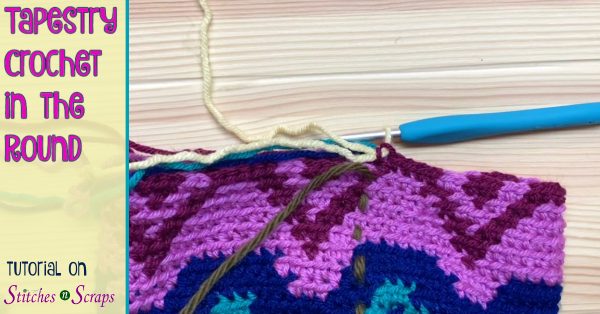
Tapestry Crochet in the Round, using back loops
Create stunning, geometric designs with 2 or more colors! Learn how to work tapestry crochet in the round, using the ...More
Join crochet rounds without a slip stitch
Slip stitch joins can leave an unsightly seam in your crochet circles. Learn how to join crochet rounds without a ...More
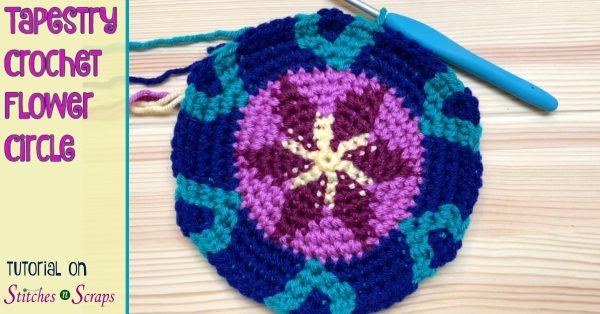
Tapestry Crochet Flower Circle - Tutorial on Stitches n Scraps
Learn how to make a 6-inch, tapestry crochet flower circle! Use it as the base of a bag or basket, ...More
Edit Post “New Draft Sweethearts Ear Warmer Knitting Tutorial” ‹ Stitches n Scraps — WordPress.html
The Starry Skies scarf is a perfect transitional accessory for spring or fall. The lacy, diamond design is open and ...More
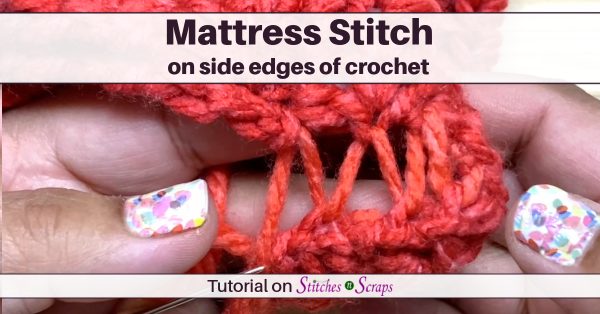
Mattress Stitch Crochet Side Edges
Many methods of seaming crochet, particularly along the sides of the rows, can create a visible seam or bulky ridge. ...More

How to Attach Wood Handles to a Crochet Bag

When it comes to crochet bags, the right finishing details can make all the difference! Learn how to attach wood handles by crocheting them directly onto the bag. Try out this technique on the Shells and Cables Market Bag.

This content is protected by copyright. See this Terms of Use / Copyright page for more information.

This post contains sponsored content and/or affiliate links. If you click an affiliate link and make a purchase, I may get a commission.

Bag Along CAL

The bag shown in this video is the Shells and Cables Market Bag pattern. You can find the full written instructions for the bag in that pattern.

This is the fourth of 6 bag patterns in the 2022 Bag Along CAL. See the full schedule and learn how to join in the fun, in the main Bag Along CAL post.

Types of handles

Wood handles come in a large variety of shapes and sizes. For this example, I used circular wood handles that were about 5 inches in diameter.

You can use this same method to attach wood handles of other sizes and types as well. Try it with bamboo handles, oval handles, rectangular handles, or D-shaped handles.

Different ways to attach wood handles

Crocheting over the handles is only one method of attaching wood handles to a crochet bag. You can also sew them on in different positions to create different effects. They can be attached with separate tabs of rings. It’s also possible start your crochet from the handle, but that means crocheting the whole bag with a heavy handle attached.

How to Attach Wood Handles to a Crochet Bag Video Tutorial

Watch this video on YouTube

Share this tutorial on Pinterest! Here’s an image perfect for pinning:

Rate this Wood Handles Tutorial!


Do you want the best of Stitches n Scraps delivered right to your inbox? Don’t miss a stitch – Subscribe now!

Shells and Cables Lace Stitch Tutorial

Combine lacy shells and twisty cables for a unique texture! In this tutorial, I’ll show you how to work this stitch pattern in the round. Try out this lovely shells and cables lace stitch in the Shells and Cables Market Bag.

This content is protected by copyright. See this Terms of Use / Copyright page for more information.

This post contains sponsored content and/or affiliate links. If you click an affiliate link and make a purchase, I may get a commission.

Bag Along CAL

The shells and cables lace stitch makes the main section of the Shells and Cables Market Bag pattern. You can find the full written instructions for the bag in that pattern.

This is the fourth of 6 bag patterns in the 2022 Bag Along CAL. See the full schedule and learn how to join in the fun, in the main Bag Along CAL post.

Shells and Cables Stitch Chart

As the chart version shows, the pattern is a repeat of 6 stitches, and a repeat of 2 rounds. The grayed-out stitches in the chart show how the start and end of each round meet.

The first round of single crochet is just a foundation round, and the shells and cables pattern starts with round 1. The foundation round does not have to be single crochet. Round 1 can be worked into any stitch, or into chains.

Shell and Cables lace stitch chart
Click image to enlarge

Notice that no round has both shells and cables. The shells are all on the odd-numbered rounds, and the cables are on the even-numbered rounds.

Shells

Each shell is (2 dc, ch 1, 2 dc) in the same stitch. Starting the round with the 2nd dc of a shell leaves you in the right place to start the next round.

First shell of round

Cables

The cables build on each other, so the first cable round is a set up row. On the first cable round, the cable is a pair of crossed dc stitches. Skip a sp and a st, dc in the next sp, ch 1, dc in the first skipped sp.

For all future cable rounds, the cable is a pair of crossed fptr stitches. Fptr in the last st of the cross below, ch 1, fptr in the first st of the cross below.

Shells and Cables Lace Stitch Written Pattern:

Rnd 1: Ch 4 (counts as dc and ch-1), 2 dc in first st, ch 1, sk next 2 sts, sc in next st, ch 1, sk next 2 sts, [shell in next st, ch 1, sk next 2 sts, sc in next st, ch 1, sk next 2 sts] around, dc in same st as beginning of rnd to complete first shell, join with sl st to first dc.

Rnd 2: Sl st in first ch-1 sp, ch 1, sc in same sp, ch 2, sk next 2 dc, dc cross, ch 2, [sc in next shell, ch 2, dc cross, ch 2] around to last 2 dc, sk last 2 dc, join with sl st to first sc.

Rnd 3: Ch 4, 2 dc in first sc, ch 1, sk next ch-2 sp, sc in next cross, ch 1, sk next ch-2 sp, [shell in next sc, ch 1, sk next ch-2 sp, sc in next cross, ch 1, sk next ch-2 sp] around, dc in same st as beginning of rnd to complete first shell, join with sl st to first dc.

Rnd 4: Sl st in first ch-1 sp, ch 1, sc in same sp, ch 2, sk next 2 dc, fptr cross, ch 2, [sc in next shell, ch 2, fptr cross, ch 2] around to last 2 dc, sk last 2 dc, join with sl st to first sc.

Shells and Cables Lace Stitch Video Tutorial

Watch this video on YouTube

Share this tutorial on Pinterest! Here’s an image perfect for pinning:

Rate this Shells and Cables Lace Stitch Tutorial!


Do you want the best of Stitches n Scraps delivered right to your inbox? Don’t miss a stitch – Subscribe now!

Circular Bag Lining Tutorial on Stitches n Scraps

Circular Bag Lining Tutorial

You can sew a zippered lining for a circular bag. It’s easier than you think! Let me show you how in this tutorial. This circular bag lining is part of my Crochet Mandala Bag Pattern but can be adapted for any bag with a similar construction.

Circular Bag Lining Tutorial on Stitches n Scraps

This content is protected by copyright. See this Terms of Use / Copyright page for more information.

This post contains sponsored content and/or affiliate links. If you click an affiliate link and make a purchase, I may get a commission.

Bag Along CAL

The layered flower mandala is part of this Crochet Mandala Bag Pattern. You can find the full written instructions for the bag and the lining in that pattern.

This is the third of 6 bag patterns in the 2022 Bag Along CAL. See the full schedule and learn how to join in the fun, in the main Bag Along CAL post.

Overall Construction

Just like the bag, this lining is made up of 3 main pieces. Two circles are the front and the back of the bag. A thin, side strip connects the circles and gives the bag its depth.

To make the lining, first we attach the zipper to the side strip. Then we sew the strip around the edge of the front and back pieces, one at a time.

Zipper and Side Strip

The width of the side strip determines the depth of the bag. For this bag, I simply matched the width of the zipper tape.

End of zipper sewn to the end of a strip of fabric that is approximately the same width.

If you want a deeper bag, you can sew additional fabric to each side of the zipper to add width. Then cut the side strip to match the overall width of your zipper and additional fabric.

Take it slow

Curved edges take patience to sew. Because we’re sewing at right angles, there’s no need to notch the fabric. But it’s still important to go slowly and make sure you’re not accidentally pinching the fabric into pleats.

Other shapes

Your bag and lining do not have to be circular. Use this technique to line any bag that has a matching front and back, connected by a side strip!

Circular Bag Lining Tutorial

Watch this video on YouTube

Share this tutorial on Pinterest! Here’s an image perfect for pinning:

Circular Bag Lining Tutorial on Stitches n Scraps

Rate this Circular Bag Lining Tutorial!


Do you want the best of Stitches n Scraps delivered right to your inbox? Don’t miss a stitch – Subscribe now!

Happy Lemon Softie Crochet Tutorial on Stitches n Scraps

Happy Lemon Softie Tutorial

Add a little happiness to your day with this adorable Happy Lemon Softie! In this tutorial, I’ll take you through the whole pattern, step-by-step. Get the free written pattern, and follow along!

Happy Lemon Softie Crochet Tutorial on Stitches n Scraps

This content is protected by copyright. See this Terms of Use / Copyright page for more information.

This post contains sponsored content and/or affiliate links. If you click an affiliate link and make a purchase, I may get a commission.

Lemon amigurumi crochet pattern

This Happy Lemon Softie crochet tutorial goes along with this Lemon Amigurumi Crochet Pattern. You may find it helpful to reference the pattern as you watch the video.

Happy Lemon Amigurumi crochet pattern on Stitches n Scraps

The pattern has all the written instructions for each round, stitch counts, notes, and other details.

Featured in this video: Fairfield Poly-Fil and Poly Pellets

Fairfield provided the Poly-Fil stuffing and Poly Pellets that I used in this video. I chose Ultra Plush Poly-Fil for a super squishy and smooth finish.

Ultra Plush Poly-Fil from Fairfield World

The Poly Pellets are an optional way to add a bit of weight to your lemon. Just a tablespoon or so in the very bottom will make your lemon hang nice and straight.

Poly Pellets

In the video you’ll see how I wrapped the pellets in a stocking to keep them from falling through the stitches.

Happy Lemon Softie video tutorial

Watch this video on YouTube

Want to jump to a specific section? Click on the timestamp below to be taken to that spot in the video! These links open on YouTube, in a new window or tab.

Share this Happy Lemon Softie crochet tutorial on Pinterest! Here’s an image perfect for pinning:

Happy Lemon Softie Crochet Tutorial on Stitches n Scraps

Rate this amigurumi crochet tutorial video!


Do you want the best of Stitches n Scraps delivered right to your inbox? Don’t miss a stitch – Subscribe now!

Layered Flower Mandala Crochet Tutorial on Stitches n Scraps

Layered Flower Mandala Tutorial

Two layers of petals weave in and out of each other, coming together at the end with a circular border. Wall decoration, trivet, or part of a bag, use this layered flower mandala just about anywhere!

Layered Flower Mandala Crochet Tutorial on Stitches n Scraps

This content is protected by copyright. See this Terms of Use / Copyright page for more information.

This post contains sponsored content and/or affiliate links. If you click an affiliate link and make a purchase, I may get a commission.

Bag Along CAL

The layered flower mandala is part of this Crochet Mandala Bag Pattern, and you can find the full written instructions for the mandala there.

This is the third of 6 bag patterns in the 2022 Bag Along CAL. See the full schedule and learn how to join in the fun, in the main Bag Along CAL post.

WeCrochet provided the Brava Bulky yarn that I used for the mandala bag design. This thick, acrylic yarn is light and lofty so it works up fast without weighing you down!

Brava Bulky yarn in colors Solstice Heather, Denim, and Brindle.

In the video, you will see the colors Brindle (brown), Solstice Heather (dark blue), and Denim (light blue).

Mandalas Everywhere

There are so many uses for crochet circles! This layered flower mandala is nice and thick because of the layers, so it makes a fabulous trivet. You can also use it as a decorative doily, part of a blanket, or half of a circular pillow.

Sew it onto a slightly larger embroidery hoop, and it makes a great wall hanging too! To do this, use a long piece of coordinating yarn or thread and whipstitch around both the hoop and the mandala. Make evenly spaced stitches all the way around, making sure the mandala stays centered. Here’s a great tutorial showing the same technique, with a different mandala.

Stitch Markers Matter

There are a lot of stitch markers in this pattern, and it’s important not to skip them. Stitches and spaces that are easy to find when you make them sometimes get much harder to find when you have 2 layers to work with.

Rnd 3 of flower mandala

I’ve mainly used stitch markers to mark stitches and spaces that I had a hard time finding on my first time through the design.

Third Loops

In addition to the normal front and back loops, half double crochet stitches have an extra, third loop. Working into this loop is a great way to add ridges and texture.

Working into the 3rd Loop of HDC tutorial - Stitches n Scraps

Check out this tutorial for a closer look at working into the third loops of hdc stitches.

Follow Along

The video works through the entire layered flower mandala, round by round. This mandala is part of the larger, Crochet Mandala Bag pattern.

Mandala Bag - Free crochet pattern on Stitches n Scraps - shows 2 different sides to the bag, and the inside lining.

For detailed written instructions, including stitch counts, follow along with the written pattern.

Layered Flower Mandala Video Tutorial

Watch this video on YouTube

Share this tutorial on Pinterest! Here’s an image perfect for pinning:

Layered Flower Mandala Crochet Tutorial on Stitches n Scraps

Rate this Layered Flower Mandala video!


Do you want the best of Stitches n Scraps delivered right to your inbox? Don’t miss a stitch – Subscribe now!

Tapestry Crochet in the Round, using back loops

Tapestry Crochet in the Round (Back Loops)

Create stunning, geometric designs with 2 or more colors! Learn how to work tapestry crochet in the round, using the back loops of your stitches.

Tapestry Crochet in the Round, using back loops

This content is protected by copyright. See this Terms of Use / Copyright page for more information.

This post contains sponsored content and/or affiliate links. If you click an affiliate link and make a purchase, I may get a commission.

Bag Along CAL

The design shown in this video is the Tapestry Crochet Project Bag. This is the second of 6 bag patterns in the 2022 Bag Along CAL. See the full schedule and learn how to join in the fun, in the main Bag Along CAL post.

Tapestry Crochet Project Bag - free crochet pattern on Stitches n Scraps

WeCrochet provided the Brava Minis yarn that I used for the project bag design. This is the same Brava yarn you know and love, but in mini skeins perfect for colorwork!

Knit Picks Brava Minis in 5 colors for bag #2 of the 2022 Bag Along CAL

In the video, you will see the colors Custard, Lady Slipper, Fairy Tale, Marina, and Celestial.

Tapestry Crochet in the Round

Use the same techniques for other projects too! Any tapestry crochet colorwork design can be worked in the round this way. For a smaller, practice project, try this glasses case.

Seeing Spots crochet glasses case - free tapestry crochet pattern on Stitches n Scraps

These designs use 2 colors at time, but you can also use the same technique with more colors!

Shifting rounds

Because of the way crochet stitches come together, working in the round without turning creates a natural shifting or spiraling effect. The start of the round shifts by half a stitch each round. See this post for a closer look at why continuous rounds shift. We need to counteract this shift in some way so that our design will line up straight.

Flat Circle

In a previous tutorial, we worked a flat circle for the bottom of this bag. Strategically placed increases shifted the design in the opposite direction and countered the shifting rounds.

Tapestry Crochet Flower Circle - Tutorial on Stitches n Scraps

For this tutorial, we don’t have increases to work with. But we can change the placement of our stitches instead.

Back Loops Only

Working into the back loops only, instead of both loops, makes the posts of the stitches line up much more closely. This eliminates the normal shift from working in the round.

Crochet swatch showing front and back loops

Check out this tutorial for a closer look at the front and back loops of crochet stitches.

Reading the Chart

Charts are a great way to visualize the tapestry crochet design and see how it comes together.

Follow Along

In the video, we’ll take several minutes to go over the chart. Then as we work through the rounds, I’ve added the relevant chart section at the top of the video, so you can follow along.

Snapshot of tapestry crochet in the round video, showing chart at the top

If it’s too small in the video, you can see a larger chart image in the Tapestry Crochet Project Bag pattern. The pattern includes full written instructions for the whole bag, including the bottom circle.

2 chart versions

I’ve included 2 versions of the chart in the pattern. One is in color, showing each stitch in its indicated color. But that’s hard to see for some, and impossible to print on a black and white printer. So I also included the black and white version that you will see in the video.

All single crochet

Every stitch on this chart is a single crochet in the back loop only. To work the pattern, simply single crochet in the back loop only of the indicated stitch, in the indicated color.

Section 4 of bag

2 colors at a time

Each round of this tapestry crochet pattern uses 2 colors. When working any stitch, always work over the yarn of the opposite color, so that it gets trapped or carried within the stitch.

If you are using more than 2 colors, work over all the unused colors at once. Keep in mind this will make your fabric thicker and more dense.

Running Stitch Marker

When working in continuous rounds, it’s always a good idea to mark the first stitch of each round. You can do this with a traditional stitch marker, or you can use a scrap of yarn as a running stitch marker.

I show the running stitch marker in the video. See this separate running stitch marker tutorial if you’d like a closer look.

Tapestry Crochet in the Round Video Tutorial

Watch this video on YouTube

Share this tutorial on Pinterest! Here’s an image perfect for pinning:

Tapestry Crochet in the Round, using back loops

Rate this tapestry crochet flower circle video!


Do you want the best of Stitches n Scraps delivered right to your inbox? Don’t miss a stitch – Subscribe now!

Join crochet rounds without a slip stitch

Join Crochet Rounds Without a Slip Stitch

Slip stitch joins can leave an unsightly seam in your crochet circles. Learn how to join crochet rounds without a slip stitch, and minimize that seam!

Join crochet rounds without a slip stitch

This content is protected by copyright. See this Terms of Use / Copyright page for more information.

This post contains sponsored content and/or affiliate links. If you click an affiliate link and make a purchase, I may get a commission.

Joining crochet rounds with a slip stitch

The traditional way to join crochet rounds is to make a slip stitch into the first stitch of the round. This extra stitch makes a bit of a bump, and over several rounds that bump can be very visible.

crochet circle with slip stitch seam

To eliminate that bump, we need to join without creating that extra stitch. We need to connect the working loop from the last stitch to the top of the first stitch, without any extra stitches in between.

Start by pulling your working loop up big, and then remove your hook from the loop. Now insert your hook into the first stitch of the round. You can go in either direction – back to front or front to back.

Remove working loop from hook and insert hook into first stitch

Put the working loop back on your hook, and pull it through that first stitch.

pull working loop through first stitch to join

That’s it! Your round is joined and you’re ready to start your next round, with no extra slip stitch bump.

Back to front or front to back

I said you could insert your hook in either direction, but it does make a very slight difference which direction you choose.

Inserting your hook from front to back will pull the first stitch of the round ever so slightly in front of the last stitch of the round. Conversely, inserting your hook from back to front will pull the last stitch of the round slightly in front of the first stitch of the round.

In this swatch, I went back to front on rnd 2, and front to back on rnds 3 and 4. Can you tell the difference?

crochet circle with seamless joins

This difference is barely noticeable, so for most situations either option will work fine. Use whichever is more comfortable for you!

Join crochet rounds video tutorial

Watch this video on YouTube

Share this tutorial on Pinterest! Here’s an image perfect for pinning:

Join crochet rounds without a slip stitch

Rate this crochet tutorial video!


Do you want the best of Stitches n Scraps delivered right to your inbox? Don’t miss a stitch – Subscribe now!

Tapestry Crochet Flower Circle - Tutorial on Stitches n Scraps

Tapestry Crochet Flower Circle Tutorial

Learn how to make a 6-inch, tapestry crochet flower circle! Use it as the base of a bag or basket, or on its own as a trivet or doily. You can even make just the center for a set of coasters!

Tapestry Crochet Flower Circle - Tutorial on Stitches n Scraps

This content is protected by copyright. See this Terms of Use / Copyright page for more information.

This post contains sponsored content and/or affiliate links. If you click an affiliate link and make a purchase, I may get a commission.

Bag Along CAL

The flower circle design shown in this video is the bottom of the Tapestry Crochet Project Bag. This is the second of 6 bag patterns in the 2022 Bag Along CAL. See the full schedule and learn how to join in the fun, in the main Bag Along CAL post.

Tapestry Crochet Project Bag - free crochet pattern on Stitches n Scraps

WeCrochet provided the Brava Minis yarn that I used for the project bag design. This is the same Brava yarn you know and love, but in mini skeins perfect for colorwork!

Knit Picks Brava Minis in 5 colors for bag #2 of the 2022 Bag Along CAL

In the video, you will see the colors Custard, Lady Slipper, Fairy Tale, Marina, and Celestial.

Tapestry crochet in a flat circle

There are a few things to consider when designing a flat circle in tapestry crochet.

Make it flat

First, it needs to make a flat circle. Each round has to have the right number of increases (6, for single crochet) to make the circle grow without curling or flaring.

Shifting rounds

Second, it has to make the colorwork design, preferably without too much distortion. We’re working in the round without turning. Because of the way crochet stitches come together, this creates a natural shifting or spiraling effect. The start of the round shifts by half a stitch each round. See this post for a closer look.

Section 2 of bottom circle

Increases to the rescue!

By placing the increases strategically, we can make the design lean back in the opposite direction. This at least partially counteracts the shifting rounds.

In other tapestry crochet shapes and projects that don’t have the increases, we can change where we place the stitches for a similar effect. But that’s a story for a different tutorial!

Reading the Chart

Charts are a great way to visualize the tapestry crochet design and see how it comes together.

Follow Along

In the video, we’ll take the first few minutes to go over the chart. Then for each round, I’ve added the relevant chart section in the corner of the video, so you can follow along.

Snapshot of video, showing the chart sections displayed in the corner.

If it’s too small in the video, you can see a larger chart image in the Tapestry Crochet Project Bag pattern. The pattern includes full written instructions for this circle and the whole bag as well.

2 chart versions

I’ve included 2 versions of the chart in the pattern. One is in color, showing each stitch in its indicated color. But that’s hard to see for some, and impossible to print on a black and white printer. So I also included a black and white version. In this version, each stitch has a circle on top of it, indicating the color for that stitch.

All single crochet

Every stitch on this chart is a single crochet. It’s either 1 single crochet into 1 stitch, or 2 single crochet into the same stitch (for the increases). To work the pattern, simply single crochet in the indicated stitch and in the indicated color.

Rnd 2 of bottom circle

Sometimes this will mean working one single crochet in one color, and another single crochet in the other color, both into the same stitch.

2 colors at a time

With the exception of rnd 1, each rnd has 2 colors. When working any stitch, always work over the yarn of the opposite color, so that it gets trapped or carried within the stitch.

Work over unused color, even if you haven't used it yet.

Tapestry Crochet Flower Circle Video Tutorial

Watch this video on YouTube

Share this tutorial on Pinterest! Here’s an image perfect for pinning:

Tapestry Crochet Flower Circle - Video Tutorial on Stitches n Scraps

Rate this tapestry crochet flower circle video!


Do you want the best of Stitches n Scraps delivered right to your inbox? Don’t miss a stitch – Subscribe now!

Edit Post “New Draft Sweethearts Ear Warmer Knitting Tutorial” ‹ Stitches n Scraps — WordPress.html

Starry Skies Scarf Crochet Tutorial

The Starry Skies scarf is a perfect transitional accessory for spring or fall. The lacy, diamond design is open and lightweight, and the pattern includes 3 different size options. Learn how to make it as a cowl, infinity scarf, or full-length scarf, in this step-by-step crochet tutorial. Get the free written pattern, and follow along!

Edit Post “New Draft Sweethearts Ear Warmer Knitting Tutorial” ‹ Stitches n Scraps — WordPress.html

This content is protected by copyright. See this Terms of Use / Copyright page for more information.

This post contains sponsored content and/or affiliate links. If you click an affiliate link and make a purchase, I may get a commission.

Starry Skies Scarf crochet pattern

This scarf crochet tutorial goes along with the Starry Skies written pattern. You may find it helpful to reference the pattern as you watch the video.

Starry Skies Scarf, cowl or infinity scarf - free crochet pattern on Stitches n Scraps

The pattern includes all the charts shown in the video, plus written instructions for each row, stitch and repeat counts, notes, and other pattern details.

Starry Skies Scarf video tutorial

Watch this video on YouTube

Want to jump to a specific section? Click on the timestamp below to be taken to that spot in the video! These links open on YouTube, in a new window or tab.

  • 00:19 Stitch counts and repeats
  • 01:52 Main section – Row 1
  • 03:32 Main section – Row 2
  • 08:06 Main section – Row 3
  • 09:31 Main section – Row 4
  • 12:24 Main section – Row 5
  • 14:14 Chainless starting double crochet option
  • 17:03 Main section repeats
  • 17:29 Joining row for cowl or infinity scarf
  • 26:00 Scarf edging

Share this Starry Skies scarf crochet tutorial on Pinterest! Here’s an image perfect for pinning:

Starry Skies Scarf, cowl or infinity scarf - free crochet pattern on Stitches n Scraps

Rate this scarf crochet tutorial video!


Do you want the best of Stitches n Scraps delivered right to your inbox? Don’t miss a stitch – Subscribe now!

Mattress Stitch Crochet Side Edges

Mattress Stitch Crochet Side Edges – Seaming Tutorial

Many methods of seaming crochet, particularly along the sides of the rows, can create a visible seam or bulky ridge. Learn how to mattress stitch crochet side edges together for a nearly invisible seam!

Mattress Stitch Crochet Side Edges

This content is protected by copyright. See this Terms of Use / Copyright page for more information.

This post contains sponsored content and/or affiliate links. If you click an affiliate link and make a purchase, I may get a commission.

When mattress stitch is useful

I find mattress stitch particularly useful for stuffed items. When you get the last seam on a pillow, or in a lot of places on amigurumi, you can’t really turn your work inside out to sew the seam.

Since you work mattress stitch from the right side of your fabric, there’s no need to access the inside.

Textured Stripes Pillow

I used this technique in my Textured Stripes Pillow pattern. I first grafted the top and bottom ends of a rectangle together to make a seamless tube. Then I used mattress stitch to sew the side edges closed.

Textured Stripes Crochet Pillow

Side to side

In this tutorial, we’re specifically looking at how to mattress stitch two crochet side edges together.

2 crochet side edges

You can also use mattress stitch on top and bottom edges, or even to join a top or bottom edge to a side edge. The technique is similar, but the loops you pick up will be different depending on the edge you are working with.

Nearly invisible

Mattress stitch creates a nearly invisible seam, particularly when working with a solid color. The pillow I’m working with has color changes, so there are parts where you can see the stitching a bit if you look for it. But it’s still pretty close to invisible!

nearly invisible mattress stitch seam

The seam pulls the two crochet side edges together so they butt up against each other without truly overlapping. This means there’s no bulky ridge.

How to mattress stitch crochet side edges together

Cut a piece of yarn at least twice the length of your seam and join it at one corner. Then line up your two side edges. Placing stitch markers at even intervals along the edge can help you to keep your seam even all the way across.

Side edges pinned with stitch markers

Zig zag stitches

Starting from either side, choose one loop very close to the side edge. Look for a loop that is small and resting towards the wrong side of the fabric if possible.

Choose a loop

Sew through this loop. You can choose to go either from the outside (top) to the inside (bottom) of your fabric, or from the inside to the outside.

choose a direction

Now make a similar stitch on the opposite side edge. Go in the same direction (outside to inside or inside to outside) that you did for the first stitch.

Continue making stitches, always in the same direction, alternating from one side edge to the other. After a few stitches, you’ll see a zig zag seam forming.

Zig Zag stitches

Straightening the seam

This is where the magic happens! Pull the seam taught so that zig zag turns into a straight line. As it does, it will bring the two side edges together.

Straighten the seam

Depending on the length of your seam, you can do this every few stitches, or wait and do it at the end. Be careful not to pull so tightly that you create gathers or ruffles, or even snap your yarn.

Puckered corner of a mattress stitch seam

Gently ease more yarn into any tight areas before you weave in your tail.

Mattress stitch for crochet side edges video tutorial

Watch this video on YouTube

Seam Strength

At the end of this mattress stitch process, you have just one straight line of yarn pulling the two side edges of crochet together. That one piece of yarn needs to hold up to whatever strain is going to be put on the seam.

For a throw pillow in this bulky, acrylic yarn, it’s more than strong enough. If I was using a particularly delicate or fragile yarn, I might choose a bulkier seam like whipstitch. The same holds true for objects that take a lot of abuse, like a child’s toy or a market bag.

If you really want to use a mattress stitch seam in these situations, try using 2 strands of yarn held together, sewing into 2 loops at a time instead of one, and/or making your stitches closer together.

Mattress Stitch Crochet Side Edges

Rate this mattress stitch for crochet side edges tutorial video!


Do you want the best of Stitches n Scraps delivered right to your inbox? Don’t miss a stitch – Subscribe now!