
Knitting Tutorials

Ready for a new knit stitch, technique, or pattern? You’re in the right place! Browse all the knitting tutorials, or select a category from the dropdown menu. What will you learn today?


Slip Slip Knit (ssk) Tutorial on Stitches n Scraps
Learn how to work the slip slip knit decrease, abbreviated as ssk. This is a very common decrease in knitting. ...More
Knit 2 Together (k2tog) Tutorial on Stitches n Scraps
Learn how to work the knit 2 together decrease, abbreviated as k2tog. This is one of the easiest and most ...More
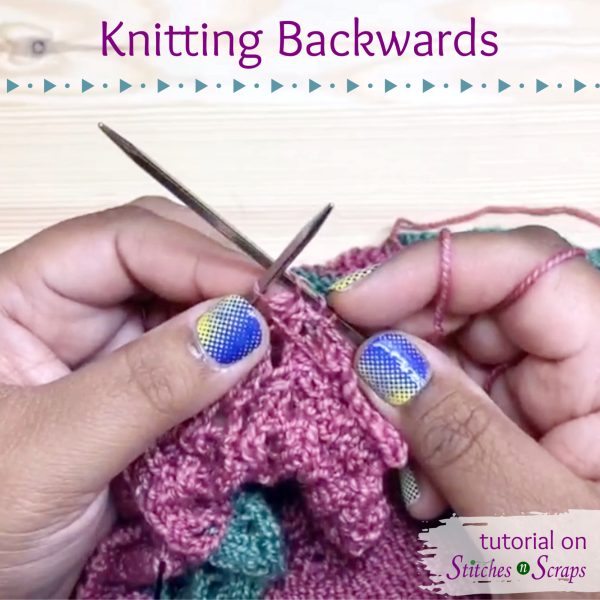
knitting backwards - Tutorial on Stitches n Scraps
Have you ever knit something really narrow like a border or edging worked sideways? Turning your work after every few ...More
2 color, simple bind off for double knitting on Stitches n Scraps
You've finished your double knitting project, now how do you bind off? There are lots of methods to choose from! ...More
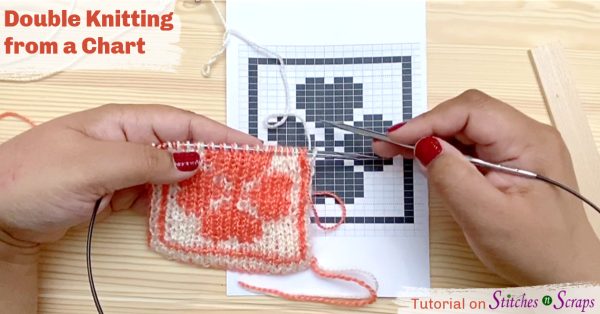
Double knitting from a chart
You know how to knit, but do you know how to double knit? Double knitting is a versatile technique that ...More
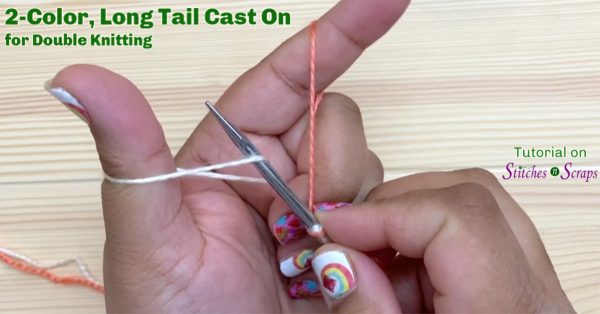
2 color long tail cast on for double knitting - Tutorial on Stitches n Scraps
Create a smooth, low profile edge for your double knitting with the 2-color, long tail cast on! Using a 2nd ...More
A knitted swatch on a wood table - Rosette Stitch - Knitting Tutorial on Stitches n Scraps
Learn how to knit the rosette stitch! This lovely, textured stitch is easier than it looks. The simple, 4-row repeat ...More
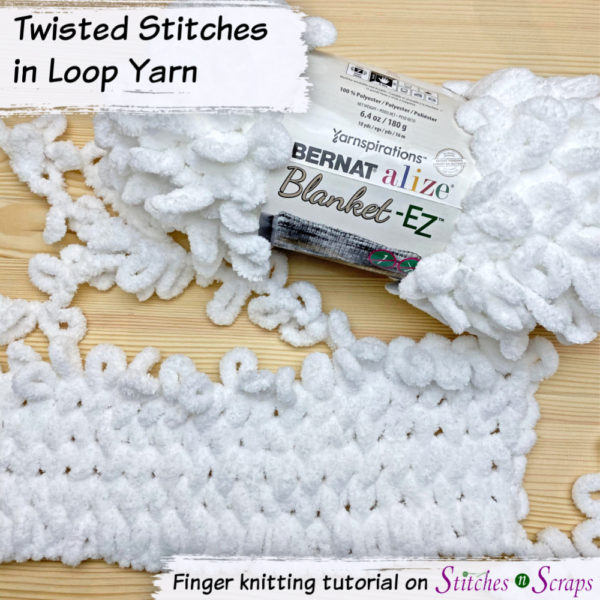
a finger knit swatch with a skein of Bernat Blanket EZ yarn. Text - Twisted Stitches in Loop Yarn, Finger Knitting Tutorial on Stitches n Scraps
For normal knit stitches in loop yarn, we try not to let the loops twist. However, twisting them on purpose ...More
Taupe and green pillow. Text says: How to Seam the Unbiased Pillow. Photo and video tutorial on StitchesnScraps
The Unbiased pillow pattern has an unusual construction. It is knit on the bias (diagonally) and seamed diagonally as well. ...More
I know a lot of knitters and crocheters cringe at the words "gauge" and "swatching". But working up a gauge ...More
Slip Slip Knit (ssk) Tutorial on Stitches n Scraps

Slip Slip Knit (ssk) Decrease Tutorial

Learn how to work the slip slip knit decrease, abbreviated as ssk. This is a very common decrease in knitting. By twisting the stitches before you knit them together, you can create a decrease that leans to the left.

Slip Slip Knit (ssk) Tutorial on Stitches n Scraps

This content is protected by copyright. See this Terms of Use / Copyright page for more information.

This post contains sponsored content and/or affiliate links. If you click an affiliate link and make a purchase, I may get a commission.

Needle and Yarn

For this tutorial, I am using Knit Picks Brava worsted weight yarn, and Knit Picks Prism Options interchangeable needles.

Knit Picks Needle Set and Case

Knit picks sent me both of these to review and to use for the Simply Sweet Raglan Baby Sweater KAL. Enter the giveaway for a chance to win a set of the needles and a case too! See all the details in the main KAL post.

Simply Sweet Raglan Baby Sweater KAL on Stitches n Scraps

Slip Slip Knit (ssk) Photo Tutorial

This decrease is very much like it’s corollary, the knit 2 together (k2tog). For both, you work a knit stitch through two stitches together as though they are one. The difference with the slip slip knit is that we first need to twist each of those two stitches around. This way, when the stitch is finished, it will lean to the left instead of to the right.

Identify the 2 stitches you would like to work together for the decrease.

Identify the 2 stitches to decrease

With the yarn held at the back, slip both stitches knitwise, one at a time. Start by inserting your working needle into the first stitch as though you are going to knit it, and then slip it off the other needle.

Slip knitwise with yarn at back

Now repeat this action with the second stitch. This is the “slip slip” part of the ssk.

both stitches slipped

Insert your left (non-working) needle back into both stitches, in front of the working needle.

insert left needle

Now you are in a position to knit the two stitches together. Yarn over and pull through as you would for a normal knit stitch. Drop both stitches from the left (non-working) needle.

Slip Slip Knit (ssk) Video Tutorial

Watch This Video on YouTube

A Note for Lefties

I am 100% right handed and absolutely hopeless at knitting left handed. When making this tutorial, I was curious to learn if the left handed ssk leaned in the same direction. I asked around and researched other tutorials. Here’s what I learned.

If you work your ssk in the same way as a right handed person, by twisting 2 stitches first and then knitting them together, your decrease will lean to the right. However, it seems that knitters do not agree on how the terms should be applied to left handed knitting. Some left handed knitters define ssk as a left leaning increase and so they do it the same way as a right handed person would do a knit 2 together (k2tog).

This can all be very confusing, but no matter your definitions, the important thing is which way the stitch leans. Unless otherwise specified in the pattern, if it says ssk, you can assume the stitch is supposed to lean towards the left. Here’s a great tutorial from Just North of The Bend that explains this in more detail.

Slip Slip Knit (ssk) Tutorial on Stitches n Scraps

Rate this ssk knitting decrease tutorial!


Do you want the best of Stitches n Scraps delivered right to your inbox? Don’t miss a stitch – Subscribe now!

Knit 2 Together (k2tog) Tutorial on Stitches n Scraps

Knit 2 Together (k2tog) Tutorial

Learn how to work the knit 2 together decrease, abbreviated as k2tog. This is one of the easiest and most common decreases in knitting. Working 2 stitches together as one, you can create a decrease that leans to the right.

Knit 2 Together (k2tog) Tutorial on Stitches n Scraps

This content is protected by copyright. See this Terms of Use / Copyright page for more information.

This post contains sponsored content and/or affiliate links. If you click an affiliate link and make a purchase, I may get a commission.

Needle and Yarn

For this tutorial, I am using Knit Picks Brava worsted weight yarn, and Knit Picks Prism Options interchangeable needles.

Knit Picks Needle Set and Case

Knit picks sent me both of these to review and to use for the Simply Sweet Raglan Baby Sweater KAL. Enter the giveaway for a chance to win a set of the needles and a case too! See all the details in the main KAL post.

Simply Sweet Raglan Baby Sweater KAL on Stitches n Scraps

Knit 2 Together (k2tog) Photo Tutorial

Identify the 2 stitches you would like to knit together. Treat them as though they are 1 stitch, made up of 2 strands of yarn.

Treat 2 stitches as 1

With the yarn held at the back, insert your needle into both stitches together as though to knit.

insert needle into both stitches

Yarn over and pull through as you would for a normal knit stitch. Drop both stitches from the left (non-working) needle.

Finish as normal knit stitch

Knit 2 Together (k2tog) Video Tutorial

Watch This Video on YouTube

A Note for Lefties

I am 100% right handed and absolutely hopeless at knitting left handed. When making this tutorial, I was curious to learn if the left handed k2tog leaned in the same direction. I asked around and researched other tutorials. Here’s what I learned.

If you work your k2tog in the same way as a right handed person, by treating the 2 stitches as one and knitting them as normal, your decrease will lean to the left. However, it seems that knitters do not agree on how the terms should be applied to left handed knitting. Some left handed knitters define k2tog as a right leaning increase and so they do it the same way as a right handed person would do a slip-slip-knit (ssk).

This can all be very confusing, but no matter your definitions, the important thing is which way the stitch leans. Unless otherwise specified in the pattern, if it says k2tog, you can assume the stitch is supposed to lean towards the right. Here’s a great tutorial from Just North of The Bend that explains this in more detail.

Knit 2 Together (k2tog) Tutorial on Stitches n Scraps

Rate this k2tog knitting decrease tutorial!


Do you want the best of Stitches n Scraps delivered right to your inbox? Don’t miss a stitch – Subscribe now!

knitting backwards - Tutorial on Stitches n Scraps

Knitting Backwards – Garter Stitch Without Turning!

Have you ever knit something really narrow like a border or edging worked sideways? Turning your work after every few stitches can get really annoying. Knitting backwards is the solution! By working the knit stitch backwards, you can knit garter stitch without ever turning your work at all. That makes it much faster too!

knitting backwards - Tutorial on Stitches n Scraps

Garter Stitch

When working in rows, knitting every row produces garter stitch. You knit on the right side, so you see knit stitches on the front of your work. Then you turn your work and knit on the wrong side, producing purl bumps on the front of your work.The goal of knitting backwards is to work those wrong side rows from left to right, on the right side of your work.

A Sideways Border

The sample I am using in this tutorial is my Polyantha Rose Garden shawl. The edging on this shawl is worked sideways and connected to the main portion of the shawl by a decrease on each right side row. This means lots (and lots) of garter stitch rows with only 3 stitches. Turning the whole shawl around after every 3 stitches would take much longer than knitting the wrong side rows backwards!

Polyantha Rose Garden Shawl - free pattern on Stitches n Scraps

Knitting Backwards

The Working Needle

After you finish a right side row, do not turn your work around. We are going to knit back in the opposite direction. Your stitches should all be on the right (or left for lefties) needle. The other needle (left for righties, right for lefties) is your working needle.

Yarn in front

If we had turned our work and were working knit stitches, the yarn would be at the back of our work. However, since we’re looking at everything backwards, the yarn needs to be in front.

The Backwards Knit Stitch

Insert the working needle from the back, through the back leg of the first stitch. It should be sticking out towards you. If you turn your work around carefully, you can see that this is the same as inserting your needle knitwise from the other side.

Insert needle into stitch - Knitting Backwards on Stitches n Scraps

To yarn over, bring the yarn up between the points of the needles, and then back down again over the top of the working needle.

Yarn over - how to knit backwards on Stitches n Scraps

Now use your working needle to scoop that yarn over out, from the front to the back, creating your knit stitch. Drop the stitch from the non-working needle. If you turn your work around, you will see that it looks just a like a knit stitch from the other side.

Scoop through to form stitch - how to knit backwards on Stitches n Scraps

Repeat with each remaining stitch on your row. Now all the stitches should be back on your other needle, so you can knit the right side row as normal!

Try Knitting Backwards!

Give this technique a try on the edging of the Polyantha Rose Garden Shawl shown in this tutorial!

Polyantha Rose Garden Shawl - free pattern on Stitches n Scraps

Knitting Backwards – Video Tutorial

Watch this video on YouTube

Rate this Knitting BackwardsTutorial

2 color, simple bind off for double knitting on Stitches n Scraps

2-Color Simple Bind Off for Double Knitting

You’ve finished your double knitting project, now how do you bind off? There are lots of methods to choose from! The 2-color Simple Bind Off creates a smooth, low profile edge that alternates between the two colors.

2 color, simple bind off for double knitting on Stitches n Scraps

Double Knitting

This tutorial assumes you already know how to do basic double knitting. If you do not, check out my tutorials for the 2-Color Long Tail Cast On, and for Double Knitting from a Chart!

2-Color, Simple Bind Off

This bind off is a nice match for the 2-color, long tail cast on. It has a lot of stretch, though not quite as much as the cast on.

First 2 stitches

Start by working the first two stitches as you normally would. Typically this will mean knitting the first stitch and purling the second one. In this case, my first stitch was cream and my second one was peach. When you finish the purl, bring both yarns to the back of your work.

2-color Bind off for double knitting - work first 2 stitches as normal.

Now pass the first stitch over the second one, just as you would for a normal, simple bind off.

passing the first stitch over the second one

Continue Binding Off

Work the next stitch as you normally would for your pattern. In this case I knit it with the white yarn. Then make sure both yarns are at the back of your work.

knit the next stitch and pass the previous stitch over.

Pass the previous stitch over the current stitch, as for a normal bind off.

Do the same thing again for the next stitch. In this case my next stitch is a purl with the accent color. After purling the stitch, be sure to move both yarns to the back of the work again.

And once again, pass the back stitch over the front stitch. Continue in this manner until all stitches have been worked, and only one stitch remains on your needle.

Purl the next stitch, and pass the previous stitch over.

Fasten off

Cut both yarns, and pull the last stitch until the yarn comes through. Congratulations, you have finished your 2-color bind off!

Cut both yarns and fasten off.

Try it out!

Give double knitting a try with the Lucky Hearts Coaster shown in this tutorial!

Two Color Simple Bind Off – Video Tutorial

Watch this video on YouTube

Rate this Double Knitting Bind Off Tutorial

Double knitting from a chart

Double Knitting from a Chart – Reversible Colorwork

You know how to knit, but do you know how to double knit? Double knitting is a versatile technique that creates two layers of fabric at the same time. Learn how to create reversible, colorwork designs by double knitting from a chart!

Double knitting from a chart

What is Double Knitting?

Imagine if you had two separate pieces of knit fabric, and you held them with the wrong sides together, so that the right sides are facing out. Now alternate between the two fabrics, working one stitch from the front one, and then one stitch from the back one. This, in essence, is double knitting.

Knitting and Purling

With the wrong sides together, our fabrics are facing in opposite directions. The front fabric is facing us, and the back fabric is facing away from us. This means that the stitches on the front fabric are right side (RS) stitches, and the stitches on the back fabric are wrong side (WS) stitches.

If we want to create a stockinette appearance on both sides, we need to knit the front, RS stitches, and purl the back, WS stitches. Since we’re alternating between the two fabrics, this means alternating between knits and purls, very much like ribbing.

Two working yarns

In the example above, each layer of fabric was separate, so it had its own working yarn. If you continue using one yarn only for the front and one yarn only for the back, without ever letting them cross, you will always have 2 separate pieces of fabric. I once used this technique to knit a pair of socks, one inside the other, on double pointed needles.

Double knit socks

Moving the yarns together at all times keeps them from twisting. So when you want to knit, move both yarns to the back, and when you want to purl, move both yarns to the front. If you DO allow the two yarns to cross, they will tie the fabric together into one, double layer fabric.

Double Knitting Colorwork

Now suppose our two layers of fabric are also different colors. Let’s say color 1 is in the front, and color 2 is in the back. We could keep them entirely separate by always working the front stitches in color 1, and the back stitches in color 2.

But what if we switched things up? Suppose we switched the colors for one pair of stitches, and worked the front stitch in color 2, and the back stitch in color 1? That would tie our fabrics together, and give us one stitch of the opposite color on each side. This is the basis of colorwork in double knitting.

Background and accent colors

We now have both colors being used on both sides, to create mirror images. So how can we talk about the two colors without getting confused? Let’s look at the design as a whole, and designate one color as the background color and one as the accent color for each side.

This is the Lucky Hearts Coaster. On this side, the background color is clearly peach, and the accent color is cream.

Lucky Hearts Coaster - Free double knitting pattern on Stitches n Scraps

On this side, it is reversed. The background color is cream, and the accent color is peach.

Lucky Hearts Coaster - Free double knitting pattern on Stitches n Scraps

Getting started

There are many cast ons for double knitting. For the one I used in this pattern, see my two-color long tail cast on tutorial.

2 color long tail cast on for double knitting - Tutorial on Stitches n Scraps

Reading the Chart

Here is a small section of the colorwork chart for this pattern. You can find the whole chart and pattern here. This chart shows only one side of the coaster. It does not show the mirror image on the other side, because it would be exactly the same. This means that each square represents 2 stitches – a knit stitch for the front side, and a purl stitch for the back.

Lucky Hearts Coaster Chart cropped to just the top few rows

White squares

The white squares show where we want to see the background color. Knit the first stitch with the background color for the side you are working on. This puts the background color in front. Now remember that the colors are reversed on the other side. The accent color for this side is the background color for the other side. So purl the next stitch with the accent color, and that will be the background color on the back.

Black squares

The black squares show where we want to see the accent color, so it’s the exact opposite of the white squares. Knit the first stitch with the accent color, and purl the next stitch with the background color.

Slip stitch selvedge

For this particular pattern, I used a slip stitch selvedge to create a nice edge. For the last pair of stitches, I first slipped one purlwise, then moved only the accent color to the front, and then slipped the last stitch purlwise as well. When moving the accent yarn to the front, make sure to twist it over the background yarn. This will tie them together for a sealed edge.

Slip stitch selvedge - slip first stitch of pair, then bring accent color to front, then slip 2nd stitch

Putting it all together

Let’s work through row 24 of this chart together. Normally, you would read the chart from the side that the number is on, but in this case it’s symmetrical so it doesn’t really matter.

First we see a white square, so knit the first stitch with the background color. Now move the yarns so both are in front.

Knit first stitch with background color, then bring both yarns forward

Then, purl the 2nd stitch with the accent color and move both yarns to the back.

Next, we have a black square, so knit the first stitch with the accent color. Now move both yarns to the front, purl the next stitch with the background color, and move both yarns to the back again.

2nd pair of stitches completed - k with accent color, p with background color

As you can see, I like to tension my background color in my left hand and my accent color in my right hand, but feel free to hold the yarns in whatever way works for you.

After that there are 5 white squares. So for the next 5 pairs of stitches, knit the first one with the background color and the next one with the accent color. Remember to move both yarns forwards and backwards together.

5 white boxes are next on the chart

Two more black squares means knitting with the accent color and purling with the background color for 2 more stitches. Then there’s one pair of the background color, 2 more of the accent color, 5 of the background color, 1 of the accent color, and finally our slip stitch selvedge as described above.

You’ve completed a row of double knitting!

Finished row of double knitting

Double Knitting from a Chart – Video Tutorial

Watch this video on YouTube

Rate this Double Knitting Tutorial

2 color long tail cast on for double knitting - Tutorial on Stitches n Scraps

2-Color Long Tail Cast On for Double Knitting

Create a smooth, low profile edge for your double knitting with the 2-color, long tail cast on! Using a 2nd color in place of the long tail, you can alternate between picking up stitches in the two different colors.

2 color long tail cast on for double knitting - Tutorial on Stitches n Scraps

Normal Long Tail Cast On

Before trying this cast on, it helps to know the long tail cast on first. If you’re not familiar with it, here’s a great tutorial from Marly Bird. Here’s another one from Jessie at Home that shows how to start without a slip knot!

Set Up for 2-Color Long Tail Cast On

Slip knot

The 2-color long tail cast on starts a little differently. Instead of using a long tail, we’re going to use a 2nd color. First, hold both yarns together and make a slip knot with both colors. Place this slip knot on the needle.

Slip knot with 2 different color yarns held together

The slip knot is just to secure the yarn and does not count as a stitch

Grip

Hold the needle in your dominant hand. Now grip both yarns in the palm of your other hand. Then, place your thumb and index finger between the two strands of yarn, separating them.

hold both yarns in palm

Turn your hand so your thumb and index finger are pointing up. You should know have a V or slingshot shape. This is your starting point.

There is a loop of yarn around your thumb, and one around your finger. Each loop has an outside strand and an inside strand.

Grip for 2-color long tail cast on for double knitting

If you care which color you start with, make sure that color is on your index finger. In most cases it won’t matter, as double knitting is reversible.

2-Color Long Tail Cast On

First stitch – finger color

The first stitch is done just like a normal long tail cast on. Bring your needle up from under the outside strand on your thumb.

Insert needle under outside thumb yarn, from bottom up

Then bring it down over the inside strand on your finger and scoop up the yarn from your finger.

Pick up inside finger yarn, from top down

Pull the yarn from your finger through the loop on your thumb, drop the loop off your thumb, and tighten. Then re-adjust your grip back to the starting point.

Finish first stitch

2nd stitch – thumb color

For the second stitch, we are going to go in the opposite direction. Bring your needle up from under the outside strand on your finger.

Insert needle under outside finger yarn, from bottom up

Now bring it up from under the inside strand on your thumb. Be sure you’re going up from the bottom this time instead of down from the top. If you go the other way you will end up with a twisted stitch.

Pick up inside thumb yarn from bottom

Pull the yarn from your thumb through the loop on your finger, drop the loop from your finger and tighten. Then re-adjust your grip back to the starting position.

Finish 2nd stitch

Continue casting on

Repeat this pair of stitches until you have enough stitches cast on. Remember not to count your slip knot. The stitches on your needle should now be alternating in color.

2 color long tail cast on

If any stitches did end up twisted, just work them through the back loop on the first row. When you reach the end of the first row, remove and undo the slip knot.

Try it out!

The Lucky Hearts Coaster uses this 2 color cast on. It also has a simple bind off that matches nicely. Give it a try!

Two Color Long Tail Cast On – Video Tutorial

Watch this video on YouTube

Rate this Double Knitting Cast On Tutorial

A knitted swatch on a wood table - Rosette Stitch - Knitting Tutorial on Stitches n Scraps

Rosette Stitch Knitting Tutorial – Left and Right Handed

Learn how to knit the rosette stitch! This lovely, textured stitch is easier than it looks. The simple, 4-row repeat works over any number of stitches.

a knitted swatch on a wood table. Learn to knit the Rosette Stitch - Right and Left Handed Tutorials on Stitches n Scraps

This post contains sponsored content and/or affiliate links. If you click an affiliate link and make a purchase, I may get a commission.

Any Stitch Count

Rosette stitch works with stitches in pairs, so some tutorials suggest an odd or an even number of stitches. But you can actually do it either way! The pattern rows are offset by 1 stitch. This means that regardless of the stitch count, you will sometimes have an extra stitch at the end of the row. When you have an extra stitch, just knit it.

Making Rosettes (r)

Each rosette (r) is a combination of two decreases. First, working over 2 stitches, bring the yarn to the front and work a normal purl 2 together decrease (p2tog) over the next 2 stitches, but do not take those stitches off the needle.

Making a p2tog
Do not remove sts from needle

If we stopped here we would have decreased by one stitch, but we don’t want to do that. We want to work into the same 2 stitches again, which is why we left them on the needle.

Next, bring the yarn to the back, and work a knit 2 together (k2tog) into the same stitch. We are done working those stitches, so now we can take them off the needle.

k2tog into the same 2 stitches

We have now worked into two stitches together, but have done it twice, creating 2 new stitches to keep the stitch count the same.

r = p2tog without removing the stitches, k2tog into the same 2 stitches and remove them.

4 Row Repeat

The full stitch pattern is a 4 row repeat. Rows 1 and 3 are right side rows. Knit these rows all the way across. Rows 2 and 4 are wrong side rows, and have the rosettes.

Row 1 (RS): K
Row 2: K 1, r across, (if there is an extra stitch at the end, k 1)
Row 3: K
Row 4: R across, (if there is an extra stitch at the end, k 1)

Notice that on row 2, we start with a k 1, and on row 4 we do not. This offsets the pattern by one stitch. If you are working with an even number of stitches, you will have an extra knit stitch at the end of row 2. If you are working with an odd number of stitches, you will have an extra knit stitch at the end of row 4.

A knitted swatch on a wood table - Rosette Stitch - Knitting Tutorial on Stitches n Scraps

Rosette Stitch Video Tutorial – Right Handed

Watch this video on YouTube

Rosette Stitch Video Tutorial – Left Handed

Watch this video on YouTube

Try it Out!

Ready to give it a try? Check out this scrunchie pattern!

A yellow, textured scrunchie on a wood table. Text: Rosette Stitch Scrunchie - Free Knitting Pattern on StitchesnScraps.com

Rate this Knitting Tutorial


Do you want the best of Stitches n Scraps delivered right to your inbox? The Stitches n Scraps email newsletter includes highlights from the blog as well as special features not available elsewhere. Don’t miss a stitch – Subscribe now!

a finger knit swatch with a skein of Bernat Blanket EZ yarn. Text - Twisted Stitches in Loop Yarn, Finger Knitting Tutorial on Stitches n Scraps

Twisted Knit Stitches in Loop Yarn

For normal knit stitches in loop yarn, we try not to let the loops twist. However, twisting them on purpose can create some fun textures! See how to make twisted knit stitches in loop yarn, and the different textures they create.

a finger knit swatch with a skein of Bernat Blanket EZ yarn. Text  - Twisted Stitches in Loop Yarn, Finger Knitting Tutorial on Stitches n Scraps

This post contains sponsored content and/or affiliate links. If you click an affiliate link and make a purchase, I may get a commission.

What is loop yarn?

Knitting is basically scooping up loops of yarn and pulling them through other loops of yarn. The needles help us to form the loops and keep them even. Loop yarn already has these loops sewn into it, which means no needles are needed. With preformed loops, everyone’s stitches are the same size. So there’s also no need to swatch or measure gauge!

a single loop of looped yarn, pulled apart to show the thread that is forming the loops

For this tutorial, I’m using Bernat Alize Blanket EZ yarn. Yarnspirations sent me this yarn for free for a pattern, which I will be posting soon! It’s the same soft, fluffy feel of Bernat Blanket, but in a loop yarn format.

Loops and Stitches

For the sake of clarity, I will be calling unworked loops that are on the working yarn “loops” and loops that have already been worked “stitches”.

swatch of finger knit fabric showing worked stitches and unworked loops

Working Back and Forth

With loop yarn, it’s not necessary to turn your work, so you can work your entire piece on the right side of the fabric. Simply work in one direction (e.g. left to right) then work back in the opposite direction (e.g. right to left)

Normal Knit Stitch (k)

Pull the next loop on the working yarn through the indicated stitch, from back to front. When doing this, make sure the stitch is lying flat and is not twisted at all.

Finger knit swatch showing a knit stitch

Doing this for every stitch creates a stockinette fabric with the typical V shaped stitches.

Left Twisted Knit Stitch (lt)

Twist the indicated stitch to the left (clockwise), then pull the next loop through it as to knit. This makes the right leg of the stitch cross over the top, towards the left.

Finger knit swatch showing a left twisting knit stitch.

Left twisted stitches create an almost cable like texture, with lines leaning to the left.

Right Twisted Knit Stitch (rt)

Twist the indicated stitch to the right (counterclockwise), then pull the next loop through it as to knit. This makes the left leg of the stitch cross over the top, towards the right.

Finger knit fabric, showing a right twisted knit stitch

Right twisted stitches create the same cable-like texture, but with lines leaning to the right.

Mix it Up

Use twisted stitches together, and/or with untwisted stitches to create designs. For example, alternating rows of left twisting and right twisting stitches create a zig-zag, herringbone texture. What other fun designs can you create with twisted stitches?

Swatch of finger knit fabric showing a herringbone texture

Twisted Knit Stitches with Loop Yarn Video Tutorial

Watch this video on YouTube

Rate this Twisted Knit Stitches Tutorial

Try it with Needles

You can use this same technique when knitting with knitting needles. See this Twisted Stitches tutorial to learn how!

Twisted stitches tutorial - Stitchesnscraps.com

Do you want the best of Stitches n Scraps delivered right to your inbox? The Stitches n Scraps email newsletter includes highlights from the blog as well as special features not available elsewhere. Don’t miss a stitch – Subscribe now!

Taupe and green pillow. Text says: How to Seam the Unbiased Pillow. Photo and video tutorial on StitchesnScraps

Knitting Seams – How to Seam the Unbiased Pillow

The Unbiased pillow pattern has an unusual construction. It is knit on the bias (diagonally) and seamed diagonally as well. Those diagonal knitting seams are a design feature of the pillow, so they need to be neat and even. Learn how to create beautiful seams for your Unbiased Pillow in this photo and video tutorial!

Taupe and green pillow. Text says: How to Seam the Unbiased Pillow. Photo and video tutorial on StitchesnScraps

This content is protected by copyright. See this Terms of Use / Copyright page for more information.

The seaming techniques I used for this pattern are similar to invisible knitting seams. In general, work back and forth, 1 stitch on 1 side, then 1 stitch on the other. This will create a zig-zag seam that looks like lacing a shoelace.

When you finish a section, pull on your seaming yarn to close the seam. The seam will flatten out, and the seaming yarn will all but disappear! Make sure your seams are snug, but not so tight that they pucker.

Taupe and green striped knit fabric with a diagonal seam. Hands on each side of the seam are pulling it shut.

3 Types of Knitting Seams

Because of the striping pattern, there are three different types of seams to consider: stockinette to stockinette, garter to garter, and stockinette to garter. Let’s look at each.

Stockinette to Stockinette

The edges of the pillow have a 1-stitch, garter stitch selvedge, followed by either an increase or a decrease. For the stockinette sections, we’ll be working into that increase or decrease. On the increase sides, you’ll just see a diagonal line.

Taupe and green striped fabric. Hands inserting a yarn needle through a loop a the edge of one piece.

On the decrease side, you’ll see a V-shaped stitch. Work into the inside edge of this stitch (away from the garter stitch selvedge).

Taupe and green striped fabric. Hands inserting a yarn needle through a loop a the edge of one piece.

In both cases, always insert your needle so that it points towards the seam.

Garter to Garter

Each garter stitch ridge has 2 rows of bumps – a top and a bottom row.

Taupe and green striped fabric. Hands inserting a yarn needle through a loop on garter stitch a the edge of one piece. Text shows "top bump" and "bottom bump" of the garter stitch ridge

On the side that you start your seam on, insert your needle into the top bump. On the other side, work into the bottom bump. In both cases, insert the needle from top to bottom. In other words, from the seam you’ve already worked towards the open stitches that still need to be seamed.

Stockinette to Garter

The stockinette to garter seams are a combination of both of the above knitting seams. Line up each garter ridge with 1 row of stockinette. Even though the garter ridges are really 2 rows, because they are more compressed and it’s only for a few rows at a time, it works out well.

When working into the stockinette stitches, work into the increase or decrease as before. When working into the garter stitches, work into the bumps as before. Remember to work into the top bumps on one side of the work, and bottom bumps on the other side.

Other Seaming Options

I chose this seam for my pillow because it’s neat and pretty, but still low profile. Since the seam is a feature of the design, you can really add your own personal touch by trying various knitting seams. For something a little showier, try crocheting the edges together with a slip stitch. A whipstitch seam in a contrasting color could also be an interesting effect. Have fun with it, and be sure to share your creations on the Scrappy Stitchers Facebook group!


Video Tutorial – Seaming the Unbiased Pillow

Watch this video on YouTube

Rate this Knitting Seams Tutorial!

All About Gauge

Featuring the Clover Swatch Ruler and Needle Gauge

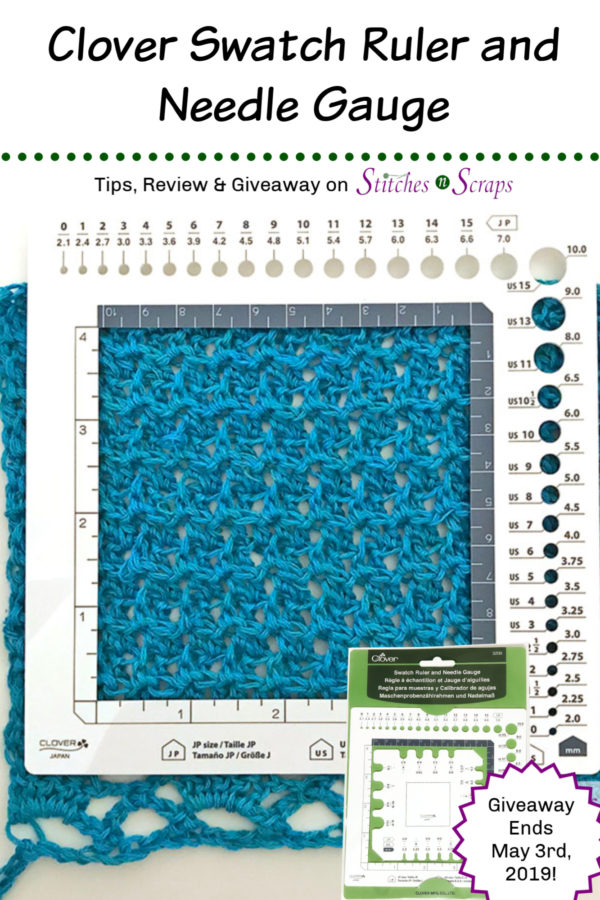
I know a lot of knitters and crocheters cringe at the words “gauge” and “swatching”. But working up a gauge swatch before starting a project can be important, and it doesn’t have to be difficult! Clover recently gave me a free swatch ruler and needle gauge tool to try out and review for you. It seemed like the perfect opportunity to share some information with you about gauge and swatching.

 All about gauge - featuring the Clover Swatch Ruler - Stitches n Scraps

This post contains affiliate advertisements (click for more info). If you click one of these advertisements and then make a purchase, I may be compensated. You get the same great prices, and you will be helping to support this site!

Keep reading for more information on why and how to swatch, and how to adjust if needed. Plus, enter the giveaway below for a chance to win a Clover swatch ruler and needle gauge!

What is a gauge swatch?

A gauge swatch is a small sample of knitting or crochet, from which you can measure the size of your stitches. It can also be a chance to practice the stitches used in the pattern, and can give you an idea of how the finished piece will look and feel.

Why does it matter?

You don’t always have to match the gauge listed in your pattern or on the yarn label, but it’s important to understand how differences in gauge can affect your finished piece.

  • Size: Matching the gauge used in a pattern will result in the same size finished piece as the pattern. If you’re making a hat, and you want to make sure it fits you and not an elephant, this is important!
  • Texture: If your gauge is tighter, your fabric will be stiffer and firmer. A looser gauge results in a more open and drapey fabric. This difference can be important if you want your garments to drape nicely, or your stuffed dolls to keep their stuffing in.
  • Yarn usage: You may not care if your blanket square turns out to be 13 inches instead of 12, but if it does it will use more yarn. Over an entire blanket, that can mean several extra skeins. Accurate gauge measurements can help to predict yarn usage.

Practice makes perfect

Learning a new stitch pattern can take a little practice, and your first few tries may have some mistakes. Working up a gauge swatch gives you an opportunity to practice the pattern before you start the project. Just be sure you are measuring your gauge over a section of your swatch that is correct and even.

When working without a pattern, a gauge swatch can give you a chance to try out different stitches and ideas. I wrote about exactly that in this post about swatching for a new design.

Swatching - How a Pattern Happens - StitchesNScraps.com

Making a swatch

If you are working from a pattern, it should have a recommended gauge. 4 inches is a common size for measurements, which is why the Clover Gauge Swatch Ruler has a convenient 4 inch window.

Your pattern may say something like “12 sc x 15 rows = 4 inches”. This means that if you measure across a 4 inch square of single crochet stitches, you should find 12 stitches and 15 rows. This does not mean you should work up a swatch that is exactly 12 sc by 15 rows.

Make it bigger

The stitches along the edges of your work are often slightly different than those in the middle. Cast on and bind off edges, selvedges, and foundation chains can all affect your measurements.

To avoid measuring over these areas, your swatch should be larger than the area you need to measure. If you’re measuring a 4 inch square, make a swatch that’s at least 6 inches square. The exception to this rule is if the instructions include a specific gauge swatch pattern.

Swatching in pattern:

Gauge measurements should ideally be done in the stitch used in the pattern. In the above example, the measurements were given as a number of single crochet stitches, but it could easily have been a different stitch or stitch pattern. It also doesn’t have to be a 4 inch square.

The gauge instructions may say something like “5 shells and 12 rows = 3 inches in pattern”. In this case, you would still need to work up a larger square, but follow the stitch pattern used in the project to do so.

Sometimes, the pattern will specify separate instructions for a gauge swatch, or may use part of the pattern itself as a swatch. For example, in my Modular Mitered Pillow pattern, each small square should be about 3.5 inches. In this case, you do not need to make a larger swatch as the measurements take into account the edge stitches.

Modular Mitered Pillow - a free crochet pattern on Stitches n Scraps

Blocking your swatch

It’s usually a good idea to wash and block your swatch before measuring it, because different fibers react differently to blocking. Unblocked squares that are identical except that one is made with bamboo yarn and the other with acrylic yarn will become very different from each other after blocking.

Unless otherwise stated, the gauges listed in most patterns are based on a blocked swatch or on the final project after blocking. If you match the gauge with an unblocked swatch, you may be in for a surprise once you wash your finished piece.

Block your swatch the same way you would block the finished project. For garments, it’s a good idea to hang your swatch with a little weight on it (binder clips or chip clips work well). This can help to simulate any sagging from the weight of the garment.

Here are three swatches of the same yarn, one unblocked, one blocked flat, and one blocked with some weight. As you can see, the finished measurements are very different.

Blocked and unblocked swatches - All about gauge - Stitches n Scraps

Not blocked, the 4 inch area is 20 sts x 8.5 rows. Dried flat, it’s 19 sts x 8 rows. When hung with a little weight, it becomes 18 sts x 7.25 rows. These may not seem like big differences over 4 inches, but it becomes a bigger difference in a larger piece. In this example, if I went by the unblocked gauge and made a sweater with a 36 inch bust, after washing it, that bust would become 40 inches!

Measuring gauge

Here’s where the Clover Swatch Ruler comes in very handy. The window isolates a square area, making it easier to count your stitches.

Measuring gauge - All about gauge - featuring the Clover Swatch Ruler - Stitches n Scraps

There are ruler markings on all sides of the window, in case you need to measure a smaller area. 2 sides have markings in inches, and the other 2 in centimeters.

Adjusting to meet the pattern gauge

If you find that you have too few stitches in your measured area, that means your gauge is too loose and your stitches are too big. To fix this, try dropping down to a smaller needle or hook size. Alternately, if your gauge is too tight and you have too many stitches, try going up a needle or hook size. It may take a little trial and error to find the right size.

Adjusting the pattern to meet your gauge

If the pattern is simple enough, and you are happy with the texture of your swatch, you may be able to adjust the pattern to meet your gauge. This requires a bit of math.

First, figure out how many stitches and rows you have per inch. Then look in the pattern to see how many inches you need. Multiply the two numbers together and you will see how many stitches you will need to make.

For example, if a scarf pattern is 8 inches wide, and my gauge is 12 stitches in 4 inches, I will need to make 24 stitches to get the same 8 inch width. If you make these kinds of adjustments, remember to take into account any stitch multiples needed for pattern stitches, and remember to adjust the number of rows as well.

The Clover Swatch Ruler and Needle Gauge

This multi-functional tool is great for measuring swatches, but it also has needle and hook gauges! It comes in 2 pieces that nest together. Both are sturdy, but thin and flat so they store easily.

The big piece, with the swatch ruler, also has the needle gauge. This handy tool helps you identify the size of any needle, even if the markings have rubbed off. This is particularly useful for double pointed needles that have no markings. You simply find the smallest hole that your needle fits into, and that’s the size.

Needle gauge -  All about gauge - featuring the Clover Swatch Ruler - Stitches n Scraps

The smaller piece has a similar gauge, but for crochet hooks. On this one, instead of holes to put needles through, there are grooves to slide hooks into. Both the hook and needle gauges have US, metric, and Japanese sizes listed.

Hook gauge -  All about gauge - featuring the Clover Swatch Ruler - Stitches n Scraps

Enter the giveaway!

Clover is generously providing a swatch ruler and needle gauge tool to one lucky winner!

Clover swatch ruler and needle gauge  - All about gauge - Stitches n Scraps

To be eligible, you must be 18 years of age or older, with a valid, US shipping address. The winner will be contacted by email, and must reply to that email and provide their selections and shipping address within 1 week in order to receive the prizes. If the winner does not reply within 1 week, a new winner will be selected. The giveaway ends on May 3rd, 2019 (at 11:59pm, central time). Hurry and enter below!

This giveaway is powered by Rafflecopter, and they may ask for some log-in information if you are not already logged in. See the Rafflecopter privacy policy for more information. 

a Rafflecopter giveaway