
Knitting Tutorials

Ready for a new knit stitch, technique, or pattern? You’re in the right place! Browse all the knitting tutorials, or select a category from the dropdown menu. What will you learn today?


How to knit garter stitch wrap and turn short rows
Learn how to knit wrap and turn short rows in garter stitch! Short rows are a great tool to add ...More
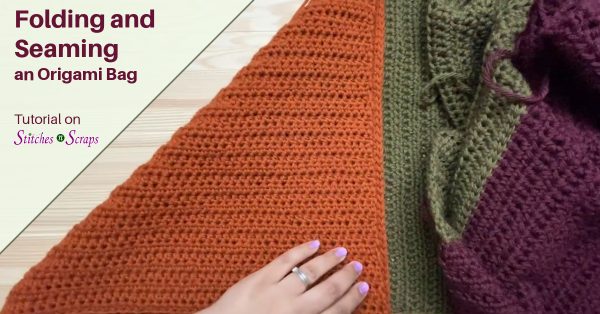
Folding and Seaming an Origami Bag
With some simple folding and seaming, you can turn a plain rectangle into an origami bag! This tutorial is designed ...More
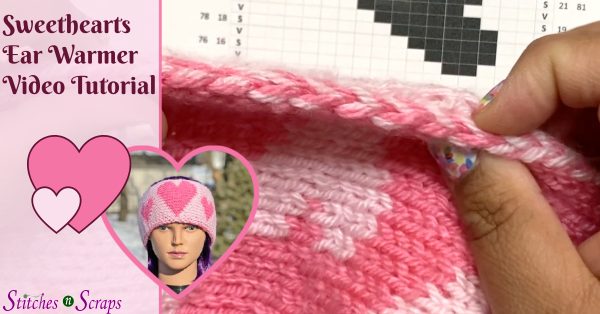
Sweethearts Ear Warmer Knitting Tutorial
The Sweethearts Ear Warmer will keep your ears warm and cozy, with a reversible, double knit, heart design. Learn how ...More
Knit front and Back Increase (kfb) tutorial on Stitches n Scraps
The knit front and back (kfb) increase is one of the easiest to learn. It creates a visible bump, which ...More
How to Knit the 3 Needle Bind Off - Tutorial on Stitches n Scraps
Join 2 layers of knit fabric while binding off at the same time, and all without any sewing! The 3-needle ...More
How to read mosaic knitting charts
Mosaic knitting is a colorwork technique using only 1 color at a time. The charts for mosaic knitting are just ...More
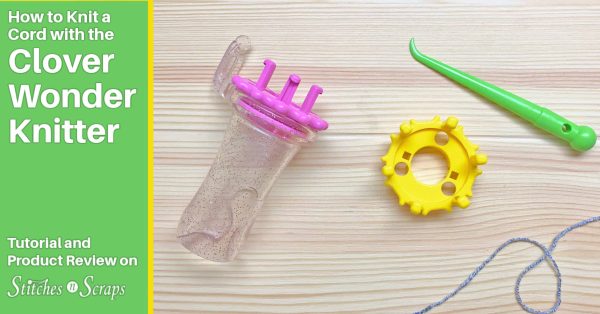
How to Knit a Cord with the Clover Wonder Knitter tutorial and product review on Stitches n Scraps
Clover sent me their new Wonder Knitter to try out and review. Learn how to knit a cord with it ...More
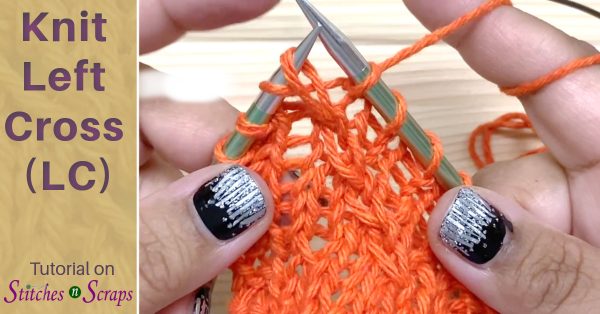
Knit Left Cross (LC) Tutorial on Stitches n Scraps
The left cross (lc) is a versatile stitch that can be used for delicate cables, swirls, and other fun textures. ...More
How to Wind Yarn from a Hank, with a ball winder and tabletop swift.
Some yarns, particularly hand dyed or artisan yarns, come in hank format. These yarns need to be wound into a ...More
Make 1 right (m1r) and Make 1 left (m1l) increases tutorial
Learn how to work the make 1 right (m1r) and make 1 left (m1l) increases. These right and left leaning ...More
How to knit garter stitch wrap and turn short rows

Wrap and Turn Short Rows in Garter Stitch

Learn how to knit wrap and turn short rows in garter stitch! Short rows are a great tool to add smooth curves and shaping to your knitting. The “wrap & turn” method is one of the most commonly used short row techniques, and is particularly easy in garter stitch.

How to knit garter stitch wrap and turn short rows

This content is protected by copyright. See this Terms of Use / Copyright page for more information.

This post contains sponsored content and/or affiliate links. If you click an affiliate link and make a purchase, I may get a commission.

What are Short Rows?

Short rows are simply rows where you don’t knit all the stitches, so the row is literally “short” compared to a full row. You leave a few stitches unworked, then turn your work and go back the other way. By working only some of the stitches, you can create extra fabric in some areas compared to others.

This is a great way to add curves and shaping to your work and is commonly used for things like bust darts and sock heels. I used wrap and turn, garter stitch short rows to shape the opening of the Wild Winter Balaclava pattern.

Wild Winter Balaclava - knit pattern on Stitches n Scraps

Wrap and Turn Short Rows

When you leave stitches unworked and then turn, it creates a gap between the stitches you did work and the stitches you didn’t. There are many methods to close this gap, and wrap & turn is one of the most common ones.

The general idea is to wrap the working yarn around the first unworked stitch before you turn to start the next row. This wrap hugs the unworked stitch closer to the stitch before it, closing that gap. When working in garter stitch, there are 2 ways to wrap your stitch.

Wrap From the Back

In garter stitch, you knit every stitch, so your working yarn should already be at the back of your work. When you reach the end of the short row, slip the first unworked stitch purlwise, then bring the working yarn to the front.

Slip with yarn in back, then move yarn forward

Now slip the same stitch back to the other needle without twisting it. You should now see the working yarn wrapped around that stitch.

Slip back onto left needle, yarn is in front.

Turn your work and you’re ready to start the next row!

Turn after wrapping from behind, the yarn is in the back

Wrapping From the Front

If you prefer, you can wrap the stitch in the opposite direction. First bring your working yarn to the front, then slip the stitch.

Slip with yarn in front, then move yarn to the back.

Bring your working yarn to the back, and slip the stitch back onto the other needle.

Slip back to left needle, yarn is in back.

When you turn your work, the working yarn will be in front and you will need to move it to the back again.

Turn after wrapping from the front, the yarn is in the front.

Working Into a Wrapped Stitch

At some point, you will need to work back into those stitches that you wrapped. This is where garter stitch makes things really easy.

If you were working in stockinette, you would need to pick up the wrap and knit it along with the stitch to camouflage it. Otherwise, it would leave a bump.

wrap from wrapped stitch looks like a purl bump

In garter stitch though, that bump blends in perfectly with the purl bumps around it. So there’s no need to pick up the wrap or do anything special. Just ignore the wrap and work into the stitch like normal!

A Closer Look

Ready for more? Compare both wrapping options in the video tutorial. Plus, see how garter stitch wrap and turn short rows look on a chart, and how the different shapes come together over multiple rows.

Wrap and Turn Short Rows in Garter Stitch – Video Tutorial

Watch this video on YouTube

Share this tutorial on Pinterest! Here’s an image perfect for pinning:

How to knit garter stitch wrap and turn short rows

Rate this Garter Stitch Wrap and Turn Short Rows Tutorial!


Do you want the best of Stitches n Scraps delivered right to your inbox? Don’t miss a stitch – Subscribe now!

Folding and Seaming an Origami Bag

Folding and Seaming an Origami Bag

With some simple folding and seaming, you can turn a plain rectangle into an origami bag! This tutorial is designed to go along with my Felted Origami Bag pattern, but the same techniques can be used with any knit or crochet rectangle.

Folding and Seaming an Origami Bag

This content is protected by copyright. See this Terms of Use / Copyright page for more information.

This post contains sponsored content and/or affiliate links. If you click an affiliate link and make a purchase, I may get a commission.

Bag Along CAL

The sample shown in this video is the Felted Origami Bag. This is the first pattern in the 2022 Bag Along CAL. See the full schedule and learn how to join in the fun, in the main Bag Along CAL post.

Felted Origami Bag - free crochet pattern on Stitches n Scraps

WeCrochet provided the Wool of the Andes Bulky yarn that I used for the origami bag design. In the video you will see the colors Masala, Thyme, and Currant.

Wool of the Andes yarn for bag 1

Starting Rectangle

In order for this folding and seaming technique to work out, it’s very important that the rectangle be 3 times as long as it is wide. If your rectangle is not the correct 1:3 ratio, the sides won’t meet up like they should when you fold it.

Bag 1 in progress

For the bag in the video, I divided the rectangle into 3 squares of different colors. This makes it super easy to see where the folds should start and end. If your rectangle does not have these color changes, you may want to divide the long edge into 3 sections with stitch markers.

Folding and seaming steps

Following this diagram, fold two opposite corners in to create a parallelogram shape. The top left corner folds down, and the bottom right corner folds up. The short side edges should each cover 1/3 of the longer side edges.

folding an origami bag - first 2 folds

Then fold that parallelogram in half across the middle.

folding an origami bag - third fold

Finally, seam the edges indicated on the diagram. You will have one seam on each side of the bag.

Seaming an origami bag

Clipped corners and the handle

The sample bag in the video has unique, “clipped” corners. I attached these to a small crochet tube to create the look I wanted for the handle.

Handle fully attached

You can connect your corners with any type of handle you like, and they don’t need to be clipped to make the bag work. In fact, you can skip the handle altogether and just sew the corners together with nothing in between!

Folding and seaming video tutorial

Watch this video on YouTube

Share this tutorial on Pinterest! Here’s an image perfect for pinning:

Folding and Seaming an Origami Bag

Rate this folding and seaming video!


Do you want the best of Stitches n Scraps delivered right to your inbox? Don’t miss a stitch – Subscribe now!

Sweethearts Ear Warmer Knitting Tutorial

Sweethearts Ear Warmer Knitting Tutorial

The Sweethearts Ear Warmer will keep your ears warm and cozy, with a reversible, double knit, heart design. Learn how to make it in this step-by-step knitting tutorial, including some tips for adjusting the size. Get the free written pattern here, and follow along!

Sweethearts Ear Warmer Knitting Tutorial

This content is protected by copyright. See this Terms of Use / Copyright page for more information.

This post contains sponsored content and/or affiliate links. If you click an affiliate link and make a purchase, I may get a commission.

Sweethearts Ear Warmer knitting pattern

This ear warmer knitting tutorial goes along with the written pattern. You will not be able to make the whole ear warmer with just the tutorial alone. The chart, written instructions for each row, notes, and other pattern details are all in the written version.

Sweethearts Double Knit Earwarmer

For this pattern, I went into my stash for two lovely pink shades of Paintbox Simply Aran yarn. The darker color is Bubblegum Pink, and the lighter is Candyfloss Pink.

Paintbox Simply Aran yarns

Sweethearts Ear Warmer video tutorial

Watch this video on YouTube

Want to jump to a specific section? Click on the timestamp below to be taken to that spot in the video! These links open on YouTube, in a new window or tab.

  • 00:16 Beginning garter stitch section
  • 05:11 Set up for double knitting
  • 08:13 Understanding the chart
  • 10:34 Double knitting pattern section
  • 28:05 Decreasing back to one color
  • 32:22 Ending garter stitch section
  • 35:16 Seaming and finishing

Share this double knitting video tutorial on Pinterest! Here’s an image perfect for pinning:

Sweethearts Ear Warmer Knitting Tutorial

Rate this Ear Warmer knitting tutorial video!


Do you want the best of Stitches n Scraps delivered right to your inbox? Don’t miss a stitch – Subscribe now!

Knit front and Back Increase (kfb) tutorial on Stitches n Scraps

Kfb Increase – How to Knit Front and back

The knit front and back (kfb) increase is one of the easiest to learn. It creates a visible bump, which can be very useful in the right situations. Learn how to work this increase, and some of the places you may want to use it.

Knit front and Back Increase (kfb) tutorial on Stitches n Scraps

This post contains sponsored content and/or affiliate links. If you click an affiliate link and make a purchase, I may get a commission.

This content is protected by copyright. See this Terms of Use / Copyright page for more information.

When NOT to use the kfb increase

The knit front and back increase creates 2 stitches that look like a knit followed by a purl. If you’re working in stockinette and want a smooth, less visible increase, the kfb is probably not the right choice. Try the make 1 right and make 1 left (m1r and m1l) increases instead.

Make 1 right (m1r) and Make 1 left (m1l) increases tutorial

When to use the kfb increase

As a design element

Sometimes, the kfb bumps can be a pretty design element. For example, creating a spiral of increases on the crown of a hat. But I find this increase most useful when working I’m not working in stockinette.

Seed stitch and ribbing

Seed stitch and 1/1 ribbing both involve pairs of knit and purl stitches, so the knit front and back increase can be used to match this pattern perfectly. If you make two increases side by side, a knit and a purl stitch pair becomes two pairs of knit and purl stitches, with no interruption in the pattern.

You can see this in the flap of my Date Night Clutch pattern, which is worked in seed stitch.

Date Night Clutch - Free knitting pattern on Stitches n Scraps

Other knit/purl patterns

In fact in any pattern that contains both knits and purls, you should be able to strategically place your kfb increases at a point where they will seamlessly blend in to the pattern.

Working the kfb increase

Each stitch has a front leg (where you normally place your knit stitches), and a back leg.

front and back legs of a knit stitch

Knit through the front leg as normal, but don’t take the stitch off your other needle.

Knit through front leg

Now insert your needle into the same stitch again, but this time through the back leg, and knit that as well. Then go ahead and take the stitch of your other needle.

Knit through back leg

You have now created 2 stitches out of one. Notice the first new stitch looks like a knit and the 2nd new stitch looks like a purl.

Placement of kfb increases

You often will want to mirror your increases on two sides of your work or around a central stitch. To make it visually symettrical, it’s not the increase itself you need to mirror, but the location of the purl bump.

On my triangle swatch, I made the kfb increase in my 2nd stitch. The kfb looks like a knit stitch followed by a purl stitch. So visually from the edge, I have 2 knit stitches followed by a purl.

Finished KFB stitch

If I was to do an increase in the 2nd to last stitch, the knit would come first, then the purl bump. So visually, there would only be one knit stitch after the purl bump.

By doing the increase in the 3rd to last stitch instead, I get the look of a purl bump followed by 2 knit stitches. Note the location of my increase stitches, highlighted in red.

Placement of kfb increases

Knit Front and Back – Video Tutorial

Watch This Video on YouTube

Knit front and Back Increase (kfb) tutorial on Stitches n Scraps

Rate this Knit Front and Back (kfb) IncreaseTutorial!


Do you want the best of Stitches n Scraps delivered right to your inbox? Don’t miss a stitch – Subscribe now!

How to Knit the 3 Needle Bind Off - Tutorial on Stitches n Scraps

3-Needle Bind Off Knitting Tutorial

Join 2 layers of knit fabric while binding off at the same time, and all without any sewing! The 3-needle bind off combines 2 sets of live stitches together, leaving a decorative ridge.

How to Knit the 3 Needle Bind Off - Tutorial on Stitches n Scraps

This post contains sponsored content and/or affiliate links. If you click an affiliate link and make a purchase, I may get a commission.

This content is protected by copyright. See this Terms of Use / Copyright page for more information.

When Can I Use a 3-Needle Bind Off?

You can use this bind off any time you want to join two layers of live stitches together. It’s a very strong seam, and not overly bulky, but it does create a raised ridge.

Finished seam at bottom of bag

This means it’s great for things like bags, cowls, and shoulder seams on sweaters. It’s not a great choice for things like sock toes, where the ridge might be uncomfortable. For those situations, I prefer grafting / Kitchener stitch.

The 3rd Needle

For a 3-needle bind off, you need…well…3 needles. The first two are usually going to be whatever you’ve been knitting with. What about the third? It only ever needs to hold 2 stitches at at time, so any needle will do. Double pointed, straight or circular are all fine. You can even use just the tip from an interchangeable needle set.

3 needles for 3-needle bind off

This needle should be the same size as the needles you’ve been using for your knitting. If you don’t have a third needle in that size, or if you have a tendency to bind off too tightly, you can use a needle that is one size larger.

Working the 3-Needle Bind Off

Setting Up

Make sure you have an even number of stitches. You may need to do a decrease in the previous row to achieve this. Now arrange your stitches on your first 2 needles so that half the stitches are on each needle. We will be working these stitches off in pairs, one from each needle.

split stitches evenly on 2 needles

If you are using circular needles, you can just line up the first few stitches on each needle. You can separate the rest out later, after you’ve bound off enough to give you some space.

Working from circulars

Your third needle is your working needle. Hold this in your dominant hand. Your other two needles, with all the stitches on them, are your non-working needles. Hold these in your non-dominant hand.

Binding Off

Insert your working needle, as if to knit, through the first stitch on each needle. Knit these 2 stitches together. Repeat this for the next pair of stitches.

Knit through a pair of stitches

You now have 2 stitches on your working needle. Using the tip of one of your non-working needles, pass the back stitch over the front one. This step is just like a traditional / simple bind off. You have now joined and bound off 1 pair of stitches.

Pass first stitch over 2nd

Knit the next pair of stitches together, so that you again have 2 stitches on your working needle. Once again, pass the back stitch over the front one, and you have bound off another pair.

Continue this until no stitches remain on the non-working needles, and you have only 1 stitch on the working needle. Cut your yarn, leaving a tail to weave in later, and pull up on the working stitch until the tail comes through.

Fasten off final stitch

Cleaning Up

You may notice the last pair of stitches in your 3-Needle bind off are looser than the others. That happens because this kind of bind off tends to push any excess yarn forward to the next pair of stitches as you go. With nowhere to go when you’re done, all that excess yarn ends up in the last two stitches.

Loose tension at the end

Stretch out your work to ease some of this tension back into the rest of the seam. Blocking will also help. If all else fails, you can hide this extra bit of yarn when you weave in your end. Push it to the wrong side of your work, and sew over it to hold it in place.

Try It Yourself!

Use this bind off to finish the Date Night Clutch. The pattern starts at the top of the flap, continuing down into the bag portion. In the end, a 3-needle bind off creates a strong bottom seam.

Date Night Clutch - Free knitting pattern on Stitches n Scraps

3-Needle Bind Off – Video Tutorial

Watch This Video on YouTube

How to Knit the 3 Needle Bind Off - Tutorial on Stitches n Scraps

Rate this 3-Needle Bind Off Tutorial!


Do you want the best of Stitches n Scraps delivered right to your inbox? Don’t miss a stitch – Subscribe now!

How to read mosaic knitting charts

How to Read Mosaic Knitting Charts

Mosaic knitting is a colorwork technique using only 1 color at a time. The charts for mosaic knitting are just a little bit different from other colorwork charts. Learn how to read mosaic knitting charts in this video tutorial!

How to read mosaic knitting charts

This post contains sponsored content and/or affiliate links. If you click an affiliate link and make a purchase, I may get a commission.

This content is protected by copyright. See this Terms of Use / Copyright page for more information.

What is Mosaic Knitting?

Mosaic knitting is sometimes also called slip stitch knitting. Using the magic of slipped stitches, you can knit each row using only one color at a time. You just slip the stitches that should not be in the color you are currently using.

stairstep mosaic texture

You can do mosaic knitting with more than 2 colors, but for this tutorial, we’ll use a 2-color pattern.

Colorwork Charts

For most colorwork techniques, charted patterns are more compact and simpler to read than written instructions. Different colored squares on the chart show you which color you should use for that stitch.

How are Mosaic Knitting Charts Different?

Pairs of Rows

We are only working with 1 color at a time, and carrying the unused color up the side of our work. For a flat piece, we need to knit 2 rows (a right side and a wrong side row) in each color, in order to get back to the starting edge and pick up the next color.

If you’re knitting in stockinette, the wrong side stitches will be purls, and if you’re knitting in garter, the wrong side stitches will be knits. As far as colors go though, the right side and wrong side row of any particular pair will be exactly the same. On many mosaic charts, including the ones we are looking at, each line represents 2 rows instead of 1.

Row Color

Each pair of rows is knit in 1 color, the other color is not used for that row. For a clean edge, the first stitch of each row is usually worked in the color of that row. That means you know which color to use by seeing which color is the first stitch on that row of the chart. For 2-color knitting, they will usually alternate (though they don’t strictly have to).

Chart showing right and wrong side rows

Slipped Stitches

As you go across each row on the chart, you will see stitches in a different color than the one you are using. If the pattern is written correctly, each should be the same color as the stitch below it. To carry that color up into your current row, you slip that stitch. Sometimes the charts will indicate the slip, and sometimes they will just assume you know to slip it.

How to Read Mosaic Knitting Charts

  • Determine if the chart shows 1 row per line or 2 rows per line. You can tell this from the line numbers.
  • Determine if you should knit the wrong side rows or purl them. This should be specified in the pattern.
  • Determine the color of the pair of rows. This will usually be the same as the color of the first stitch. Pick up that color and start to knit.
  • For each stitch, if the color on the chart matches the color you are using, knit it. If it does not match, slip it.
  • On the wrong side row, knit or purl each of the knit stitches, and slip each of the slipped stitches.
  • Pick up the other color, and repeat the process for the next pair of rows.

Mosaic Sampler Blanket Mystery Knit Along

Knit along as we make a blanket in 6 sections! Each section will be a different mosaic knitting pattern in two colors. Join in the fun and enter the giveaway too!

Mosaic Sampler Blanket MKAL on Stitches n Scraps

How to Read Mosaic Knitting Charts – Video Tutorial

Watch This Video on YouTube

How to read mosaic knitting charts

Do you want the best of Stitches n Scraps delivered right to your inbox? Don’t miss a stitch – Subscribe now!

How to Knit a Cord with the Clover Wonder Knitter tutorial and product review on Stitches n Scraps

How to Knit a Cord with the Clover Wonder Knitter

Clover sent me their new Wonder Knitter to try out and review. Learn how to knit a cord with it in this tutorial. This upgraded take on a spool knitter is so fast and easy, it’s addictive. Create all sorts of cords and other fun projects in no time. It’s great for kids too!

How to Knit a Cord with the Clover Wonder Knitter tutorial and product review on Stitches n Scraps

What is the Wonder Knitter?

The Clover Wonder Knitter is a simple knitting loom that creates cords. This type of loom is often called a French knitter, or a spool knitter. But the Clover Wonder Knitter takes the traditional French knitting tool to a whole new level!

Get the Clover Wonder Knitter on Amazon

With a normal French knitter, you have to wind the yarn around the pins manually. This means for each round, you have to put down or shift your grip on your pick so you can pick up the working yarn. Then you wind the yarn around the pins, and then pick up your pick again to knit. Constantly changing your grip makes this a slow process.

The Wonder Knitter has two game-changing features: rotating heads, and a yarn guide. Combined, these make the winding process more automatic, so you never have to change your grip!

Rotating Heads

With a rotating head, you don’t have to move the knitter or the working yarn to cover each pin. Simply twist the head, and make the pins move! The scalloped shape of the rotating heads make it easy to turn with your thumb, while maintaining your grip on the body of the knitting tool.

The Wonder Knitter comes with 2, rotating heads. The heads snap on and off, so you can change them out easily. The purple one has 3 pins, for a 3-stitch cord. The yellow one has 6 pins, for a larger, 6-stitch cord. For this tutorial, I chose the 3-stitch cord.

Two rotating heads

Yarn Guide

The other important innovation is the yarn guide. This holds your working yarn in place, so that as the top rotates, the yarn winds automatically around the pins. With these two features combined, you never need to pick up your yarn or change your grip while knitting!

String yarn through guide

For Righties and Lefties

You can hold the Clover Wonder Knitter with either your right or left hand. It has a cut out on one side so it’s not totally symmetrical, but it feels comfortable in either hand.

holding the wonder knitter

I am right-handed, so I hold the tool in my left hand and the pick in my right. To use the Wonder Knitter left-handed, just reverse all my left/right instructions. If I say right, go left. If I say clockwise, go counterclockwise.

Choose a Yarn

You can knit a cord using a variety of different yarns! As long as the yarn is thin enough for the pins to hold it without slipping, it should work. The thicker your yarn is, the more dense your cord will be. Thinner yarns will produce a lighter and stretchier cord. Here are two cords I made, one with worsted weight yarn and one with fingering weight yarn.

2 cords made on the Wonder Knitter

Get creative and try other materials too, like thread, ribbons, or even leather. If it fits and it’s flexible, you can knit a cord with it!

Cast On

To make tensioning easier, I like to add a little weight to my tail. Make a slip knot, then attach a stitch marker to the loop and tighten it. If you don’t have a stitch marker handy, you can use a paperclip, safety pin, or just about anything with a little weight that you can attach to the loop.

Add weight to tail

Now feed the weighted tail down through the center of the Wonder Knitter.

Feed tail down middle

Bring the working yarn up to the right of one of the pins. Wrap it around the pin clockwise.

Cast on first peg

Now rotate the top to the left, so that the next pin to the right is in front. Bring the yarn up to the right of this pin and wrap it clockwise as well. Repeat this for all remaining pins – in this case there is only one more.

All pegs cast on

When all pins have been wrapped, lay the working yarn into the grove on the yarn guide. For better tension control, hold the working yarn against the bottom of the wonder knitter.

Tension yarn

Knit a Cord

Continue rotating the top until the working yarn lays across the first pin again.

Wrapping first stitch

Use your hook to bring the loop on that pin up and over the working yarn, and off the pin. You have just made one knit stitch.

Knitting a stitch

Repeat this process with each pin in order, around and around, until the cord reaches the length you want.

Cord coming out of bottom

Bind Off

Cut the working yarn, leaving a tail long enough to work one more round of stitches. Rotate the top to work the next stitch. This time, instead of pulling the loop over and off, pull the tail down through the loop and all the way out.

Binding off first peg

Place the working yarn back in the yarn guide, and repeat this process for the remaining stitches. Once the working yarn has been woven through all the stitches in this way, you can remove your knit cord from the Wonder Knitter. Pull all the stitches off the pins, and pull on the ends to tighten.

Finished cord

Remove the stitch marker, and pull out your slip knot.

Uses for French Knit Cords

The cord I used in this tutorial is made with King Cole Summer yarn. I used this yarn for my Stepping Out Summer Scarf pattern.

Stepping Out Summer Scarf

I designed the Stepping Out Sun Hat to coordinate with the scarf, and wanted a way to tie the two together. So I knit a cord with the same yarn and used it as a decorative tie on the hat!

Stepping Out Sun Hat - Free crochet pattern on Stitches n Scraps

Try wearing French knit cords on their own as headbands. Use them as ribbons to tie up gifts. Add beads to make bracelets and necklaces. Or, make strong and dense cords for bag handles.

French Knitted Knotted Coasters from My Poppet Makes
Image courtesy of My Poppet Makes – used with permission.

There are lots of projects out there using French knit cords, and crafty creators are posting new ones every day! Coil your cord up into a cute flower, or weave several together to make a fun coaster. Search French Knitting for more ideas. The possibilities are endless!

Clover Wonder Knitter Video Tutorial

Watch This Video on YouTube

How to Knit a Cord with the Clover Wonder Knitter tutorial and product review on Stitches n Scraps

Rate this Clover Wonder Knitter tutorial!


Do you want the best of Stitches n Scraps delivered right to your inbox? Don’t miss a stitch – Subscribe now!

Knit Left Cross (LC) Tutorial on Stitches n Scraps

Knit Left Cross (LC) Stitch – 3 ways

The knit left cross (lc) is a versatile stitch that can be used for delicate cables, swirls, and other fun textures. Learn 3 different ways to knit this stitch, all of which give you the same result. Choose whichever is more comfortable for you!

Knit Left Cross (LC) Tutorial on Stitches n Scraps

This content is protected by copyright. See this Terms of Use / Copyright page for more information.

This post contains sponsored content and/or affiliate links. If you click an affiliate link and make a purchase, I may get a commission.


1/1 Left Crossing Cable

A left cross could more specifically be called a 1/1 LC or 1 over 1 left crossing cable. This means that we cross one stitch over another stitch, so that the cross appears to lean to the left. The stitch on the right pass in front of the stitch on the left.

The shorter and more common abbreviation is simply LC, and the chart symbol looks like this:

Left cross chart symbol

For more details about cables in general, and their abbreviations, check out my tutorial on Decoding Cables (with Licorice!).

Decoding Cables - with licorice

The key to making the stitches cross is knitting them out of order. In this case we’re working with 2 stitches, so you knit the 2nd stitch first, then knit the first stitch.

Knit left cross with cable needle

Just like larger cables, you can make the LC stitch with a cable needle. The cable needle holds the first stitch out of the way, while you knit the 2nd one.

First identify the 2 stitches you want to cross. Slip the first stitch onto your cable needle and drop it in front.

Place stitch on cable needle

Knit the 2nd stitch

Knit next stitch

Then knit the first stitch from the cable needle.

Knit from cable needle

Knit LC by rearranging stitches

Instead of moving one stitch out of the way, you can rearrange the stitches on your needle before knitting them. First slip both stitches together, purlwise, onto your working needle.

Slip 2 stitches

Now insert your other needle back into the stitches, starting from the back, so that the 2nd stitch goes onto the needle first.

Insert needle from behind

With the stitches already twisted, you can now simply knit them as normal.

Stitches crossed before knitting them

Knit LC stitches out of order

My favorite way of knitting an LC takes a little practice to get used to. It’s worth the effort, because when you can do it consistently it’s the fastest way to knit the stitch. Rather than moving the stitches around, you simply knit the 2nd stitch first.

With your yarn at the back, ring your needle up from the back, between the first and 2nd stitches.

up between stitches

Now insert it down into the 2nd stitch as though to knit.

Down through 2nd stitch to knit

Knit the stitch, though you won’t be able to remove it from your other needle yet.

Knit 2nd stitch

Finally, knit the first stitch, and then drop both stitches from your other needle.

Knit Left Cross (LC) Video Tutorial

Watch This Video on YouTube

Knit Left Cross (LC) Tutorial on Stitches n Scraps

Rate this Left Cross tutorial!


Do you want the best of Stitches n Scraps delivered right to your inbox? Don’t miss a stitch – Subscribe now!

How to Wind Yarn from a Hank, with a ball winder and tabletop swift.

How to Wind Yarn from a Hank

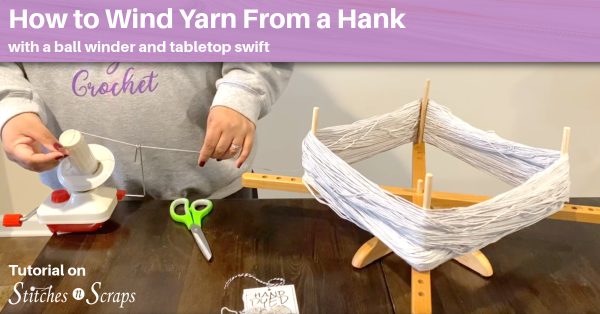
Some yarns, particularly hand dyed or artisan yarns, come in hank format. These yarns need to be wound into a cake or ball before they can be used. Learn how to use a ball winder and a tabletop swift to wind yarn from a hank into a cake!

How to Wind Yarn from a Hank, with a ball winder and tabletop swift.

This content is protected by copyright. See this Terms of Use / Copyright page for more information.

This post contains sponsored content and/or affiliate links. If you click an affiliate link and make a purchase, I may get a commission.

What is a Hank?

A hank is a twisted skein of yarn. When you open it out, you get a big loop of yarn. You often see yarn from indie dyers and spinners in this format. It’s easy to wind yarn this way, and it’s great for dyeing since all the yarn is loose and exposed. Check out my article about yarn formats to learn more about some of the other formats yarn comes in.

Silver Linings Collection from Global Backyard Industries

The yarn pictured here is the Silver Lining Collection of hand dyed, extrafine merino blend yarn from Global Backyard Industries. Global Backyard sent me this yarn free for a new design that will be coming out soon!

Why Wind Yarn from a Hank?

Hanks are loose and floppy. If you try to knit or crochet directly from a hank, you’ll likely end up with a big, tangled mess! When you wind yarn from a hank into a ball or a cake, it gives it more structure so that it won’t tangle as you use it.

What is a Swift?

You’ve likely seen images and memes of hapless husbands holding their hands upright, with a loop of yarn draped around them, while their wife winds the yarn into a ball. This really does happen, and not just with husbands. I’ve actually done this for several of my friends when there’s no swift to be found.

Hands holding a hank of yarn open

A swift takes the place of those hands. You could also substitute a straight chair back, or even your knees if you’re a bit flexible. The difference is, hands, chairs, and knees don’t rotate, while a swift does. The rotation makes it easier to unwind the yarn and to maintain a more even tension.

Types of Swifts

Swifts come in two main types: umbrella and tabletop. Umbrella swifts stand upright and usually clamp to the edge of your table. They open up like an umbrella, expanding to hold various size hanks.

I saw it on Knit Picks

Umbrella Swift

Tabletop swifts are horizontal and sit on the table. They usually come apart for storage and use pegs to hold various size hanks.

tabletop swift

In most cases, I prefer a tabletop swift. Umbrella swifts usually hold the yarn higher up than the winder (if attached to the same surface). While they do require more work space, tabletop swifts hold the yarn at the same level as the winder. I find this makes the resulting cakes more even.

Why use a Ball Winder?

A ball winder creates a cylindrical cake of yarn that can be pulled from the center. It’s certainly possible to wind a ball by hand instead. You can even wind a ball that pulls from the center. A ball winder is just faster and more efficient, and produces a prettier result.

Finished yarn cake

How to Wind Yarn from a Hank

The video tutorial below shows the following steps:

  • Assemble the swift
  • Place the yarn on the swift
  • Remove the ties and “fluff” the yarn
  • Attach the end of the yarn to the winder
  • Wind the cake
  • Remove the cake from the winder
  • Disassemble the swift.

Winding Yarn from a Hank Video Tutorial

Watch This Video on YouTube


How to Wind Yarn from a Hank, with a ball winder and tabletop swift.

Rate this yarn winding tutorial!


Do you want the best of Stitches n Scraps delivered right to your inbox? Don’t miss a stitch – Subscribe now!

Make 1 right (m1r) and Make 1 left (m1l) increases tutorial

Make 1 Right (m1r) and Make 1 Left (m1l) Knitting Increases

Learn how to work the make 1 right (m1r) and make 1 left (m1l) increases. These right and left leaning increases add a stitch without leaving a large hole. They’re perfect for sweaters, socks, and anywhere else that you need paired or directional increases.

Make 1 right (m1r) and Make 1 left (m1l) increases tutorial

This content is protected by copyright. See this Terms of Use / Copyright page for more information.

This post contains sponsored content and/or affiliate links. If you click an affiliate link and make a purchase, I may get a commission.

Knit Picks Brava Yarn

For this tutorial, I am using Knit Picks Brava worsted weight yarn. Knit picks sent me this yarn to use for the Simply Sweet Raglan Baby Sweater KAL. Make 1 right and make 1 left are the increases that I used in that pattern.

Simply Sweet Raglan Baby Sweater KAL on Stitches n Scraps

What is a Make 1 increase?

First of all, it’s an increase, which means you are adding a stitch. The make 1 increases are made by picking up and knitting the horizontal bar that falls between two stitches.

The direction in which you pick up that bar determines whether the increase will lean to the right or to the left.

Make 1 Right (m1r) increase

Insert your left needle, from back to front, under that horizontal bar.

pick up bar from back to front

Notice that you now have a short, diagonal leg in front and a long, horizontal leg in back.

Picked up bar for m1r

Knit through the short diagonal leg in front.

Knit through front leg

Notice how this makes the stitch twist – this is why it does not leave much of a gap when finished. I’m pulling on it a bit in this picture to try to show the twist, but you will notice in the video that after knitting a couple more stitches, that gap disappears. The m1r increase leans to the right.

Finished m1r

Make 1 Left (m1l) increase

Insert your left needle, from front to back, under the horizontal bar.

pick up bar from front to back

Notice that you now have a long, horizontal leg in the front and a short, diagonal leg in the back.

Picked up bar for m1l

Knit through the short, diagonal leg at the back.

Knit through back leg

Again, this forces the stitch to twist, closing the gap. The m1l increase leans to the left.

Finished m1l

Make 1 Right (m1r) and Make 1 Left (m1l) Video Tutorial

Watch This Video on YouTube

A Note for Lefties

I am 100% right handed and absolutely hopeless at knitting left handed. But I was curious to see if the instructions would be the same for lefties. What I found is that if you follow these instructions, just swapping out your left and right hand, your increase will lean in the opposite direction.

Beyond that, the abbreviations get confusing. Some tutorials show a left handed m1r as a left leaning decrease and an m1l as a right leaning decrease, so that the instructions stay the same. Others switch the instructions so that if you want a m1r, you work it the same way as a right handed m1l.

This can all be very confusing, but no matter your definitions, the important thing is which way you want the stitch to lean. Here is a great m1r tutorial from Yarn Crafts for Lefties, and here is his m1l tutorial.

Make 1 right (m1r) and Make 1 left (m1l) increases tutorial

Rate this make 1 knitting increase tutorial!


Do you want the best of Stitches n Scraps delivered right to your inbox? Don’t miss a stitch – Subscribe now!