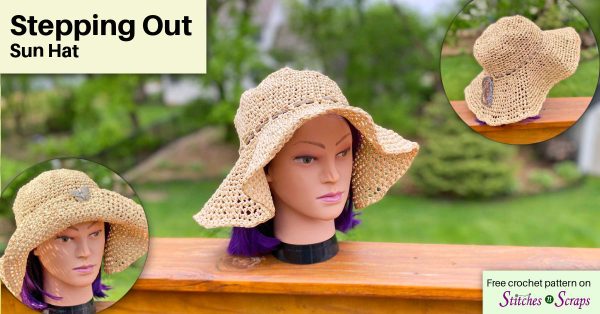
Free Crochet Patterns

Find the perfect, free crochet pattern for your next project! Browse them all, or select a category from the dropdown menu. Where will your creativity take you today?


Stepping Out Summer Scarf fb
Step out into the summer sunshine with the Stepping Out crochet summer scarf! With lacy diamonds in lightweight yarn, it's ...More
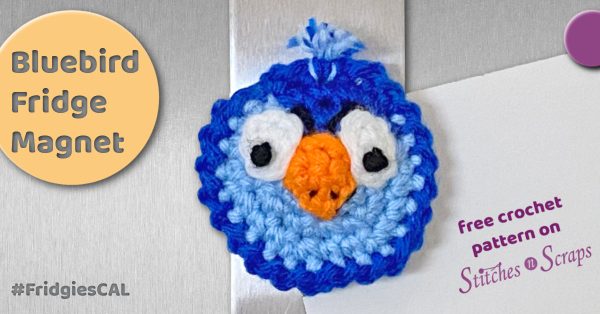
Bluebird Fridge Magnet on Stitches n Scraps
Got a refrigerator or magnet board? Put a bird on it! The Bluebird Fridge Magnet is a quick and easy ...More
Smiley the Baby Sloth Crochet Amigurumi Pattern on Stitches n Scraps
Smiley the baby sloth likes to keep things low key. Most days you can find them lounging around or hanging ...More
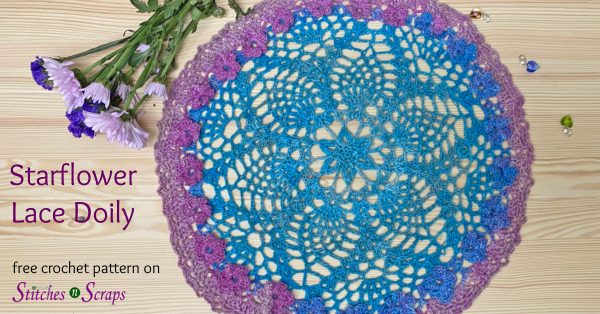
Starflower Lace Doily - free crochet pattern on Stitches n Scraps
Dress up your table for spring with the Starflower Lace crochet doily! Tiny, 3-dimensional flowers encircle classic pineapple lace, creating ...More
Unicorn Fridge Magnet crochet pattern on Stitches n Scraps
Add a little magic to your refrigerator with a Unicorn Fridge Magnet! With tiny flowers, pink cheeks, and of course ...More
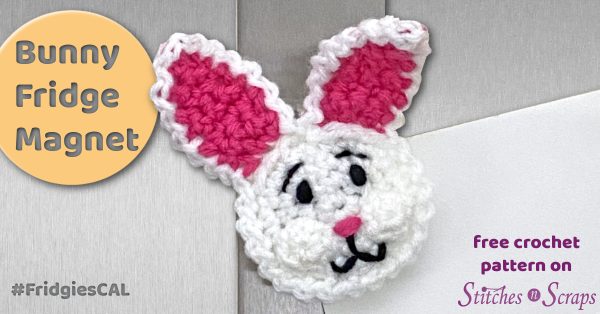
Bunny Fridge Magnet Crochet Pattern
Hippity Hoppity, look who hopped by! This adorable bunny fridge magnet is looking for a home on your fridge or ...More
Corner to Corner Cables Pillow
Take post stitch textures in new directions with the corner to corner cables crochet pillow! The front features a diagonal ...More
Silver Linings lacy crochet shawl pattern on Stitches n Scraps
Wrap yourself in elegance with the Silver Linings wrap. This lacy, crochet shawl offers the warmth of wool and the ...More
Fox Fridge Magnet - a free pattern on Stitches n Scraps
What has this sly fox been up to? Crochet your own with this quick fox fridge magnet pattern, and put ...More
Tunisian Twist Crochet Earwarmer
Keep the cold out with this Tunisian crochet ear warmer! It's big on style, but still easy to make. Just ...More
Stepping Out Summer Scarf fb

Crochet Summer Scarf – Stepping Out

Step out into the summer sunshine with the Stepping Out crochet summer scarf! With lacy diamonds in lightweight yarn, it’s a perfect accessory for warmer weather. The height and width are easily adjustable, so you can make it in a size that’s just right for you. Wear it as a scarf, headband, belt, or tie it around a hat or bag handle for a decorative accent!

Stepping Out Summer Scarf

This content is protected by copyright. See this Terms of Use / Copyright page for more information.

This post contains sponsored content and/or affiliate links. If you click one of these affiliate links and make a purchase, I may be compensated.

Scarf of the Month CAL

This crochet summer scarf is my contribution to the Scarf of the Month CAL. This year-long event is hosted by Oombawka Designs and The Stitchin Mommy. Follow along for 3 new scarf patterns every month! The other two patterns this month are the Just Another Day Scarf by Oombawka Designs and the Bonfire Infinity Scarf by The Stitch Mommy.

Due to unforeseen circumstances the scarf pattern from The Stitchin’ Mommy will not be available today as planned. Until it’s ready, she has a special coupon code up in its place, which can be applied to any previous Scarf of the Month CAL pattern!

Make the Coordinating Sun Hat!

Oombawka Designs and The Stitchin Mommy also run a Hat of the Month CAL. For that CAL, I designed a hat pattern that coordinates with this scarf. Complete your set with the Stepping Out Sun Hat!

Stepping Out Sun Hat - Free crochet pattern on Stitches n Scraps

King Cole Summer 4-Ply Yarn

King Cole generously provided the yarn for this design. It’s a lovely, lightweight, self striping yarn called Summer. The cotton/bamboo blend is mixed with a small amount (8%) of PBT. This polyester-like fiber gives the yarn a bit of bounce, and some added texture too. Because of this, it doesn’t stretch and sag the same way as most cotton and bamboo yarns do. It’s also remarkably soft, and would be a fabulous choice for lightweight socks and other clothing.

King Cole Summer Yarn

King Cole yarn comes from the UK. The 4-ply designation refers to the weight, not the actual number of plies. It’s the equivalent of a fingering weight yarn here in the US. 1 skein is more than enough for this pattern.


Stepping Out Summer Scarf

Project level Intermediate

Add this to your Ravelry queue

Materials

Project Level

Intermediate: Easy stitches, but requires some concentration and careful counting.

Size

6 x 60 inches.

Gauge

27 dc x 12 rows = 4 inches. Exact gauge is not critical.

Abbreviations used

(Pattern is written in US terms)
ch = chain
ch-sp = chain space
cl = cluster (see Special Stitch)
dc = double crochet
sc = single crochet
sk = skip
sp = space
st(s) = stitch(es)
yo = yarn over

Special Stitch

Cluster: This is a dc3tog stitch worked over 2 dc and a ch-1 sp.

Cluster symbol
  • Yo, insert hook in next st, yo and pull up a loop, yo and pull through 2 loops on hook. (2 loops remain on hook)
  • Yo, insert hook in next ch-1 sp, yo and pull up a loop, yo and pull through 2 loops on hook. (3 loops remain on hook)
  • Yo, insert hook in next st, yo and pull up a loop, yo and pull through 2 loops on hook. (4 loops remain on hook)
Cluster - 4 loops on hook
  • Yo and pull through all 4 loops on hook.
Finished cluster

Instructions

(scroll down for chart)

With A, ch 43 (multiple of 12 plus 7)

This pattern is reversible and has no right or wrong side. Ch 3 at the beginning of a row counts as dc throughout (including in row 1). To adjust width, start with more or fewer chains, in groups of 12.

Row 1: Dc in 4th ch from hook and each ch across. (41 dc)

Row 2: Ch 3, turn, dc in each of next 3 sts, [ch 1, sk next st, dc in next st] across to last 3 sts, dc in each of last 3 sts. (24 dc, 17 ch-1 sps)

Row 3: Ch 3, turn, dc in each of next 2 dc, ch 4, sk next 3 dc and 2 ch-1 sps, 3 dc in next ch-1 sp, ch 4, sk next 3 dc and 2 ch-1 sps, [dc in next ch 1 sp, ch 4, sk next 3 dc and 2 ch-1 sps, 3 dc in next ch-1 sp, ch 4, sk next 3 dc and 2 ch-1 sps] across to last 3 dc, dc in each of last 3 dc. (17 dc, 6 ch-4 sps)

From this point forward, skip all chain spaces unless otherwise specified.

Row 4: Ch 3, turn, dc in each of next 2 dc, [ch 3, 2 dc in next dc, ch 1, sk next dc, 2 dc in next dc, ch 3, dc in next dc] across to last 2 dc, dc in each of last 2 dc. (20 dc, 6 ch-3 sps, 3 ch-1 sps)

Row 5: Ch 3, turn, dc in each of next 2 dc, [ch 2, 2 dc in next dc, ch 3, sk next 2 dc, 2 dc in next dc, ch 2, dc in next dc] across to last 2 dc, dc in each of last 2 dc. (20 dc, 6 ch-2 sps, 3 ch-3 sps)

Row 6: Ch 3, turn, dc in each of next 2 dc, [ch 1, 2 dc in next dc, ch 7, sk next 2 dc, 2 dc in next dc, ch 1, dc in next dc] across to last 2 dc, dc in each of last 2 dc. (20 dc, 6 ch-1 sps, 3 ch-7 sps)

Row 7: Ch 3, turn, dc in each of next 2 dc, [2 dc in next dc, ch 4, sk next dc, sc in ch-7 sp, ch 4, sk next dc, 2 dc in next dc, dc in next dc] across to last 2 dc, dc in each of last 2 dc. (20 dc, 3 sc, 6 ch-4 sps)

Row 8: Ch 3, turn, dc in next st, 2 dc in next dc, ch 4, sk next 2 dc, sc in next sc, ch 4, sk next 2 dc, [3 dc in next dc, ch 4, sk next 2 dc, sc in next sc, ch 4, sk next 2 dc] across to last 3 dc, 2 dc in next dc, dc in each of last 2 dc. (14 dc, 3 sc, 6 ch-4 sps)

Row 9: Ch 3, turn, dc in each of next 2 dc, [2 dc in next dc, ch 4, sc in next sc, ch 4, 2 dc in next dc, dc in next dc] across to last 2 dc, dc in each of last 2 dc. (20 dc, 3 sc, 6 ch-4 sps)

Row 10: Ch 3, turn, dc in each of next 2 dc, [ch 1, sk next dc, 2 dc in next dc, ch 3, sc in next sc, ch 3, 2 dc in next dc, ch 1, sk next dc, dc in next dc] across to last 2 dc, dc in each of last 2 dc. (20 dc, 3 sc, 6 ch-3 sps, 6 ch-1 sps)

Row 11: Ch 3, turn, dc in each of next 2 dc, [ch 2, sk next dc, 2 dc in next dc, ch 3, 2 dc in next dc, ch 2, sk next dc, dc in next dc] across to last 2 dc, dc in each of last 2 dc. (20 dc, 6 ch-2 sps, 3 ch-3 sps)

Row 12: Ch 3, turn, dc in each of next 2 dc, [ch 3, sk next dc, 2 dc in next dc, ch 1, 2 dc in next dc, ch 3, sk next dc, dc in next dc] across to last 2 dc, dc in each of last 2 dc. (20 dc, 6 ch-3 sps, 3 ch-1 sps)

Row 13: Ch 3, turn, dc in each of next 2 dc, [ch 4, sk next 2 dc, 3 dc in next ch-1 sp, ch 4, sk next 2 dc, dc in next dc] across to last 2 dc, dc in each of last 2 dc. (17 dc, 6 ch-4 sps)

Rows 14-173: Repeat rows 4-13 16 times.

To adjust length, work more or fewer repeats of rows 4-13 as desired.

Rows 174-182: Repeat rows 4-12 once more.

End after repeat of row 12

Row 183: Ch 3, turn, dc in each of next 2 dc, [ch 5, sk next dc, cl, ch 5, sk next dc, dc in next dc] across to last 2 dc, dc in each of last 2 dc. (3 cl, 8 dc, 6 ch-5 sps)

For best results on row 184, work into the actual chains as specified, rather than into the chain spaces. See this Lunchtime Live video for a closer look at working into chains and chain spaces.

Row 184: Ch 3, turn, dc in each of next 2 dc, dc in next ch, (ch 1, sk next ch, dc in next ch) twice, [ch 1, sk next st, dc in next ch, (ch 1, sk next ch, dc in next ch) twice] across to last 3 sts, dc in each of last 3 sts. (24 dc, 17 ch-1 sps)

Row 185: Ch 3, dc in next dc and in each dc and ch-1 sp across. (41 dc)

Fasten off

Wash and block. Blocking is important to open up the lace. For best results, do not skip this step.

Weave in all ends.

Chart

Stepping Out Scarf Chart
Click image to expand
Stepping Out Summer Scarf fb

Rate this Crochet Summer Scarf Pattern!


I hope you enjoyed this crochet summer scarf pattern. A downloadable pdf of this pattern is available on Ravelry for a small fee. The fee for the pdf format is to offset the advertising revenue lost when you print or download the pattern rather than viewing it online.

Do you want the best of Stitches n Scraps delivered right to your inbox? The Stitches n Scraps email newsletter includes highlights from the blog as well as special features not available elsewhere. Don’t miss a stitch – Subscribe now!

Bluebird Fridge Magnet on Stitches n Scraps

Bluebird Fridge Magnet Crochet Pattern

Got a refrigerator or magnet board? Put a bird on it! The Bluebird Fridge Magnet is a quick and easy way to bring a touch of spring indoors. They make great gifts too, so make a few!

Bluebird Fridge Magnet on Stitches n Scraps

This content is protected by copyright. See this Terms of Use / Copyright page for more information.

This post contains sponsored content and/or affiliate links. If you click an affiliate link and make a purchase, I may get a commission.

2021 Fridgies CAL

This bunny fridge magnet is the March pattern in the 2021 Fridiges CAL! Crochet along through 12 magnet patterns. At the end of the year, you’ll have an adorable set of fridgies for yourself or for a gift! You may want to make 2 sets, so you don’t have to decide.

2021 Fridgies Crochet Along on Stitches n Scraps

Enter the Giveaway

There will be several giveaways throughout the Fridgies CAL. This quarter, you could win this gift set of fiber wash products from Unicorn Clean. It even includes an adorable plush!

Unicorn Clean 4oz bottles gift set

Learn all about the Fridgies Crochet Along here, including how to enter the giveaways!

Lion Brand DIY Yarn

Lion Brand provided all the yarn for this crochet along. Their DIY yarn comes in small balls, which is just perfect for the small amounts needed for each magnet. For the bluebird fridge magnet, you will need 2 shades of blue, with small amounts of white, organge and black for the facial features.

LIon Brand DIY Yarn

If you’re not able to get this yarn or the colors you need, Lion Brand Vanna’s Choice or Basic Stitch are also good options.

Xyron Glue Gun

The easiest way to attach your magnet to your crochet is with hot glue. For my magnets, I’m using this mini hot glue gun that Xyron gave me to try out.

Xyron Mini Hot Glue Gun

I used it on this bluebird fridge magnet and on the previous magnets as well. I’ve been very happy with it. It heats up quickly and produced a nice steady bead of glue. Watch it in action in the tutorial video below!


Bluebird Fridge Magnet

4-medium
Project Level Easy

Add this to your Ravelry queue

Materials

  • Yarn: Lion Brand DIY Yarn (100% acrylic, worsted weight, 65 yds / 30g per ball)
    • 30 yds royal blue (royal)
    • 10 yds sky blue (sky)
    • 3 yds each, orange and white
    • 1/2 yd black OR black embroidery thread
  • Hook: Size H / 5 mm crochet hook or size needed to match gauge.
  • Notions:
    • Yarn Needle
    • Strong, flat magnet that will fit inside the bluebird (sample shown is 1 inch diameter)
    • Xyron hot glue gun and glue stick
    • Stitch marker

Project Level

Easy: Worked in the round with some sewing and embroidery required. Some color changes.

Size

About 2.5 inches in diameter, not counting tuft on top.

Gauge

12 sc x 13 rounds = 4 inches

Use pattern as gauge swatch – After rnd 4, back circle should measure about 2.25 inches in diameter. Exact gauge is not critical. Your fabric should be tight enough that the magnet won’t show through.

Abbreviations used

(Pattern is written in US terms)
ch = chain
inc = increase (see Special Stitches)
sc = single crochet
sc2tog = single crochet 2 together
sk = skip
sl st = slip stitch
st(s) = stitch(es)
RS = right side
WS = wrong side

Special Stitches

Increase (inc): Sc in back loop only of indicated st, then sc in both loops of same st. This counts as two stitches in the end of round stitch counts.

See this tutorial for a more detailed look.

Almost Invisible SC Increase - Stitches n Scraps

Instructions

Join rounds where indicated with a slip stitch in the first stitch of the round. Slip stitches are not included in stitch counts unless otherwise specified. Mark first stitch of rounds if desired. Do not turn your work unless indicated.

Back

With royal, ch 2.

Rnd 1 (RS): 6 sc in 2nd ch from hook, join. (6 sts)

Rnd 2: Ch 1, inc in each st around, join. (12 sts)

Rnd 3: Ch 1, inc in first st, sc in next st, (inc in next st, sc in next st) around, join. (18 sts)

Rnd 4: Ch 1, inc in first st, sc in next 2 sts, (inc in next st, sc in next 2 sts) around, join with sl st in flo of first st. Fasten off. (24 sts)

Weave in tails.

Work should now measure about 2.25 to 2.5 inches in diameter.

Back circle - bluebird

Magnet

Using hot glue gun, glue magnet to center of back circle, on the WS of work.

Gluing magnet

Set back piece aside.

Front

This is the same pattern of increases as the back, but done with 2 colors. For a clean color change, start using the new color in the last “pull through” step of the last stitch in the previous color. See this tutorial for a more detailed look.

Do not work over the unused color. Instead, allow it to “float”, creating loose strands on the back of the work. Pick it up and work with it where you need it, making sure it stays loose at the back and doesn’t pull too tightly.

Float at back of work

With sky, ch 2.

Rnd 1 (RS): 6 sc in 2nd ch from hook, join. (6 sts)

Rnd 2: Ch 1, inc in each of first 4 sts, sc in back loop only of next st changing to royal. With royal, sc in both loops of same st, inc in next st changing to sky, join with sky. (9 sky sts, 3 royal sts)

Rnd 2 of front

For the rest of the front, you will always be working royal stitches into royal stitches, and sky stitches into sky stitches.

Rnd 3: Ch 1, inc in first st, (sc in next st, inc in next st) 4 times, changing to royal. With royal, sc in next st, inc in next st, sc in next st changing to sky, join with sky. (14 sky sts, 4 royal sts)

Rnd 4: Ch 1, inc in first st, (sc in next 2 sts, inc in next st) 4 times, sc in next st, changing to royal. With royal, sc in next st, inc in next st, sc in last 2 sts, join. (19 sky sts, 5 royal sts)

Remove royal working loop from hook and place it onto a stitch marker to secure it. Fasten off sky only. Weave in all 3 tails.

Front circle

Eyes (Make 2)

With white, ch 2

Rnd 1: (2 sc, sl st, 2 sc, sl st) in 2nd ch from hook, join. (4 sc)

Optional: For a neater join, try this sewn, invisible join technique!

Fasten off, leaving a 12 inch tail for sewing on one eye, and just a normal tail on the other.

Bluebird eye

Beak

With orange, ch 2

Row 1: 2 sc in 2nd ch from hook. (2 sc)

Row 2: Ch 1, turn, inc in each st across. (4 sc)

Row 3: Turn, sl st in first st, sc2tog, sl st in last st. (1 st)

Fasten off, leaving a 12 inch tail for sewing.

Bluebird beak

Assembly

Face

Place front circle with right side up and royal section centered at top. Using picture as a guide, place beak onto center of front circle, with point (row 1) at the bottom. The top of the beak should just overlap the bottom of the first royal stitches. Sew into place using the tail from the beak. Weave in end.

beak placement

Place eyes on either side of the beak so that they just slightly overlap the beak at its widest point. The eyes are oval shaped. Orient them with the narrow slip stitches on the sides, and the wider sc stitches at the top and bottom. Use the one long tail from the first eye to sew both eyes into place. Weave in end.

eyes and nose sewn on

Cut a piece of black yarn about 18 inches long, and weave it in at the back of the work to secure it. With this yarn, make a French knot at the center of each eye. Make two small stitches along the top edge of top edge of each eye to create shadows.

Split the remaining black yarn into its component plies – the DIY yarn has 4 plies, so can be split into 2 strands of 2 plies each. Using one of these 2 strands (2 plies), sew tiny stitches at the base of the nose for nostrils, and sew a line along the bottom edge of the nose for a shadow. Weave in all remaining ends.

Finished face - bluebird

Join front and back

Put royal working loop from front onto your hook and remove the stitch marker. Place the front and back together so that wrong sides are together and magnet is hidden between them. With front facing and working through both layers, (ch 1, sl st) in each st around. Fasten off and weave in ends.

All pieces joined

Tuft

Cut a 4 inch length of each of the 2 blue yarns. Holding them together, fold in half to form a loop. With front facing you, insert hook from front to back through top of head, just below the edging. Place the loop on your hook and pull loop through, leaving 4 ends at the back.

pull loop through top of head

Insert your hook into the loop and pull the ends through the loop.

Pull tails through loop

Pull ends to tighten, then trim ends to about 1/2 inch. With your yarn needle, fray the ends so that each strand separates into its individual plies.

Separate strands with needle

Bluebird Fridge Magnet Video Tutorial

Watch This Video on YouTube


Bluebird Fridge Magnet on Stitches n Scraps

Rate this Bluebird Fridge Magnet Pattern!


I hope you enjoyed this Bluebird fridge magnet pattern. Big thanks to Karen Navoy for testing it!

A downloadable pdf of this pattern is available on Ravelry for a small fee. The fee for the pdf format is to offset the advertising revenue lost when you print or download the pattern rather than viewing it online.

Do you want the best of Stitches n Scraps delivered right to your inbox? Don’t miss a stitch – Subscribe now!

Smiley the Baby Sloth Crochet Amigurumi Pattern on Stitches n Scraps

Crochet Sloth Amigurumi – Smiley the Baby Sloth

Smiley the baby sloth likes to keep things low key. Most days you can find them lounging around or hanging out with their other baby buddies. This crochet sloth amigurumi pattern is fast and fun to make, so you can crochet the whole crew!

Smiley the Baby Sloth Crochet Pattern on Stitches n Scraps

This content is protected by copyright. See this Terms of Use / Copyright page for more information.

This post contains sponsored content and/or affiliate links. If you click an affiliate link and make a purchase, I may get a commission.

CAL Central Softie CAL

I designed this crochet sloth amigurumi pattern for the 2021 Softie CAL at CAL Central Crochet. Read more about it in the main CAL post, and join in the fun on Facebook!

https://www.facebook.com/groups/CALCentral/

Poly Fil Poly Pellets

Fairfield World generously offered all the designers free Poly-Fil fiber fill for their designs. It’s my go-to filler for all my amigurumi, but I already had a lot from previous events. So this time they sent me some of their Poly Pellets instead!

Poly Pellets

This was my first time using any sort of weighted fill, and I was thrilled with the results. It gave Smiley a nice firm base to help them stand still for pictures, even in the wind. I might hesitate to use it for baby gifts though, in case any of the beads works loose and gets swallowed. I’ve made this an optional step in the pattern.

Baby Buddies

Smiley has a whole family of baby biddies! Meet their friends Awesome the Baby Elephant, Noble the Lion Cub, Bravo the Bear Cub, Sunny the Baby Bunny, Breezy the Baby Bat, and Playful the Baby Penguin. Make them all!


Smiley the Baby Sloth

4-medium
Project level Intermediate

Add this to your Ravelry queue

Materials

Project Level

Intermediate: Mostly single crochet in the round, with some increases and decreases, working in back and front loops separately.

Size

7 inches tall

Gauge

14 sc x 14 rows = 4 inches. Use pattern as gauge swatch – Rounds 1 – 4 should measure 2.25 inches in diameter. Exact gauge is not critical.

Abbreviations used

(Pattern is written in US terms)
ch = chain
sc = single crochet
inc = increase (see Special Stitches)
dec = decrease (see Special Stitches)
sk = skip
st(s) = stitch(es)
sl st = slip stitch
sp = space
ch-sp = chain space
rnd = round
RS = right side

Special Stitches

Increase (inc): Sc in back loop only of next st, then sc in both loops of the same st. See full tutorial here.

Almost Invisible SC Increase - Stitches n Scraps

Decrease (dec): Insert hook into front loop only of both of next 2 stitches, yarn over and draw up a loop, yarn over and draw through both loops on hook. This is an alternative to a single crochet 2 together (sc2tog) stitch. If you prefer, you can use the standard sc2tog instead.

Instructions

Weighted Base (optional)

Pour about 1/4 cup of Poly Pellets into the toe of the stocking. A funnel is helpful for this. Tie a knot in the stocking, above the pellets.

Fill bottom of stocking with pellets

Fold the top of the stocking around to the other side, so that the pellets are in 2 layers of stocking.

Fold top of stocking over again

If desired, you can repeat the last 2 steps, so that the pellets are now in 3 layers.

When stuffing the body, place a thin layer of stuffing at the bottom, then place your weighted base inside. As you finish stuffing, be sure to surround your weighted base entirely with stuffing material all around it so that the nylon does not show through and you can’t feel the knots.

Body

The Body, Head, and Muzzle are worked in continuous rounds. Do not join or turn unless indicated. Mark first stitch of each round.

With A, ch 2

Rnd 1 (RS): 6 sc in 2nd ch from hook. (6 sc)

Rnd 2: Inc around. (12 sc)

Rnd 3: (Inc in next st, sc in next st) around. (18 sc)

Rnd 4: (Inc in next st, sc in each of next 2 sts) around. (24 sc)

Rnd 5: Sc in each st around.

Rnd 6: (Inc in next st, sc in each of next 3 sts) around. (30 sc)

Rnds 7-10: Sc in each st around.

Rnd 11: (Dec, sc in each of next 3 sts) around. (24 sts)

Rnds 12-15: Sc in each st around.

Rnd 16: (Dec, sc in each of next 2 sts) around. (18 sts)

Rnds 17-18: Sc in each st around.

Rnd 19: (Dec, sc in next st) around, join with sl st to flo of first st. Do not fasten off (12 sts)

Stuff body most of the way full and continue stuffing as you go. (If you made a weighted base, this is where you insert it.)

Sloth body

Hood

Continuing from body

Row 1: Ch 1, sc in flo of same st and flo of each of next 8 sts, leaving 3 sts unworked. (9 sts)

Row 2: Ch 1, turn, sc in first st, (inc, sc in next st) across. (13 sts)

Row 3: Ch 1, turn, sc in first st, (inc, sc in next 2 sts) across. (17 sts)

Rows 4-7: Ch 1, turn, sc in each st across. (17 sts)

Row 8: Ch 1, turn, sc in first st, (dec, sc in next 2 sts) across. (13 sts)

Row 9: Ch 1, turn, sc in first st, (dec, sc in next st) across. (9 sts)

Rows 10-11: Ch 1, turn, sc in first st, dec, sc across to last 3 sts, dec, sc in last st (5 sts).

Row 12: Ch 1, turn, sk first st, sc in next 2 sts, dec. (3 sts)

Row 13: Ch 1, turn, sk first st, dec. (1 st)

Fasten off, leaving a 12 inch tail for sewing.

Body and hood

Head

Fold hood back and out of the way. With RS facing, Join B with sl st in blo of first unworked st on body.

Join for head

Rnd 1: Inc in same st, sc in next st, inc in next st. working in unworked back loops in front of hood, (sc in blo of next st, 2 sc in blo of next st) 4 times, sc in blo of last st. (18 sts)

Rnd 2-3: Repeat rnds 4-5 of body

Rnd 4: Sc in next 2 sts, ch 4, sk next 4 sts, sc in last 15 sts. (21 sc and ch-4 sp for muzzle)

Muzzle opening should be centered directly opposite the hood, so that when the hood is folded up, the point at the top lines up with the center of the muzzle opening.

Rnd 5: Sc in each st and each ch around. (24 sc)

Rnd 6: Sc in each st around.

Rnd 7: (Dec, sc in next 2 sts) around. (18 sc)

Rnd 8: (Dec, sc in next st) around. (12 sc)

Rnd 9: Dec around, fasten off. (6 sc)

Using tails, sew top of head and bottom of body closed, then weave in all ends except for long tail on hood.

Finish stuffing head through muzzle opening.

Sloth muzzle opening

Muzzle

Rnd 1: Join B with sc in any st around muzzle opening, sc in each remaining st around. (8 sc)

Rnd 2: Sc in each st around. Fasten off, leaving a long tail for sewing. (8 sc)

Stuff the muzzle.

Line the stitches up so that there are 4 on top and 4 on the bottom. Sew the opening closed with the tail, using a mattress stitch.

Weave in ends from the muzzle.

Hood and muzzle

Eye Patches (Make 2)

With A, ch 2

Rnd 1 (RS): 6 sc in 2nd ch from hook, join with sl st to first st. (6 sc)

Row 2: Ch 1, sc in first 3 sts, leaving remaining sts unworked. (3 sc)

Row 3: Ch 1, sk first st, sc in next 2 sts. (2 sc)

Row 4: Ch 1, sk first st, sc in last st. (1 sc)

Fasten off, leaving an 8 inch tail for sewing.

eye patches

Assembly

Using tails, sew eye patches on to head. The circle part of the eye patch should rest just above the muzzle, with the pointed end turned down slightly. The pointed end should end up under the edge of the hood, once the hood is in place.

Eye patches sewn in place

Weave in ends from eye patches.

Fold hood up so that the point is centered between and slightly above the eye patches. The edges of the hood should cover the pointy end of the eye patch. With the long tail, sew hood in place around the edge, all around the face.

Weave in all ends.

Hood sewn in place

With Black, embroider the eyes, nose, and mouth.

Sloth face

Weave in any remaining ends.

Smiley the Baby Sloth Crochet Amigurumi Pattern on Stitches n Scraps

Rate this Crochet Sloth Amigurumi Pattern!


I hope you enjoyed this crochet sloth amigurumi pattern. A downloadable pdf of this pattern is available on Ravelry for a small fee. The fee for the pdf format is to offset the advertising revenue lost when you print or download the pattern rather than viewing it online.

Do you want the best of Stitches n Scraps delivered right to your inbox? The Stitches n Scraps email newsletter includes highlights from the blog as well as special features not available elsewhere. Don’t miss a stitch – Subscribe now!

Starflower Lace Doily - free crochet pattern on Stitches n Scraps

Crochet Doily Pattern – Starflower Lace

Dress up your table for spring with the Starflower Lace crochet doily! Tiny, 3-dimensional flowers encircle classic pineapple lace, creating the perfect backdrop for your favorite bowl or vase. Or showcase this beauty all by itself!

Starflower Lace Doily - free crochet pattern on Stitches n Scraps

This content is protected by copyright. See this Terms of Use / Copyright page for more information.

This post contains sponsored content and/or affiliate links. If you click an affiliate link and make a purchase, I may get a commission.

Handspun yarn

In a short-lived spate of spring cleaning, I decided to make something from some unidentified scraps of fiber. I had little bits of bright magenta and teal, and some natural off-white colored wool as well.

By blending them together, I spun them into something of a gradient. My yarn was somewhat uneven, and not soft enough to wear against skin, but perfect for something decorative for spring!

Spring Gradient yarn skein used for Starflower Lace Doily

Make it any size

This pattern will work with any size yarn, and a hook appropriate for the yarn you choose. Keep in mind though that the size and yardage will vary if you change the size of the yarn.

All the gauge and size measurements in the pattern are based on the tester’s project, using store bought, fingering weight yarn. Because my yarn was hand spun, it was not the most even in weight throughout. My doily ended up closer to 15 inches in diameter instead of 14.

3-D Flower Stitch

The tiny flowers circling the outside of the doily are made with the flower stitch. In this technique, the flower petals are worked around the posts of the stitches in the row below. Each flower starts and ends in almost the same position, so it’s possible to do the whole round without breaking the yarn. Check out this tutorial for a more in-depth look at this 3-dimensional stitch.

How to Crochet the Flower Stitch


Starflower Lace Doily

1 - Super fine (Fingering)
Project-Level-Complex

Add this to your Ravelry queue

Materials

  • Yarn: 225 yds fingering weight yarn
  • Hook: Size E/ 3.5 mm crochet hook or size needed to match gauge.
  • Notions:
    • Yarn Needle
    • Stitch marker (optional)

Project Level

Complex: Lace pattern worked in the round with uneven stitch counts in some places. 3-dimensional flower stitch.

Size

About 14 inches in diameter after blocking.

Gauge

20 dc x 10 rows = 4 inches

Use pattern as gauge swatch – After rnd 6, work should measure about 4 inches in diameter. Exact gauge is not critical.

Abbreviations used

(Pattern is written in US terms)
ch = chain
dc = double crochet
flower = flower stitch (see Special Stitches)
RS = right side
sc = single crochet
shell = shell stitch (see Special Stitches)
sk = skip
st(s) = stitch(es)
sl st = slip stitch
tr = treble crochet

Special Stitches

Shell Stitch (shell): (2 dc, ch 1, 2dc) in indicated st or sp. When working into a shell, work into the ch-1 sp at the center.

3 shell stitches on top of each other

Flower Stitch (flower): Worked around the posts of 2 adjacent double crochets.

Rotate work sideways to work around post of 2nd dc. (Sl st, [ch 2, 2 dc, ch 2, sl st] 3 times) around post of 2nd dc.

First half of flower stitch

Rotate work the other way to work around post of 1st dc.

Working around dc

(Sl st, [ch 2, 2dc, ch 2, sl st] 3 times) around post of 1st dc.

Finished flower stitch

Sometimes it can be hard to see the dc immediately after the flower – turn and look from the back if needed to make sure you’re not accidentally missing that stitch. See this tutorial for a more detailed look.

How to Crochet the Flower Stitch

Instructions

Entire project is worked on the right side, in joined rounds. Do not turn your work. Join rounds where indicated with a slip stitch in the first stitch of the round. You may find it helpful to mark the first st of each round.

Center Flower

(scroll down for full chart)

Center flower chart
Click image to expand

Ch 2, or make a magic loop

Rnd 1 (RS): 6 sc in 2nd ch from hook or in magic loop, join. (6 sts)

Rnd 2: Ch 1, (sc, ch 1) in each st around, join. (6 sc, 6 ch-1 sps).

Rnd 3: Sl st in first ch-1 sp, ch 1, (sc, ch 6, sc) in same sp, ch 1, sk next st, [(sc, ch 6, sc) in next sp, ch 1, sk next st] 5 times, join. (12 sc, 6 ch-6 sps, 6 ch-1 sps)

Doily rnd 3

From this point forward, skip all stitches and work only into chain spaces unless otherwise specified. Ch 3 at the start of a rnd counts as a dc throughout.

Rnd 4: Ch 1, [(4 sc, ch 2, 4 sc) in next ch-6 sp, sl st in next ch-1 sp], do not join. (48 sc, 6 ch-2 sps)

Doily rnd 4

Rnd 5: Ch 9 (first 4 chs count as a tr, last 5 chs count as a ch-5 sp), sc in next ch-2 sp, ch 5, [tr in next ch-1 sp from rnd 3, ch 5, sc in next ch-2 sp, ch 5] 5 times, join to 4th ch of starting ch 9 (top of 1st tr). (6 tr, 6 sc, 12 ch-5 sps)

Doily rnd 5

Rnd 6: Sl st in first ch-5 sp, ch 3, (dc, ch 1, 2 dc) in same sp (counts as shell), [shell in next ch-5 sp] 11 times, join. (12 shells)

Work should now measure about 4 inches in diameter.

Pineapple Stitch Lace

(Scroll down for full chart)

Pineapple section chart
Click image to expand

Rnd 7: Sl st in next dc of first shell, sl st in center of first shell, ch 3, 6 dc in same sp, ch 1, shell in next shell, ch 1, [7 dc in next shell, ch 1, shell in next shell, ch 1] 5 times, join. (42 dc, 6 shells, 12 ch-1 sps)

Doily rnd 7

Rnd 8: Ch 4 (counts as dc and ch-1), [dc in next dc, ch 1] 6 times, sk next ch-1 sp, shell in next shell, ch 1, sk next ch-1 sp, *[dc in next dc, ch 1] 7 times, sk next ch-1 sp, shell in next shell, ch 1, sk next ch-1 sp, repeat from * 4 more times, join. (42 dc, 6 shells, 48 ch-1 sps)

Doily rnd 8

Rnd 9: Sl st in first ch-1 sp, ch 1, sc in same sp, [ch 3, sc in next ch-1 sp] 5 times, ch 2, sk next ch-1 sp, shell in next shell, ch 2, sk next ch-1 sp, *sc in next ch-1 sp, [ch 3, sc in next ch-1 sp] 5 times, ch 2, sk next ch-1 sp, shell in next shell, ch 2, sk next ch-1 sp, repeat from * 4 more times, join. (36 sc, 6 shells, 30 ch-3 sps, 12 ch-2 sps)

Doily rnd 9

Rnd 10: Sl st in first ch-3 sp, ch 1, sc in same sp, [ch 3, sc in next ch-3 sp] 4 times, ch 2, sk next ch-2 sp, (2 dc, ch 1, 2 dc, ch 1, 2 dc) in next shell, ch 2, sk next ch-2 sp, *sc in next ch-3 sp, [ch 3, sc in next ch-3 sp] 4 times, ch 2, sk next ch-2 sp, (2 dc, ch 1, 2 dc, ch 1, 2 dc) in next shell, ch 2, sk next ch-2 sp, repeat from * 4 more times, join. (30 sc, 36 dc, 24 ch-3 sps, 12 ch-2 sps, 12 ch-1 sps)

Doily rnd 10

Rnd 11: Sl st in first ch-3 sp, ch 1, sc in same sp, [ch 3, sc in next ch-3 sp] 3 times, ch 2, sk next ch-2 sp, shell in next ch-1 sp, ch 1, shell in next ch-1 sp, ch 2, sk next ch-2 sp, *sc in next ch-3 sp, [ch 3, sc in next ch-3 sp] 3 times, ch 2, sk next ch-2 sp, shell in next ch-1 sp, ch 1, shell in next ch-1 sp, ch 2, sk next ch-2 sp, repeat from * 4 more times, join. (24 sc, 12 shells, 18 ch-3 sps, 12 ch-2 sps, 6 ch-1 sps)

Doily rnd 11

Rnd 12: Sl st in first ch-3 sp, ch 1, sc in same sp, [ch 3, sc in next ch-3 sp] twice, ch 3, sk next ch-2 sp, shell in next shell, ch 3, sc in next ch-1 sp, ch 3, shell in next shell, ch 3, sk next ch-2 sp, *sc in next ch-3 sp, [ch 3, sc in next ch-3 sp] twice, ch 3, sk next ch-2 sp, shell in next shell, ch 3, sc in next ch-1 sp, ch 3, shell in next shell, ch 3, sk next ch-2 sp, repeat from * 4 more times, join. (24 sc, 12 shells, 36 ch-3 sps)

Doily rnd 12

Rnd 13: Sl st in first ch-3 sp, ch 1, sc in same sp, ch 3, sc in next ch-3 sp, ch 3, sk next ch-3 sp, shell in next shell, [ch 3, sc in next ch-3 sp] twice, ch 3, shell in next shell, ch 3, sk next ch-3 sp, *[sc in next ch-3 sp, ch 3] twice, sk next ch-3 sp, shell in next shell, [ch 3, sc in next ch-3 sp] twice, ch 3, shell in next shell, ch 3, sk next ch-3 sp, repeat from * 4 more times, join. (24 sc, 12 shells, 36 ch-3 sps)

Doily rnd 13

Rnd 14: Sl st in first ch-3 sp, ch 1, sc in same sp, ch 3, sk next ch-3 sp, shell in next shell, ch 3, sc in next ch-3 sp, ch 1, dc in next ch-3 sp, [ch 1, dc in same sp] 4 times, ch 1, sc in next ch-3 sp, ch 3, shell in next shell, ch 3, sk next ch-3 sp, *sc in next ch-3 sp, ch 3, sk next ch-3 sp, shell in next shell, ch 3, sc in next ch-3 sp, ch 1, dc in next ch-3 sp, [ch 1, dc in same sp] 4 times, ch 1, sc in next ch-3 sp, ch 3, shell in next shell, ch 3, sk next ch-3 sp, repeat from * 4 more times, join. (18 sc, 30 dc, 12 shells, 24 ch-3 sps, 36 ch-1 sps)

Doily rnd 14 section

Rnd 15: Ch 6 (counts as dc and ch 3), sk next ch-3 sp, shell in next shell, ch 3, sc in next ch-3 sp, ch 3, sk next ch-1 sp, dc in next ch-1 sp, [ch 1, dc in next ch-1 sp] 3 times, ch 3, sk next ch-1 sp, sc in next ch-3 sp, ch 3, shell in next shell, ch 3, sk next ch-3 sp, *dc in next sc, ch 3, sk next ch-3 sp, shell in next shell, ch 3, sc in next ch-3 sp, ch 3, sk next ch-1 sp, dc in next ch-1 sp, [ch 1, dc in next ch-1 sp] 3 times, ch 3, sk next ch-1 sp, sc in next ch-3 sp, ch 3, shell in next shell, ch 3, sk next ch-3 sp, repeat from * 4 more times, join. (12 sc, 30 dc, 12 shells, 36 ch-3 sps, 18 ch-1 sps)

Note: I have removed the images for Rnds 15-17 because I made a mistake in my sample and didn’t want it to be confusing. I will replace these with new images when I get a chance.

Rnd 16: Sl st in first ch-3 sp, ch 1, sc in same sp, [ch 3, sc] in each ch sp and in each shell around, ch 3, join. (66 sc, 66 ch-3 sps)

Rnd 17: Sl st in first ch-3 sp, Ch 3, 2 dc in same sp, 3 dc in each of next 9 ch-3 sps, 4 dc in next ch-3 sp, [3 dc in each of net 10 ch-3 sps, 4 dc in next ch-3 sp] 5 times, join.

Flower Stitch Border

Scroll down for full chart

flower border chart
Click image to expand

Rnd 18 has 6 repeats of 4 flowers each, for a total of 24 flowers. Between the flowers are chain spaces over skipped stitches. Pay special attention to how many stitches it says to skip – you will not always be skipping over the same number of stitches. Sometimes there are a total of 6 skipped dc between flowers, and sometimes 8.

When the instructions say to sl st between the next 2 dc, insert your hook between the posts of the indicated stitches and work a sl st. There is no ch-sp here to work into, it’s just between the stitches. Skip both the stiches that you just worked between.

Crochet between stitches

Rnd 18: Sl st in 2nd dc. Flower around 2nd and 3rd dcs, ch 3, sk next 2 dc, sl st between next 2 dc, ch 3, sk next 2 dc, flower around next 2 dc, ch 3, sk next 3 dc, sl st between next 2 dc, ch 3, sk next 3 dc, [flower around next 2 dc, ch 3, sk next 2 dc, sl st between next 2 dc, ch 3, sk next 2 dc] twice, *flower around next 2 dc, ch 3, sk next 2 dc, sl st between next 2 dc, ch 3, sk next 2 dc, flower around next 2 dc, ch 3, sk next 3 dc, sl st between next 2 dc, ch 3, sk next 3 dc, [flower around next 2 dc, ch 3, sk next 2 dc, sl st between next 2 dc, ch 3, sk next 2dc] twice, repeat from * 4 times more, sl st in 2nd dc of rnd 17. (24 flowers, 48 ch-3 sps)

Doily rnd 18

Rnd 19: Working behind the flowers, sl st in next ch-3 sp, ch 3, 3 dc in same sp, 4 dc in each of next 6 ch-3 sps, dc in next sl st, 4 dc in next ch-3 sp, [4 dc in each of next 7 ch-3 sps, dc in next sl st, 4 dc in next ch-3 sp] 5 times, join. (198 dc)

Doily rnd 19

Rnd 20: Ch 1, sc in first st, ch 3, sk next st, (sc in next st, ch 3, sk next st) around, join. (99 sc, 99 ch-3 sps)

Doily rnd 20

Rnd 21: Sl st in first ch-3 sp, ch 1, (sc, ch-3) in same sp and in each ch-3 sp around, join. Fasten off. (99 sc, 99 ch-3 sps).

Border section detail

Finishing

Wash and Block – this is important to open up the lace, for best results, do not skip this step.

Weave in all ends.

Full Pattern Chart

Full doily chart
Click image to expand

Starflower Lace Doily - free crochet pattern on Stitches n Scraps

Rate this Crochet Doily Pattern!


I hope you enjoyed this crochet doily pattern. Big thanks to ET’s Crochet Creations for testing it!

A downloadable pdf of this pattern is available on Ravelry for a small fee. The fee for the pdf format is to offset the advertising revenue lost when you print or download the pattern rather than viewing it online.

Do you want the best of Stitches n Scraps delivered right to your inbox? Don’t miss a stitch – Subscribe now!

Unicorn Fridge Magnet crochet pattern on Stitches n Scraps

Unicorn Fridge Magnet Crochet Pattern

Add a little magic to your refrigerator with a Unicorn Fridge Magnet! With tiny flowers, pink cheeks, and of course a spiraling horn, they’re sure to brighten up your day. They make great gifts too, so make a few!

Unicorn Fridge Magnet crochet pattern on Stitches n Scraps

This content is protected by copyright. See this Terms of Use / Copyright page for more information.

This post contains sponsored content and/or affiliate links. If you click an affiliate link and make a purchase, I may get a commission.

2021 Fridgies CAL

This unicorn fridge magnet is the March pattern in the 2021 Fridiges CAL! Crochet along through 12 magnet patterns. At the end of the year, you’ll have an adorable set of fridgies for yourself or for a gift! You may want to make 2 sets, so you don’t have to decide.

2021 Fridgies Crochet Along on Stitches n Scraps

Enter the Giveaway

There will be several giveaways throughout the Fridgies CAL. This quarter, you could win this gift set of fiber wash products from Unicorn Clean. It even includes an adorable plush!

Unicorn Clean 4oz bottles gift set

Learn all about the Fridgies Crochet Along here, including how to enter the giveaways!

Lion Brand DIY Yarn

Lion Brand provided all the yarn for this crochet along. Their DIY yarn comes in small balls, which is just perfect for the small amounts needed for each magnet. For the unicorn fridge magnet, you will need mostly white, with small amounts of pink, yellow, and sky blue.

LIon Brand DIY Yarn

If you’re not able to get this yarn or the colors you need, Lion Brand Vanna’s Choice or Basic Stitch are also good options.

Xyron Glue Gun

The easiest way to attach your magnet to your crochet is with hot glue. For my magnets, I’m using this mini hot glue gun that Xyron gave me to try out.

Xyron Mini Hot Glue Gun

I used it on this unicorn fridge magnet and on the previous 3 magnets as well. I’ve been very happy with it. It heats up quickly and produced a nice steady bead of glue. Watch it in action in the tutorial video below!


Unicorn Fridge Magnet

4-medium
Project level Intermediate

Add this to your Ravelry queue

Materials

  • Yarn: Lion Brand DIY Yarn (100% acrylic, worsted weight, 65 yds / 30g per ball)
    • 40 yds white
    • 10 yds hot pink (pink)
    • 5 yds yellow
    • 2 yds sky (blue)
    • 1/2 yd black OR black embroidery thread
  • Hook: Size H / 5 mm crochet hook or size needed to match gauge.
  • Notions:
    • Yarn Needle
    • Strong, flat magnet that will fit inside the unicorn (sample shown is 1 inch diameter)
    • Xyron hot glue gun and glue stick
    • Stitch marker

Project Level

Intermediate: Worked in the round with some sewing and embroidery required. Working in front and back loops and with multiple layers.

Size

About 2.5 inches in diameter, not counting ears and horn.

Gauge

12 sc x 13 rounds = 4 inches

Use pattern as gauge swatch – After rnd 4, back circle should measure about 2.25 inches in diameter. Exact gauge is not critical. Your fabric should be tight enough that the magnet won’t show through.

Abbreviations used

(Pattern is written in US terms)
blo = back loop only
ch = chain
dec = decrease (see Special Stitches)
flo = front loop only
inc = increase (see Special Stitches)
sc = single crochet
sk = skip
sl st = slip stitch
st(s) = stitch(es)
RS = right side
WS = wrong side

Special Stitches

Increase (inc): Sc in back loop only of indicated st, then sc in both loops of same st. This counts as two stitches in the end of round stitch counts.

See this tutorial for a more detailed look.

Almost Invisible SC Increase - Stitches n Scraps

Decrease (dec): Insert hook into front loop only of both of next 2 stitches, yarn over and draw up a loop, yarn over and draw through both loops on hook. This is an alternative to a single crochet 2 together (sc2tog) stitch. If you prefer, you can use the standard sc2tog instead.

Instructions

The unicorn has 2 main sections: The back with ears and magnet, and the front with the cheeks and embroidered face. You can make these 2 sections in any order you prefer. The horn and flowers are added after the front and back are joined together.

Join rounds where indicated with a slip stitch in the first stitch of the round. Slip stitches are not included in stitch counts unless otherwise specified. Mark first stitch of rounds if desired. Do not turn your work unless indicated.

Back

Back circle

With white, ch 2.

Rnd 1 (RS): 6 sc in 2nd ch from hook, join. (6 sts)

Rnd 2: Ch 1, inc in each st around, join. (12 sts)

Rnd 3: Ch 1, inc in first st, sc in next st, (inc in next st, sc in next st) around, join. (18 sts)

Rnd 4: Ch 1, inc in first st, sc in next 2 sts, (inc in next st, sc in next 2 sts) around, join with sl st in flo of first st. Do not fasten off. (24 sts)

Work should now measure about 2.25 to 2.5 inches in diameter.

back circle of unicorn

Ears

First outer ear:

Continuing from the end of rnd 4.

Row 1 (RS): Ch 1, sc in flo of first st, sc in flo of next 2 sts, leave remaining sts unworked. (3 sc)

Place a marker in the base of the last stitch you worked. This will be used for joining later.

Marker placement

Row 2: Ch 1, turn, sk first st, dec. (1 st)

Fasten off.

First outer ear
2nd outer ear

Turn to RS. Skip next 3 unworked sts on back circle, join white with a sl st in flo of next st.

Placement of 2nd ear

Row 1 (RS): Ch 1, sc in flo of same st (where the sl st was made), sc in flo of next 2 sts. (3 sc)

Row 2: Ch 1, turn, sk first st, dec. (1 st)

Fasten off.

Outer ears
Inner ear:

Stay on wrong side. Working into unused loops in front of either outer ear, join pink with sl st in flo of first st.

Row 1 (WS): Ch 1, sc in flo of same st (where the sl st was made), sc in flo of next 2 sts. (3 sc)

Row 2: Ch 1, turn, sk first st, dec. (1 st)

Fasten off.

Repeat inner ear instructions for the other inner ear.

inner and outer ears

Weave in all ends.

Magnet

Using hot glue gun, glue magnet to center of back circle, on the WS of work.

Glue on magnet

Set back piece aside.

Front

Front circle

With white, ch 2.

Rnds 1-3: Repeat rnds 1-3 of back circle. (18 sts)

Rnd 4: Ch 1, inc in first st, sc in next 2 sts, (inc in next st, sc in next 2 sts) around, join. Fasten off. (24 sts)

Cheeks (make 2)

With pink, ch 2

Rnd 1: 3 sc in 2nd ch from hook, do not join. Fasten off leaving an 8 inch tail for sewing.

Weave in the shorter, starting tail.

Unicorn cheek

Face

Using the pictures as a guide:

  • Sew cheeks into place, being careful not to interfere with the tops of the stitches in the last round. You’ll need to work into those for the assembly.
Unicorn face with cheeks sewn on
  • Separate the black yarn into individual strands (plys). Using only one of the plies, embroider the eyes and eyelashes.

If you prefer, you can use thread or embroidery floss for the eyes instead.

Finished face

Weave in all ends.

Assembly

Join front and back

Starting with back piece only and with WS (pink) facing, join white with sl st in marked st at base of ear.

Working through both layers of ear, ch 1, sl st in side of ear, ch 1, sl st in top of ear, ch 1, sl st in other side of ear, ch 1, sl st in base of ear. (4 sl sts)

first ear edging

Place the front circle on top of the back circle so that the right sides are facing out and wrong sides are together. Make sure the face is upright and centered between the ears.

Position front and back

Working through both the front and back layers, (ch 1, sl st) in each st around to base of other ear. (15 sl sts).

Joined up to 2nd ear

Working on back piece only, and through both layers of ear, ch 1, sl st at base of ear, ch 1, sl st in side of ear, ch 1, sl st in top of ear, ch 1, sl st in other side of ear, ch 1, sl st in base of ear. (5 sl sts)

There should be 9 remaining, unworked stitches on the front circle. 3 will be in front of each ear, and 3 in the center for the horn.

Joined front and back

Fasten off

Weave in all ends.

Horn

Horn is worked in continuous rounds – do not join rounds, but rather continue working around in the same direction.

With RS facing, sk the first 3 stitches (in front of the first ear) on front circle. Join yellow with sl st in next st on front circle.

Join for horn

Rnd 1: Sc in same st and next 2 sts, turn to continue working into the 3 unworked sts between the ears on the back circle, sc in each of the 3 sts. (6 sc)

First round of horn

Rnd 2: Sc in blo of each st around. (6 sc)

Rnd 3: (Sk next st, sc in blo of next st) twice. (4 sc)

Fasten off

Weave tail through the back loops only of each of the 4 sts, and pull tight to form a point.

unicorn horn

Weave in tails and stuff horns with the ends. If you need more stuffing, use a few tiny pieces of yellow yarn, cut to a length of 1 inch or less.

Flowers

Make 2 in blue and 1 in pink.

Ch 4, sl st in 4th ch from hook, (ch 3, sl st in same ch) 4 times.

Fasten off, leaving an 8 inch tail for sewing.

3 flowers

Arrange the two blue flowers at the base of the horn and sew them in place with their tails, sewing the front and back layers closed in front of the ears as you do.

Place the pink flower on top of the 2 blue flowers and sew that in place with its tail as well.

Weave in all ends.

Unicorn Fridge Magnet

Unicorn Fridge Magnet Video Tutorial

Watch This Video on YouTube


Unicorn Fridge Magnet crochet pattern on Stitches n Scraps

Rate this Unicorn Fridge Magnet Pattern!


I hope you enjoyed this Unicorn fridge magnet pattern. Big thanks to Karen Navoy for testing it!

A downloadable pdf of this pattern is available on Ravelry for a small fee. The fee for the pdf format is to offset the advertising revenue lost when you print or download the pattern rather than viewing it online.

Do you want the best of Stitches n Scraps delivered right to your inbox? Don’t miss a stitch – Subscribe now!

Bunny Fridge Magnet Crochet Pattern

Bunny Fridge Magnet Crochet Pattern

Hippity Hoppity, look who hopped by! This adorable bunny fridge magnet is looking for a home on your fridge or magnet board. They’re so fun to make they just might multiply like…well…bunnies. But that’s ok, because they make a great gift too!

Bunny Fridge Magnet Crochet Pattern

This content is protected by copyright. See this Terms of Use / Copyright page for more information.

This post contains sponsored content and/or affiliate links. If you click an affiliate link and make a purchase, I may get a commission.

2021 Fridgies CAL

This bunny fridge magnet is the March pattern in the 2021 Fridiges CAL! Crochet along through 12 magnet patterns. At the end of the year, you’ll have an adorable set of fridgies for yourself or for a gift! You may want to make 2 sets, so you don’t have to decide.

2021 Fridgies Crochet Along on Stitches n Scraps

Enter the Giveaway

There will be several giveaways throughout the Fridgies CAL. This quarter, you could win a zippered pouch from Global Backyard Industries!

Small Zippered Pouch in Indigo Clouds design from Global Backyard Industries

Learn all about the Fridgies Crochet Along here, including how to enter the giveaways for a chance to win some fabulous prizes too! March is the last month for this prize, so be sure to get those entries in!

Lion Brand DIY Yarn

Lion Brand provided all the yarn for this crochet along. Their DIY yarn comes in small balls, which is just perfect for the small amounts needed for each magnet. For the bunny fridge magnet, you will need mostly white, with small amounts of pink and black. Brown or off white would be great color choices for the bunny as well!

LIon Brand DIY Yarn

If you’re not able to get this yarn or the colors you need, Lion Brand Vanna’s Choice or Basic Stitch are also good options.

Xyron Glue Gun

The easiest way to attach your magnet to your crochet is with hot glue. For my magnets, I’m using this mini hot glue gun that Xyron gave me to try out.

Xyron Mini Hot Glue Gun

I used it on this fox fridge magnet and on the previous fox magnet and bear magnet. I’ve been very happy with it. It heats up quickly and produced a nice steady bead of glue. Watch it in action in the tutorial video below!


Bunny Fridge Magnet

4-medium
Project level Intermediate

Add this to your Ravelry queue

Materials

  • Yarn: Lion Brand DIY Yarn
    • 45 yds white
    • 10 yds pink
    • 2 yds black
  • Hook: Size H / 5 mm crochet hook or size needed to match gauge.
  • Notions:
    • Yarn Needle
    • Strong, flat magnet that will fit inside the bunny (sample shown is 1 inch diameter)
    • Xyron hot glue gun and glue stick
    • Stitch marker (optional)
    • Black embroidery thread (optional for eyebrows)

Project Level

Intermediate: Worked in the round with some sewing and embroidery required.

Size

About 2.5 inches in diameter, not counting ears.

Gauge

12 sc x 13 rounds = 4 inches

Use pattern as gauge swatch – After rnd 4, back circle should measure about 2.25 inches in diameter. Exact gauge is not critical. Your fabric should be tight enough that the magnet won’t show through.

Abbreviations used

(Pattern is written in US terms)
ch = chain
sc = single crochet
dc = double crochet
inc = increase (see Special Stitches)
dec = decrease (see Special Stitches)
flo = front loop only
sk = skip
st(s) = stitch(es)
sl st = slip stitch
RS = right side
WS = wrong side

Special Stitches

Increase (inc): Sc in back loop only of indicated st, then sc in both loops of same st. This counts as two stitches in the end of round stitch counts.

See this tutorial for a more detailed look.

Almost Invisible SC Increase - Stitches n Scraps

Decrease (dec): Insert hook into front loop only of both of next 2 stitches, yarn over and draw up a loop, yarn over and draw through both loops on hook. This is an alternative to a single crochet 2 together (sc2tog) stitch. If you prefer, you can use the standard sc2tog instead.

Instructions

The pattern is made in 2 separate sections: The back with ears and magnet, and the front with the cheeks and embroidered face. You can make these 2 sections in any order you prefer.

Join rounds where indicated with a slip stitch in the first stitch of the round. Slip stitches are not included in stitch counts unless otherwise specified. Mark first stitch of rounds if desired. Do not turn your work unless indicated.

Back

Back circle

With white, ch 2.

Rnd 1 (RS): 6 sc in 2nd ch from hook, join. (6 sts)

Rnd 2: Ch 1, inc in each st around, join. (12 sts)

Rnd 3: Ch 1, inc in first st, sc in next st, (inc in next st, sc in next st) around, join. (18 sts)

Rnd 4: Ch 1, inc in first st, sc in next 2 sts, (inc in next st, sc in next 2 sts) around, join with sl st in flo of first st. Do not fasten off. (24 sts)

Work should now measure about 2.25 to 2.5 inches in diameter.

Bunny magnet back circle

Ears

First outer ear:

Continuing from the end of rnd 4.

Row 1 (RS): Ch 1, sc in flo of same st (where the sl st was made), sc in flo of next 2 sts. (3 sc)

Row 2: Ch 1, turn, sc in first st, inc in next st, sc in last st. (4 sc)

Rows 3-4: Ch 1, turn, sc in each st across. (4 sc)

Row 5: Ch 1, turn, sc in first st, dec, sc in last st. (3 sts)

Row 6: Ch 1, turn, sk first st, sc in each of next 2 sts. (2 sts)

Row 7: Ch 1, turn, sk first st, sc in last st. (1 st)

Fasten off.

First outer ear of bunny
2nd outer ear

Skip next st on back circle, join white with a sl st in flo of next st.

Join for 2nd outer Ear - Bunny

Rows 1-7: Repeat rows 1-7 of first outer ear.

Fasten off.

Finished outer ears
Inner ear:

Turn to wrong side. Working into unused loops in front of either outer ear, join pink with sl st in flo of first st.

Join for inner ear

Row 1 (WS): Ch 1, sc in flo of same st (where the sl st was made), sc in flo of next 2 sts. (3 sc)

Rows 2-7: Repeat rows 2-7 of outer ear.

Fasten off.

Repeat inner ear instructions for the other inner ear.

Finished ears

Weave in all ends.

Magnet

Using hot glue gun, glue magnet to center of back circle, on the WS of work.

Set back piece aside.

Front

Cheeks (make 2)

With white, ch 2

Rnd 1: 6 sc in 2nd ch from hook, join. Fasten off leaving an 8 inch tail for sewing.

Weave in the shorter, starting tail.

Bunny Cheeks

Front circle

With white, ch 2.

Rnds 1-3: Repeat rnds 1-3 of back circle. (18 sts)

Rnd 4: Ch 1, inc in first st, sc in next 2 sts, (inc in next st, sc in next 2 sts) around, join. Do NOT fasten off. (24 sts)

Secure working loop with a stitch marker and remove hook.

Front Circle

Face

IMPORTANT – When the front and back are joined, the working loop will be at the top center, between the ears. Keep this in mind when working on the face.

Using the pictures as a guide:

  • Sew cheeks into place, being careful not to interfere with the tops of the stitches in the last round. You’ll need to work into those for the assembly.
  • Embroider nose with pink yarn
  • Embroider mouth, and eyes with black yarn.
  • Optional: Separate the black yarn into individual strands (plys). Using only half the plies (2, for the Lion Brand DIY yarn), embroider the eyebrows.

If you are using a different yarn you may have more or fewer plys. If your yarn does not separate easily into plys, you can use thread or embroidery floss for the eyebrows.

Front and back layers

Weave in all ends.

Assembly

Place working loop from front circle back onto hook and remove the stitch marker.

Hold front and back with wrong sides together. The active stitch on the front should be at the top center, between the ears.

Place layers together

Working through both front and back circle layers: (Ch 1, sl st) in the first st on the front circle and the skipped stitch between the ears on the back circle. (1 sl st)

Slip Stitch between ears

Working through both ear layers, around the outside of the ear: (Ch 1, sl st) 7 times evenly spaced to the top point, (ch 1, sl st) at the top point, (ch 1, sl st) 7 times down the other side to the base of the ear. (15 sl sts)

Edging around ear

Skip the next 3 sts on the front circle, the ones in front of the ear. Working through both front and back circle layers, (Ch 1, sl st) in each st around to the base of the other ear (17 sl sts)

There should be 3 remaining, unworked stitches on the front circle. This leaves 3 unworked front sts in front of each ear.

skipped stitches in front of ears

Working through both ear layers, around the outside of the other ear: (Ch 1, sl st) 7 times evenly spaced to the top point, (ch 1, sl st) at the top point, (ch 1, sl st) 7 times down the other side to the base of the ear. Join with sl st to first ch-1 of edging rnd. (15 sl sts not counting join.)

Edging rnd finished

Fasten off leaving a 12-18 inch tail for sewing.

With the tail and working through front and back circle layers, sew across the 3 skipped stitches in front of each ear.

sew in front of ears

Weave in remaining ends

Bunny Fridge Magnet Video Tutorial

Watch This Video on YouTube


Bunny Fridge Magnet Crochet Pattern

Rate this Bunny Fridge Magnet Pattern!


I hope you enjoyed this fox fridge magnet pattern. Big thanks to Karen Navoy for testing it!

A downloadable pdf of this pattern is available on Ravelry for a small fee. The fee for the pdf format is to offset the advertising revenue lost when you print or download the pattern rather than viewing it online.

Do you want the best of Stitches n Scraps delivered right to your inbox? Don’t miss a stitch – Subscribe now!

Corner to Corner Cables Pillow

Corner to Corner Cables Crochet Pillow

Take post stitch textures in new directions with the corner to corner cables crochet pillow! The front features a diagonal cable, while the back has raised, horizontal stripes. With an overlapping closure, the cover comes off easily for washing.

Corner to Corner Cables Pillow

This content is protected by copyright. See this Terms of Use / Copyright page for more information.

This post contains sponsored content and/or affiliate links. If you click an affiliate link and make a purchase, I may get a commission.

CAL Central Cozy at Home CAL

I designed this Corner to Corner Cables crochet pillow for the CAL Central Cozy at Home CAL. Follow along on the CAL Central Crochet Facebook group for more cozy home decor patterns. Share your CAL pictures (we love to see all the projects) and don’t forget to enter the giveaway!

Cozy at Home CAL

New to Cables?

If you’re new to working post stitch cables, don’t be intimidated! Once you understand where to put your hook, they’re not as hard as you might think. In my Lunchtime Live videos, I did a 4 part series on how to work with post stitch cables. It covers all the skills you need for this pattern, and then some!

Screenshot from Lunchtime Live Cable series

Please note that these are not full tutorial videos. Lunchtime Live is the equivalent of a video newsletter, and the demos are just a small portion at the end of each one. You may want to scroll forward a bit on each video, if you just want to see the demos.

From Corner to Corner

Most often, when people say “corner to corner” or “c2c”, they are talking about diagonal box stitch. But there are a surprising array of stitches that can be worked from corner to corner. In this pillow, working from corner to corner creates the striking diagonal cable, while building a post stitch frame around the edge at the same time.

Yarn Choices

Plain, solid color yarns tend to show off cables the best. Cables can sometimes get lost in yarns with lots of colors or unusual textures. For my pillow, I chose some Lion Brand Wool Ease yarn from my stash. My main color is #99 – Fisherman, and the accent color is #620 Aloe. Aloe has since been discontinued, but #087 Arrowwood would be fairly close.

Wool-Ease® Yarn
Wool-Ease® Yarn

from: Lion Brand

The only reason this pillow has an accent color at all is that I didn’t have enough yarn in the main color. Because the stripes are made with post stitches, they have added texture as well as color. You can easily make your pillow in all one color, and you’ll still get the textural striping effect on the back.


Corner to Corner Cables Crochet Pillow

4-medium
Project level Intermediate

Add this to your Ravelry queue

Materials

  • Yarn: Worsted Weight Yarn:
    • 400 yds off-white (A)
    • 100 yds brown (B)
  • Hook: Size H / 5 mm crochet hook or size needed to match gauge.
  • Notions:
    • Yarn Needle
    • 4 stitch markers, safety pins, or scraps of yarn.
    • 14″ square pillow form

Project Level

Intermediate: Post stitches, increases, decreases, crocheted seams.

Size

14 inches square

Gauge

13 dc x 9 rows = 4 inches after blocking.

Abbreviations used

(Pattern is written in US terms)
CB = Cable border (see Special Stitches)
ch = chain
ch-sp = chain space
dc = double crochet
fphdc = front post half double crochet
fptr = front post treble crochet
fptr 2tog = front post treble crochet 2 together (see Special Stitches)
hdc = half double crochet
LC = Left cross (see Special Stitches)
RS = right side
sc = single crochet
sl st = slip stitch
st(s) = stitch(es)
WS = wrong side

Special Stitches

Left cross (LC) – 5 sts

Sk next 2 fptrs on row below, (fptr around next fptr on row below) twice,

First half of left cross

hdc in center st on current row,

hdc in the center

working in front of fptrs just made, fptr around each of the skipped fptrs on row below.

Finished LC

Cable border (CB) – 3 sts

At beginning of row: Fptr around first fptr on row below, hdc in next st on current row, fptr around next fptr on row below.

At end of row: Fptr around next fptr on row below, hdc in next st on current row, fptr around last fptr on row below.

Cable border on Corner to Corner Cables Pillow

Front Post Treble 2 together (fptr 2tog) – 1 st

Work a fptr around both of the next 2 fptrs on the row below, as though they were one stitch, by inserting your hook under the post of both stitches together at the same time.

Front post treble 2 together

Instructions

Front

Corner to Corner Cables Pillow - Chart for front
Click image to expand

Increasing

When working a post stitch, remember to skip the stitch behind it. Each row will add 2 stitches to the total stitch count.

Row 1 (RS): With A, ch 2, 3 hdc in 2nd ch from hook. (3 sts)

Row 2: Ch 2, turn, 2 hdc in first st, hdc in next st, 2 hdc in last st. (5 sts)

Row 3: Ch 2, turn, 2 hdc in first st, fptr around the 2nd (center) st of row 1, hdc in next st on row 2, fptr around the same center st from row 1, 2 hdc in last st (7 sts)

After this row, all post stitches will be worked around post stitches from the row below.

All even rows from 4-30: Ch 2, turn, 2 hdc in first st, hdc in each st across to last st, 2 hdc in last st.

Row 5: Ch 2, turn, 2 hdc in first st, fptr around first fptr from row below, hdc in next st on current row, fptr in same first fptr on row below, hdc in next st on current row, fptr in last fptr on row below, hdc in next st on current row, fptr in same last fptr on row below, 2 hdc in last st on current row. (11 sts)

Row 7: Ch 2, turn, 2 hdc in first st, fptr around first fptr on row below, hdc in next st on current row, (fptr around next fptr on row below, hdc in next st on current row, fptr around same fptr on row below, hdc in next st on current row) twice, fptr around last fptr on row below, 2 hdc in last st on current row. (15 sts)

Row 9: Ch 2, turn, 2 hdc in first st, CB, hdc in each of next 2 sts on current row, fptr around next fptr on row below, fptr around same fptr on row below, hdc in next st on current row (place a stitch marker in this stitch to mark it as center), fptr around next fptr on row below, fptr around same fptr on row below, hdc around next 2 sts on current row, CB, 2 hdc in last st on current row. (19 sts)

Move the stitch marker up with every row, when you work into the marked stitch.

Row 11: Ch 2, turn, 2 hdc in first st, CB, hdc in each st on current row across to 2 sts before marked center st, LC, hdc in each st on current row across to last 4 sts, CB, 2 hdc in last st on current row. (23 sts)

Row 13: Ch 2, turn, 2 hdc in first st, CB, hdc in each st on current row to 2 sts before marked center st, (fptr around next fptr on row below) twice, hdc in center st on current row, (fptr around next fptr on row below) twice, hdc in each st on current row across to last 4 sts, CB, 2 hdc in last st on current row. (27 sts)

Row 15: Ch 2, turn, 2 hdc in first st, CB, hdc in each st on current row to 3 sts before marked center st, (fptr around next fptr on row below) twice, hdc in next st on current row, hdc in center st on current row, hdc in next st on current row, (fptr around next fptr on row below) twice, hdc in each st on current row across to last 4 sts, CB, 2 hdc in last st on current row. (31 sts)

Row 17: Repeat row 13. (35 sts)

Rows 19-26: Repeat rows 11-18 (53 sts)

Rows 27-31: Repeat rows 11-15 (63 sts)

Decreasing

All even rows from 32-64: Ch 2, turn, sk first st, hdc in each st across to last 2 sts, hdc2tog.

Row 33: Ch 2, turn, sk first st, hdc in each of next 2 sts, CB, hdc in each st on current row to 2 sts before marked center st, (fptr around next fptr on row below) twice, hdc in center st on current row, (fptr around next fptr on row below) twice, hdc in each st on current row across to last 6 sts, CB, hdc in next st on current row, hdc2tog in last 2 sts on current row. (59 sts)

Row 35: Ch 2, turn, sk first st, hdc in each of next 2 sts, CB, hdc in each st on current row across to 2 sts before marked center st, LC, hdc in each st on current row across to last 6 sts, CB, hdc in next st on current row, hdc2tog in last 2 sts on current row. (55 sts)

Row 37: Repeat row 33. (51 sts)

Row 39: Ch 2, turn, sk first st, hdc in each of next 2 sts, CB, hdc in each st on current row to 3 sts before marked center st, (fptr around next fptr on row below) twice, hdc in next st on current row, hdc in center st on current row, hdc in next st on current row, (fptr around next fptr on row below) twice, hdc in each st on current row across to last 6 sts, CB, hdc in next st on current row, hdc2tog in last 2 sts on current row. (47 sts)

Rows 41-47: Repeat row 33-39 (31 sts)

Rows 49-53: Repeat rows 33-37 (19 sts)

You can now remove the center stitch marker.

Row 55: Ch 2, turn, sk first st, hdc in each of next 2 sts, CB, fptr 2tog, hdc in each of next 3 sts on current row, fptr 2tog, CB, hdc in next st on current row, hdc2tog in last 2 sts on current row. (15 sts)

Row 57: Ch 2, turn, sk first st, hdc in each of next 2 sts, fptr around first fptr on row below, fptr 2tog, hdc in next st on current row, fptr 2tog, fptr around last fptr on row below, hdc in next st on current row, hdc2tog in last 2 sts on current row. (11 sts)

Row 59: Ch 2, turn, sk first st, hdc in each of next 2 sts, fptr 2tog, hdc in next st on current row, fptr 2tog, hdc in next st on current row, hdc2tog in last 2 sts on current row. (7 sts)

Row 61: Ch 2, turn, sk first st, hdc in next st, fptr 2tog, hdc2tog in last 2 sts on current row. (3 sts)

Row 62: Ch 2, turn, sk first st, hdc2tog in last 2 sts. Do not fasten off. (1 st)

Edging

With right side facing and working in sides of rows around edge: (ch 1, work 47 sc evenly spaced across to next corner) 4 times, join with sl st to starting ch 1. (188 sc, 4 ch-1 sps)

47 stitches per side works out to approximately 2 stitches every 3 rows.

Fasten off and weave in all ends.

Front with edging

Back

Panel (make 2)

Each row has 45 sts. Starting ch 3 counts as dc throughout, including on first row. For a cleaner edge, try a chainless starting dc (csdc) instead of the ch-3. Do not fasten off when changing colors, you can carry the unused color up the side edge.

With A, ch 47.

Row 1 (RS): Dc in 4th ch from hook and in each ch across.

Row 2: Ch 3, turn, dc in each st across, changing to B at end of row.

Row 3: With B, ch 2, turn, hdc in each st across.

Row 4: Ch 2, turn, fphdc around each st across, changing to A at the end of the row.

Rows 5-6: Repeat row 2

Rows 7-16: Repeat rows 3-6 twice, then repeat rows 3-4 once more.

Place a marker at each end of row 16. Fasten off B.

Rows 17-22: Repeat row 2. Fasten off A.

Back panel

Edging:

Place the two panels together with right sides up so that they form a square with the 6 rows of A overlapping in the center. The ends of row 22 on each piece should line up with the markers on the other piece. Pin in place if desired.

overlapping back panels
Picture shows wrong side – you should have the right side up on yours.

For Edging rnd, when working over the areas where the two panels overlap, work through both layers.

Edging Rnd (RS): Join A with a sl st in any corner of the square. (Ch 1, work 47 sts evenly spaced to next corner.) 4 times, join with sl st to starting ch-1. (188 sc, 4 ch-1 sps)

Back panels joined at edging with opening in the middle

Fasten off and weave in all ends.

Seaming

Hold front and back with WRONG sides together.

Arrange front and back with wrong sides together

Seam is worked on the RS of the fabric, through the wrong side loops only. This means the back loop of the piece facing you, and the front loop of the other piece. This will leave the unused loops visible on the RS of the fabric to form the decorative seam.

wrong side loops

Working through both layers, Join B with sl st in any corner ch-1 sp. [(Ch 1, sl st in WS loops only of next st) across to next ch-1 sp, ch 1, sl st in ch-1 sp] 3 times, (ch 1, sl st in WS loops only of next st) across to starting ch-1 sp, join with sl st to first st.

Decorative slip stitch seam

Finishing:

Fasten off.

Remove any remaining markers.

Weave in remaining ends.

Insert pillow form through opening in back.


Corner to Corner Cables Pillow

Rate this Corner to Corner Cables Pillow Pattern!


I hope you enjoyed this pillow pattern. A downloadable pdf of this pattern is available on Ravelry for a small fee. The fee for the pdf format is to offset the advertising revenue lost when you print or download the pattern rather than viewing it online.

Do you want the best of Stitches n Scraps delivered right to your inbox? Don’t miss a stitch – Subscribe now!

Silver Linings lacy crochet shawl pattern on Stitches n Scraps

Lacy Crochet Shawl – Silver Linings

Wrap yourself in elegance with the Silver Linings wrap. This lacy, crochet shawl offers the warmth of wool and the lightness of lace, in a unique and easy-to-wear shape. Crocheted seams and a repeating pattern of basic stitches means it’s easy to make too.

Silver Linings lacy crochet shawl pattern on Stitches n Scraps

This content is protected by copyright. See this Terms of Use / Copyright page for more information.

This post contains sponsored content and/or affiliate links. If you click an affiliate link and make a purchase, I may get a commission.

Silver Lining Collection

Global Backyard Industries generously supplied me with the yarn for this design. In fact, the shawl is named after the yarn! It’s the hand dyed, Silver Lining Collection. This trio of tonal, silver yarns includes the pale grey Cloud Cover, the soft platinum Incoming Rain, and the deep charcoal Thunderclap.

Silver Linings Collection from Global Backyard Industries

These rich grey colors are hand dyed on a fingering weight base that blends 85% extrafine merino wool with15% nylon. Each of the three colors is also available individually. This yarn comes in hanks, which need to be wound into a ball or cake before using. Global Backyard will cake your yarn for you, for a small fee. If you’re doing it yourself, check out my tutorial on winding yarn!

A note about gauge

Like most merino yarns, this yarn tends to grow with the initial blocking. My unblocked gauge was 17 dc x 10 rows in 4 inches, but it blocked out to 15 dc x 9 rows. To get an accurate gauge, it’s important to measure your swatch after blocking.

The shawl is quite large, so if your gauge is just a bit too small, it’ll still come out ok. But I did use up almost all of the yarn, so if your gauge is too big you may run out. This is what I had left over after my shawl.

Levtover yarn after making shawl

Silver Linings Shawl

1 - Super fine (Fingering)
Project Level Easy

Add this to your Ravelry queue

Materials

Project Level

Easy: Basic stitches in a repeating pattern, with some increases.

Size

72″ wide at top x 30″ height x 36″ wide at bottom.

Silver Linings Shawl Schematic

Gauge

15 dc x 9 rows = 4 inches after blocking.

Exact gauge is not critical for fit, but will affect yarn usage. Err on the slightly smaller side if needed. If your gauge is a little too big, you will likely run out of yarn.

Abbreviations used

(Pattern is written in US terms)
ch = chain
ch-sp = chain space
csdc = chainless starting double crochet (optional – see Recommended Resources)
sc = single crochet
dc = double crochet
RS = right side
sl st = slip stitch
st(s) = stitch(es)
WS = wrong side
yo = yarn over

Instructions

The pattern is made in 3 separate, triangle sections which are then crocheted together.

Ch 3 at the beginning of a row counts as a dc throughout the pattern. For a cleaner look, replace the ch 3 with a chainless starting double crochet (csdc) instead.

Silver Linings Shawl flat

Triangle

Make 3 (one in each color)

Silver Linings Shawl - Triangle chart without edging
Click image to expand

Solid section

Row 1 (RS): Ch 4 (counts as 1 foundation ch and 1 dc), 2 dc in 4th ch from hook. (3 dc)

Row 2: Ch 3, turn, dc in first st, dc in next st, 2 dc in last st. (5 dc)

Rows 3-32: Ch 3, turn, dc in first st, dc in each st across to last st, 2 dc in last st. (65 dc)

Solid Section of Triangle

Mesh section

It’s ok if work starts to look puckered in this section. The mesh will open up with blocking.

Row 33: Ch 3, turn, dc in first st, ch 2, sk next st, sc in next st, (ch 4, sk next st, sc in next st) across to last 2 sts, ch 2, sk next st, 2 dc in last st. (4 dc, 31 sc, 32 ch-sps)

For the remainder of this section, sk all sc stitches. Work only into dc stitches and ch-sps.

Rows 34-62: Ch 3, turn, dc in first dc, dc in each dc across to first ch-2 sp, dc in first ch-2 sp, ch 2, sc in next ch-4 sp, (ch 4, sc in next ch-4 sp) across to last ch-2 sp, ch 2, dc in last ch-2 sp, dc in each dc across to last st, 2 dc in last st. (120 dc, 2 sc, 3 ch-sps)

Row 63: Ch 3, turn, dc in first dc, dc in each dc across to first ch-2 sp, dc in first ch-2 sp, ch 2, sc in next ch-4 sp, ch 2, dc in each dc across to last st, 2 dc in last st. (124 dc, 2 ch-sps)

Row 64: Ch 3, turn, dc in first dc, dc in each dc across to first ch-2 sp, dc in first ch-2 sp, ch 1, dc in next ch-2 sp, dc in each st across to last st, 2 dc in last st. (128 dc, 1 ch sp)

Row 65: Ch 3, turn, dc in first dc, dc in each dc and ch-sp across to last st, 2 dc in last st. (131 dc)

Triangle without edging

Edging (RS)

Do not turn. Working in sides of rows, ch 1, 2 sc in each row across to the point at the base of row 1. (130 sc)

(Sc, ch 1, sc) in point at base of row 1. Place a marker in this ch-1 sp to mark the point of the triangle. (2 sc, 1 ch-1- sp)

Working in sides of rows, 2 sc in each row across to top of row 65. (130 sc)

Do not fasten off. Secure working loop with a stitch marker and set triangle aside until all 3 triangles are made.

Finished triangle

Seaming

The seaming diagram below shows how the triangles should be arranged when seaming is completed. Triangles A and B should have the points facing down and the wide edge at the top. The two wide edges form the top of the shawl. Triangle C should be between them, with its point facing up. The wide edge of triangle C makes the bottom edge of the shawl.

Silver Linings Shawl Seaming Diagram

We are going to seam up the edge between A and C, then back down the other edge between B and C. The (ch-1, sl st) seam is both stretchy and decorative, in case the wrong side of the fabric ever shows when worn.

A-C seam:

Hold the A and C triangles along the A/C seam line, with right sides together. The working loop from triangle C should meet the point of triangle A.

Starting the A-C seam

The WS loop referenced below means the loop on the WS of the fabric. That’s the front loop on whichever piece you have on top, and the back loop on the bottom piece.

Slip stitch in wrong side loops only

Pick up the working loop of color C. With C, and working through the WS loops only of both pieces, (ch-1, sl st) in each st across. You should end at the top of triangle A and the point of triangle C.

Center point

Working only into triangle C, sl st into the ch-1 sp at the point. Remove the marker.

B-C seam:

Hold B & C with right sides together, along the B/C seam. The working loop from triangle C should meet the top corner of triangle B, on the other side from where the working loop of B is.

Center of seam

Continuing with C, and working through the WS loops only of both pieces, (ch-1, sl st) in each st across. You should end at the point of triangle B. Fasten off and cut C.

Top Border

Lay work flat with RS up. Notice that the working loop of color B is at one corner and the working loop of color A is in the middle. We’re going to work across the top of triangle B with color B, change colors when we get to triangle A, and then continue to the end with A.

Top border diagram

Color B:

Pick up the working loop of color B and remove marker. With B and working across the top, ch 3 (or csdc in side of edging row), dc in next 130 dc, dc in seam between triangles B and C, dc in ch-1 sp at point of C. (133 dc)

Csdc in side of edging row

Changing colors:

Yo, insert hook into seam between triangles A and C, and pull up a loop.

start color change

Remove marker from working loop of A, place the loop on your hook.

Place loop of A on hook

Pull the loop of A through the next 2 loops on your hook.

Pull A through 2 loops

Continuing with A, yo and pull through two loops on hook. (1 dc)

Finished color change

Color A

Continuing with A, dc in each dc across, dc in side of edging row. (131 dc)

Top center of shawl

Finishing

Fasten off all colors

Weave in all ends

Wash and block (this is important to open up the mesh. Do not skip this step).


Silver Linings lacy crochet shawl pattern on Stitches n Scraps

Rate this Lacy Crochet Shawl Pattern!


I hope you enjoyed this lacy crochet shawl pattern. A downloadable pdf of this pattern is available on Ravelry for a small fee. The fee for the pdf format is to offset the advertising revenue lost when you print or download the pattern rather than viewing it online.

Do you want the best of Stitches n Scraps delivered right to your inbox? Don’t miss a stitch – Subscribe now!

Fox Fridge Magnet - a free pattern on Stitches n Scraps

Fox Fridge Magnet Crochet Pattern

What has this sly fox been up to? Crochet your own with this quick fox fridge magnet pattern, and put them to work holding photos and notes on your fridge. There’s a complete video tutorial too!

Fox Fridge Magnet - a free pattern on Stitches n Scraps

This content is protected by copyright. See this Terms of Use / Copyright page for more information.

This post contains sponsored content and/or affiliate links. If you click an affiliate link and make a purchase, I may get a commission.

2021 Fridgies CAL

This fox fridge magnet is the February pattern in the 2021 Fridiges CAL! Crochet along through 12 magnet patterns. At the end of the year, you’ll have an adorable set of fridgies for yourself or for a gift! You may want to make 2 sets, so you don’t have to decide.

2021 Fridgies Crochet Along on Stitches n Scraps

Enter the Giveaway

There will be several giveaways throughout the Fridgies CAL. This quarter, you could win a zippered pouch from Global Backyard Industries!

Small Zippered Pouch in Indigo Clouds design from Global Backyard Industries

Learn all about the Fridgies Crochet Along here, including how to enter the giveaways for a chance to win some fabulous prizes too!

Lion Brand DIY Yarn

Lion Brand provided all the yarn for this crochet along. Their DIY yarn comes in small balls, which is just perfect for the small amounts needed for each magnet. For the fox fridge magnet, you will need: White, Orange, and a little bit of Black.

LIon Brand DIY Yarn

If you’re not able to get this yarn or the colors you need, Lion Brand Vanna’s Choice or Basic Stitch are also good options.

Xyron Glue Gun

The easiest way to attach your magnet to your crochet is with hot glue. For my magnets, I’m using this mini hot glue gun that Xyron gave me to try out.

Xyron Mini Hot Glue Gun

I used it on this fox fridge magnet and on the previous bear magnet. I’ve been very happy with it. It heats up quickly and produced a nice steady bead of glue. Watch it in action in the tutorial video below!


Fox Fridge Magnet

4-medium
Project level Intermediate

Add this to your Ravelry queue

Materials

  • Yarn: Lion Brand DIY Yarn
    • 20 yds each Orange and White
    • 2 yds Black
  • Hook: Size H / 5 mm crochet hook or size needed to match gauge.
  • Notions:
    • Yarn Needle
    • Strong, flat magnet that will fit inside the fox (sample shown is 1 inch diameter)
    • Xyron hot glue gun and glue stick
    • Stitch marker (optional)

Project Level

Intermediate: Worked in the round with some sewing and embroidery required.

Size

About 2.5 inches in diameter, not counting ears.

Gauge

12 sc x 13 rounds = 4 inches

Use pattern as gauge swatch – After rnd 4, back circle should measure about 2.25 inches in diameter. Exact gauge is not critical. Your fabric should be tight enough that the magnet won’t show through.

Abbreviations used

(Pattern is written in US terms)
ch = chain
sc = single crochet
dc = double crochet
inc = increase (see Special Stitches)
dec = decrease (see Special Stitches)
flo = front loop only
st(s) = stitch(es)
sl st = slip stitch
RS = right side
WS = wrong side

Special Stitches

Increase (inc): Sc in back loop only of indicated st, then sc in both loops of same st. This counts as two stitches in the end of round stitch counts.

See this tutorial for a more detailed look.

Almost Invisible SC Increase - Stitches n Scraps

Decrease (dec): Insert hook into front loop only of both of next 2 stitches, yarn over and draw up a loop, yarn over and draw through both loops on hook. This is an alternative to a single crochet 2 together (sc2tog) stitch. If you prefer, you can use the standard sc2tog instead.

Instructions

The pattern is made in 2 separate sections: The back with ears and magnet, and the front with the embroidered face. You can make these 2 sections in any order you prefer.

Join rounds where indicated with a slip stitch in the first stitch of the round. Slip stitches are not included in stitch counts. Mark first stitch of rounds if desired. Do not turn your work unless indicated.

Back

Back circle

With orange, ch 2.

Rnd 1 (RS): 6 sc in 2nd ch from hook, join. (6 sts)

Rnd 2: Ch 1, inc in each st around, join. (12 sts)

Rnd 3: Ch 1, inc in first st, sc in next st, (inc in next st, sc in next st) around, join. (18 sts)

Rnd 4: Ch 1, inc in first st, sc in next 2 sts, (inc in next st, sc in next 2 sts) around, join. (24 sts)

Work should now measure about 2.25 to 2.5 inches in diameter.

Measuring the back circle after rnd 4

Rnd 5 (partial rnd): Ch 1, inc in first st, sc in next 3 sts, (inc in next st, sc in next 3 sts) 3 times, leaving remaining 8 sts unworked. Do not fasten off. (20 sts)

Rnd 5 of back piece of fox fridge magnet

Ears

First outer ear:

Continuing from the end of rnd 5, sl st in flo of next st.

Row 1 (RS): Ch 1, sc in flo of same st (where the sl st was made), sc in flo of next 2 sts. (3 sc)

Row 2: Ch 1, turn, sc in each st across. (3 sc)

Row 3: Ch 1, turn, sk first st, dec. (1 st)

Fasten off.

first outer ear
2nd outer ear

Skip next 2 sts on back circle, join orange with a sl st in flo of next st.

join for 2nd outer ear

Rows 1-3: Repeat rows 1-3 of first outer ear.

Fasten off.

2nd outer ear
Inner ear:

Turn to wrong side. Working into unused loops in front of either outer ear, join white with sl st in flo of first st.

Join for inner ear

Row 1 (WS): Ch 1, sc in flo of same st (where the sl st was made), sc in flo of next 2 sts. (3 sc)

Row 2: Ch 1, turn, sc in each st across. (3 sc)

Row 3: Ch 1, turn, sk first st, dec. (1 st)

Fasten off.

first inner ear

Repeat inner ear instructions for the other inner ear.

2nd inner ear

Weave in all ends.

Joining Ears

Attach a 24-36 inch strand of orange yarn at the end of rnd 5, just before the base of the foxes left ear.

join yarn for seaming ears

Using a whipstitch, sew inner and outer ear together around the outside edges. Keep the stitches very close together so they fully cover the edge and create a solid edging.

First ear sewn together

Weave yarn through the 2 stitches between the ears, and bring it out at the base of the other ear.

Move yarn to other ear

Whipstitch the 2nd ear together in the same way as the first.

It’s ok to repeat both whipstitch seams if desired, to close any gaps or until you get a look you like.

Weave in all ends.

Back without magnet

Magnet

Using hot glue gun, glue magnet to center of back circle, on the WS of work.

Gluing on magnet

Set back piece aside.

finished back

Front

Front circle

With orange, ch 2.

Rnd 1 (RS): 6 sc in 2nd ch from hook, join. (6 sts)

Rnd 2: Ch 1, turn, with orange, inc in each of first 2 sts, change to white, with white inc in each of next 4 sts, join. (12 sts)

Rnd 2 of front

For the rest of the front, you will always be working white stitches into white stitches and orange stitches into orange stitches.

Rnd 3: Ch 1, turn, with white, inc in first st, sc in next st, (inc in next st, sc in next st) 3 times, change to orange, (inc in next st, sc in next st) twice, join. (18 sts)

Rnd 3 of front

Rnd 4: Ch 1, turn, with orange, inc in first st, sc in next 2 sts, inc in next st, sc in next 2 sts, change to white, (inc in next st, sc in next 2 sts) 4 times, join. (24 sts)

Rnd 5 (partial rnd): Ch 1, turn, with white, inc in first st, sc in next 3 sts, (inc in next st, sc in next 3 sts) 3 times, sl st in same st, leaving 8 orange sts unworked. (20 sts)

Rnd 5 of front piece of fox magnet

Fasten off both colors, leaving a 24 inch tail of each color for seaming.

Face

Using the pictures as a guide, embroider nose, mouth, and eyes with Black yarn. Place the nose a little lower than center – it should be in the white section, directly below the first round.

Face embroidery

Weave in all ends except for the one long tail of each color for sewing.

Assembly

Hold front and back with wrong sides together.

hold back and front together

Using the white yarn, sew the layers together around the outside edge with a whipstitch, only in the area that’s white on the front. Leave the orange part open.

White seam around bottom of fox face

Fold the face back at the opening and weave in the white tail on the inside.

weave in white yarn inside face

With the remaining orange tail, sew the layers together as follows – sew across the first ear with a backstitch, whipstitch over the 2 stitches between the ears, then sew across the 2nd ear with a backstitch.

Seaming around ears

Weave in the orange tail on the back.

Fox Fridge Magnet Video Tutorial

Watch This Video on YouTube


Fox Fridge Magnet - a free pattern on Stitches n Scraps

Rate this Fox Fridge Magnet Pattern!


I hope you enjoyed this fox fridge magnet pattern. Big thanks to Karen Navoy for testing it!

A downloadable pdf of this pattern is available on Ravelry for a small fee. The fee for the pdf format is to offset the advertising revenue lost when you print or download the pattern rather than viewing it online.

Do you want the best of Stitches n Scraps delivered right to your inbox? Don’t miss a stitch – Subscribe now!

Tunisian Twist Crochet Earwarmer

Tunisian Crochet Ear Warmer – Tunisian Twist

Keep the cold out with this Tunisian crochet ear warmer! It’s big on style, but still easy to make. Just two basic Tunisian stitches and two colors combine to create the unique texture.

Tunisian Twist - Tunisian Crochet Ear Warmer pattern on Stitches n Scraps

New to Tunisian or just need some help? Check out the video tutorial! In the Recommended Resources Section below, you’ll also find in depth tutorials for each of the stitches used in the pattern.

Knit Picks Brava Yarn

We Crochet / Knit Picks gave me some Brava Worsted yarn to use for my Simply Sweet Baby Sweater pattern.

Simply Sweet Raglan Knit Baby Sweater

I had lots left over, and used some of it for this Tunisian crochet ear warmer. The darker green is Dublin (#28429), and the lighter green is Fig (#28432).

Knit Picks Brava Worsted Yarn

Tunisian Crochet Hook

Tunisian crochet hooks look like knitting needles with hooks on the end. They need the extra length in order to hold all your stitches at once.

Tunisian Crochet Hooks

If you don’t like the long, straight hooks, you can also get them with flexible cords. They even come as interchangeable sets like this one from Knit Picks. These are great for larger projects with lots of stitches.

Radiant Wood Interchangeable Crochet Set | KnitPicks.com

However, this pattern only has at most 17 stitches on a row, so you may not even need an actual Tunisian hook. Any hook with a straight shaft that can hold the number of stitches for the size you are making will work! It can’t have a thumb grip or any change in shape or size within the space needed to hold the stitches.

My go-to hook for small Tunisian pieces is this beautiful hook from Brittany Needles. They had sent it to me some time ago to try out and review, and it’s absolutely perfect for this kind of project. Read my full review here.

Brittany needles and hook review on StitchesnScraps

You may notice this is a 4.5 mm hook, and the pattern calls for a 5.5 mm hook. My gauge tends to be quite loose, and the lovely crocheter who tested this pattern needed a larger hook to meet the same gauge. Over the years, I’ve found that more people have success matching my gauge if they use a slightly larger hook than I did. So now I almost always recommend a hook slightly larger than the one I am actually using.

Want More Tunisian?

Check out Modern Tunisian – a new book from Mary Beth Temple!

Modern Tunisian Crochet by Mary Beth Temple

Tunisian Twist Ear Warmer

4-medium
Project Level Easy

Add this to your Ravelry queue

Materials

  • Yarn:Brava Worsted yarn from Knit Picks / WeCrochet
    • 50-100 yds #28429 Dublin (A)
    • 50-100 yds #28432 Fig (B)
  • Hook: Size I / 5.5 mm Tunisian crochet hook or size needed to match gauge.
  • Notions: Yarn Needle

Project Level

Easy: Repeating pattern with 2 basic Tunisian crochet stitches.

Sizes

Newborn [Baby, Toddler, Child, S, M, L]

Instructions are shown for newborn size, with other sizes listed in [ ]

SizeTo fit head circumference:
Newborn12-14 inches
Baby14-16 inches
Toddler16-18 inches
Child18-20 inches
S20-21 inches
M21-22 inches
L22-23 inches

Gauge

17 sts x 18 rows = 4 inches in pattern.

Use pattern as gauge swatch – after row 18 your work should measure 2 [2.5, 3, 3.5, 4, 4, 4] inches wide x 4 inches long. Size is adjustable, so exact gauge is not critical.

Abbreviations used

(Pattern is written in US terms)
ch = chain
fp = forward pass (see Special Stitches)
rp = return pass (see Special Stitches)
tss = Tunisian simple stitch (see Special Stitches)
tks = Tunisian knit stitch (see Special Stitches)
st(s) = stitch(es)
RS = right side

Special Stitches

Forward Passes (fp)

Tunisian Simple Stitch (tss): See tss tutorial.

Skip first stitch. Insert hook under front vertical bar of next stitch, yarn over and pull up a loop.

Placement of hook for Tunisian Simple Stitch - Tunisian Twist - Tunisian Crochet Ear Warmer pattern on Stitches n Scraps

Repeat for all stitches across.

Finished Tunisian Simple Stitch forward pass

For a cleaner side edge, on the last stitch only, insert your hook under the vertical bar as normal, and then also under the extra loop of the other color on the side. This is the loop that was created when bringing up that color for the return pass on the previous row. On the very first tss row, you won’t have this extra thread.

Work under both strands on side

Tunisian Knit Stitch (tks): See tks tutorial.

Skip first stitch. Insert hook between front and back vertical bars of next stitch, yarn over and pull up a loop.

Placement of hook for Tunisian Knit Stitch

Repeat for all stitches across.

For a cleaner side edge, on the last stitch only, insert your hook into the stitch as normal, and then also under the extra loop of the other color on the side. This is the loop that was created when bringing up that color for the return pass on the previous row.

Insert hook under extra strand at edge

Return Pass (rp)

This is the same for all rows, regardless of which forward pass is used.

Yarn over and pull through only the first loop on your hook (i.e. chain 1).

Chain 1 for return pass

[Yarn over and pull through 2 loops on your hook] until only 1 loop remains.

Yarn over and pull through 2 for return pass

Instructions

A video tutorial for this pattern is available here.

Each row will have a forward pass in one color, and a return pass in the other color. You will always be making the color changes between the forward and return passes.

To adjust width, start with more or fewer chains.

With A, ch 9 [11, 13, 15, 17, 17, 17]

Row 1: (Foundation Row)

Fp: Insert hook into 2nd ch, yarn over and pull up a loop. Repeat in each ch across. 9 [11, 13, 15, 17, 17, 17] loops on hook.

Rp: With B, work return pass.

finished foundation row

Row 2: (tss)

Fp: With B, work tss forward pass.

Rp: With A, work return pass.

Finished TSS row

Row 3: (tks)

Fp: With A, work tks forward pass.

Rp: With B, work return pass.

Finished tks row

Repeat rows 2-3 until work measures 13 [15, 17, 19, 20, 21, 22] inches, or fits comfortably around your head without stretching.

You will lose a bit of length when seaming, so make sure it’s not overly tight.

Bind off: With B, sk first st, sl st in front vertical bar of next st and each st across.

Bound off edge - Tunisian Twist - Tunisian Crochet Ear Warmer pattern on Stitches n Scraps

Fasten off both colors, leaving one 16 inch tail of either color for seaming.

Seaming:

Lay work flat with RS up. On each short edge, pinch the ends together so that it folds in the middle.

fold ends in half

Bring the two folded ends together.

Bring folded ends together

Insert them into each other so that the layers alternate as shown. Make sure the edges are lined up evenly.

Layers sandwiched together

Sew across edge, through all 4 layers

Sew through all 4 layers - Tunisian Twist - Tunisian Crochet Ear Warmer pattern on Stitches n Scraps

Weave in all ends.

Tunisian Twist - Tunisian Crochet Ear Warmer pattern on Stitches n Scraps

Rate this Tunisian Crochet Ear Warmer Pattern!


I hope you enjoyed this Tunisian crochet ear warmer pattern. Thanks to Adrienne McCarthy for testing it!

A downloadable pdf of this pattern is available on Ravelry for a small fee. The fee for the pdf format is to offset the advertising revenue lost when you print or download the pattern rather than viewing it online.

Do you want the best of Stitches n Scraps delivered right to your inbox? Don’t miss a stitch – Subscribe now!