Free Crochet Patterns – Home Décor

Find the perfect, free crochet pattern for your next project! Browse them all, or select a category from the dropdown menu. Where will your creativity take you today?


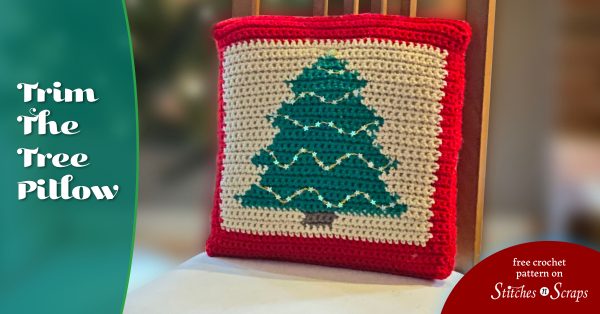
Trim the Tree Pillow Christmas Crochet Pattern
Deck your halls with this Christmas crochet pattern! Just like a real tree, this festive holiday pillow is a blank ...More
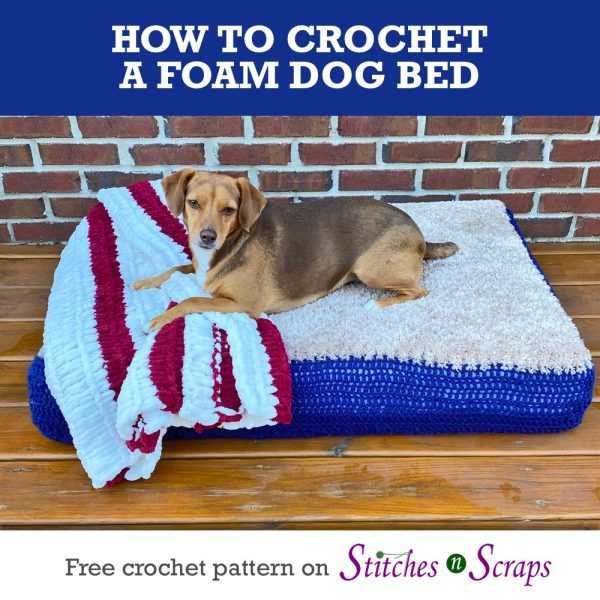
How to Crochet a Foam Dog Bed
Give your dog a cozy, supportive place to sleep! This crochet dog bed has 5 inches of foam inside and ...More
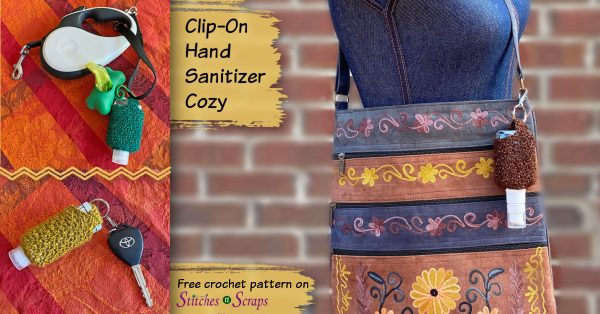
Clip On hand sanitizer cozy
Never be without your hand sanitizer again! Turn your travel size bottle into a clip-on hand sanitizer with this quick ...More
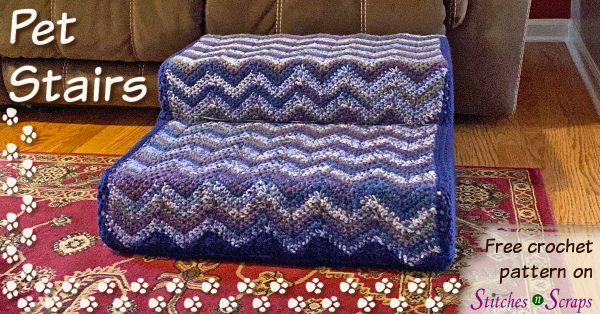
Crochet Pet Stairs on Stitches n Scraps
Sometimes our smaller fur babies need a little help to reach high places. Give them a boost with these crochet ...More
Candy Corn Soap Saver crochet pattern on Stitches n Scraps
Make yourself a sweet treat for Halloween! Put your favorite bar of soap in this Candy Corn Soap Saver. Crochet ...More
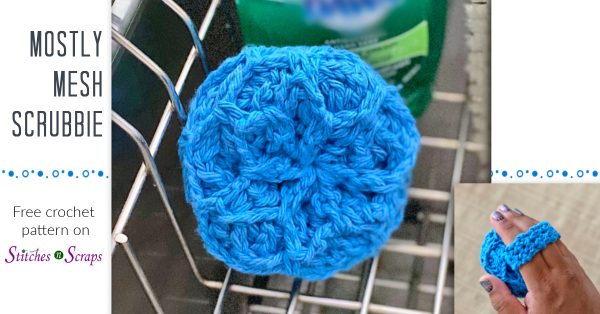
Mostly Mesh Scrubbie - an easy crochet scrubbie pattern on Stitches n Scraps
Clean up with the Mostly Mesh Scrubbie! This easy crochet scrubbie pattern works up fast with a rolled mesh tube ...More
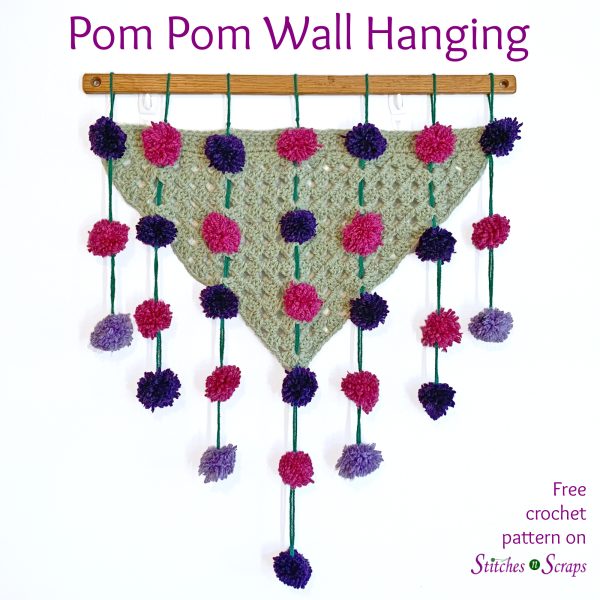
Pom Pom Wall Hanging Crochet Pattern on Stitches n Scraps
What could be better for using up scraps than fun, fuzzy pom poms? Turn your stash into a lovely pom ...More
Crochet Nesting Bowls - free pattern on Stitches n Scraps
Use up some scraps and get organized at the same time! Crochet nesting bowls are a fun way to store ...More
A mini crochet Christmas wreath hanging on a door. Text says Jingle Bell Mini Wreath - Free crochet pattern on Stitches n Scraps
Welcome guests with a jingle when you hang this mini crochet Christmas wreath on your door! Hang one on your ...More
A stair rail post with a round knob that has a crocheted pumpkin cover on it. Text says Pumpkin Post Topper - a free crochet pattern on Stitches n Scraps
The post at the top of my staircase has a ball shaped cap. Do you have one like that? Learn ...More
Trim the Tree Pillow Christmas Crochet Pattern

Christmas Crochet Pattern – Trim the Tree Pillow

Deck your halls with this Christmas crochet pattern! Just like a real tree, this festive holiday pillow is a blank canvas for your decorations. Trim the tree with buttons, pom poms, embroidery or whatever else you like for a one of a kind design!

Trim the Tree Pillow Christmas Crochet Pattern

This content is protected by copyright. See this Terms of Use / Copyright page for more information.

This post contains sponsored content and/or affiliate links. If you click an affiliate link and make a purchase, I may get a commission.

Scrappy Stitchers Stash Bash Crochet Along

This Christmas crochet pillow pattern is the November design for the 2020 Stash Bash Crochet Along. Each month, I will post a new, stash-busting pattern, and a giveaway prize too! See the giveaway details below, and join in the fun on the Scrappy Stitchers Facebook group. Remember to use the hashtag #ScrappyStitchersStashBash in your social media posts!

Scrappy Stitchers 2020 Stash Bash Crochet Along

Trim the Tree

Decorating the tree is the most fun part of making this pillow. It’s a blank slate for your creativity. Decorate it any way you like! When selecting your decorations, keep in mind that your choices may affect your ability to wash the pillow later.

https://www.instagram.com/p/BmyrYeEBmTu/

Years ago, my aunt and uncle gave me these adorable pin cushions. Among all the other attached findings were packets of star shaped sequins that were perfect for my tree!

Star shaped sequins and gold yarn for trimming the tree

I embroidered a garland with some sparkly, Lion Brand Bon Bons yarn, and then added the sequins. I first marked the “peaks” and “valleys” with pins, and loosely strung the yarn across them to make sure I liked the placement. Then, using the pins as a guide, I sewed the garland with small back stitches.

Pins marking the peaks and valleys of the garland

Intarsia Crochet Colorwork

Intarsia colorwork uses a separate ball of yarn for each section of color. I demoed this technique in my October 8th Lunchtime Live video. Since the unused yarns are not being carried through the stitches, this method avoids the “bleed through” you can sometimes get with other colorwork techniques.

Yarn Bobbins from We Crochet

Working with multiple balls of yarn can present a challenge of its own. Through most of the tree portion, you will have 5 balls of yarn attached at one time. Unruly balls or skeins easily tangle, creating tension issues and a lot of wasted time untangling.

To tame the tangles, I use these handy Knit Picks yarn bobbins. My mom got them for me years ago, and they’ve come in handy every time I do multiple strand projects. When closed, they prevent the yarn from unravelling. This means you can leave them attached closely to your fabric, and they won’t tangle with each other or other yarns!

Use a separate ball of yarn for each color section

Knit Picks is the same company that owns We Crochet, and you can buy these bobbins on either site. The Knit Picks site also has them in an Intarsia Kit, together with tapestry needles and a chart keeper!

I showed the yarn bobbins in this Lunchtime Live video. Here’s an excerpt of just that section, so you can see how they work!

Watch the whole video on YouTube

Enter the giveaway

We Crochet is providing a fantastic prize package for our giveaway this month! One lucky winner will get a set of these bobbins in each of the three sizes, AND a copy of the new WeCrochet Magazine (Issue #5). That’s 4 large bobbins, 6 medium bobbins, and 6 small bobbins, plus the magazine! Wow!

We Crochet Magazine, Issue #5

To be eligible, you must be 18 years of age or older, with a valid, US shipping address. The winner will be contacted by email, and must reply to that email and provide their shipping address within 1 week in order to receive the prize. If the winner does not reply within 1 week, a new winner will be selected. The giveaway ends on December 9th, 2020 (at 11:59pm, central time). Hurry and enter below!

This giveaway is powered by Rafflecopter, and they may ask for some log-in information if you are not already logged in. See the Rafflecopter privacy policy for more information. 

a Rafflecopter giveaway

Trim the Tree Pillow

4-medium
Project level Intermediate

Add this to your Ravelry queue

Materials

  • Yarn: Worsted weight yarn
    • 250 yds red
    • 60 yds cream
    • 10 yds brown
    • 40 yds green
  • Hook: Size I / 5.5 mm crochet hook or size needed to match gauge.
  • Notions:
    • Yarn Needle
    • 4 stitch markers
    • Embellishments as desired
    • 14 inch square pillow form

Project Level

Intermediate: Intarsia crochet colorwork, working in back loops only, seaming.

Size

14 inches square. This is designed to fit snuggly around a 14 inch pillow form. The cover can be slightly less than 14 inches, but should stretch comfortably to fit.

Gauge

11 sc x 13 rows = 4 inches

Abbreviations used

(Pattern is written in US terms)
ch = chain
sc = single crochet
dc = double crochet
csdc = chainless starting double crochet (optional – see Recommended Resources)
st(s) = stitch(es)
RS = right side

Instructions

The chainless starting double crochet (csdc) creates a cleaner edge which will make seaming easier. However, if you prefer you can replace csdc with “ch 3, counts as dc” throughout the pattern.

Prepare Bobbins

For the front of the pillow, you will need separate balls of yarn for each color section. Before you start, wind a separate ball or bobbin with about 25 or 30 yards of red yarn. Do the same with cream.

Bottom Back

Ch 40 with red

Row 1: (RS) Working into the back bumps of the chain, sc in each ch across. (39 sts)

Row 2: Turn, csdc, dc in next st and each st across.

Row 3: Ch 1, turn, sc in each st across.

Rows 4-13: Repeat rows 3-4 5 times more. Place a marker at each end of row 13

Rows 14-28: Repeat rows 2-3 7 times more, then repeat row 2 once more.

Front

Change colors as indicated in the last part of the previous stitch. See this changing colors tutorial for more details on clean color changes. Use a separate ball of yarn for each section of color – do not carry yarn from one section to another. Cut yarns when they are no longer needed, leaving tails to weave in.

Change colors in the last part of the stitch

Row 29: Ch 1, turn, sc in back loop only of each st across. This leaves a line of unused loops to mark the fold line.

(Scroll down for chart of rows 30-74)

Rows 30-34: Ch 1, turn, sc in each st across.

Rows 35-73: Ch 1, turn, sc in each st across, changing colors as indicated below:

  • Rows 35-36: 3 red, 33 cream, 3 red
  • Rows 37-39: 3 red, 14 cream, 5 brown, 14 cream, 3 red
  • Row 40: 3 red, 4 cream, 25 green, 4 cream, 3 red
  • Row 41: 3 red, 3 cream, 27 green, 3 cream, 3 red
  • Row 42: 3 red, 5 cream, 23 green, 5 cream, 3 red
  • Row 43: 3 red, 6 cream, 21 green, 6 cream, 3 red
  • Rows 44-45: 3 red, 7 cream, 19 green, 7 cream, 3 red
  • Row 46: 3 red, 8 cream, 17 green, 8 cream, 3 red
  • Row 47: 3 red, 6 cream, 21 green, 6 cream, 3 red
  • Row 48: 3 red, 5 cream, 23 green, 5 cream, 3 red
  • Row 49: 3 red, 7 cream, 19 green, 7 cream, 3 red
  • Row 50: 3 red, 8 cream, 17 green, 8 cream, 3 red
  • Rows 51-52: 3 red, 9 cream, 15 green, 9 cream, 3 red
  • Row 53: 3 red, 10 cream, 13 green, 10 cream, 3 red
  • Row 54: 3 red, 8 cream, 17 green, 8 cream, 3 red
  • Row 55: 3 red, 7 cream, 19 green, 7 cream, 3 red
  • Row 56: 3 red, 9 cream, 15 green, 9 cream, 3 red
  • Row 57: 3 red, 10 cream, 13 green, 10 cream, 3 red
  • Row 58: 3 red, 11 cream, 11 green, 11 cream, 3 red
  • Row 59: 3 red, 12 cream, 9 green, 12 cream, 3 red
  • Row 60: 3 red, 11 cream, 11 green, 11 cream, 3 red
  • Row 61: 3 red, 10 cream, 13 green, 10 cream, 3 red
  • Row 62: 3 red, 12 cream, 9 green, 12 cream, 3 red
  • Row 63: 3 red, 13 cream, 7 green, 13 cream, 3 red
  • Row 64: 3 red, 14 cream, 5 green, 14 cream, 3 red
  • Row 65: 3 red, 15 cream, 3 green, 15 cream, 3 red
  • Row 66: 3 red, 16 cream, 1 green, 16 cream, 3 red
  • Row 67-68: 3 red, 33 cream, 3 red

Rows 69-74: Ch 1, turn, sc in each st across.

Trim the Tree Pillow - Front

Chart

(same as written instructions for rows 30-74 of Front)

Each square on the chart is a single crochet in the color shown.

Trim the Tree Pillow - Front Chart
Click image to expand

Top Back

If you haven’t already, cut all yarns except for current working ball of red, leaving tails to weave in later.

Row 75: Turn, working in back loops only, csdc in first st, dc in each st across. This leaves a line of unused loops to mark the fold line.

Row 76: Ch 1, turn, sc in each st across

Row 77: Turn, csdc in first st, dc in each st across.

Row 78: Repeat row 76. Place a marker at each end of this row.

Row 79: Repeat row 77

Rows 80-90: Repeat rows 76-77 5 times more, then repeat row 76 once more.

Fasten off.

Finishing:

Weave in all ends

Trim the Tree (optional):

Decorate the tree as desired. Embroidery, sequins, buttons, pom poms and felt appliques are all good options.

Seaming:

Lay pillow flat with tree upright and right side facing up.

Lay pillow face up for seaming

Fold the top down first, being sure to fold at the line formed by the unused loops.

Fold top down

Fold the bottom up in the same manner. The ends of the top and bottom sections should line up evenly with the markers, creating a 13 row overlap.

Fold bottom up

With red, sew side edges closed, working through all layers.

Sew side edges, working through all layers

Weave in any remaining ends and remove markers.

Turn pillow right-side-out and insert pillow form.

Insert pillow form

Fluff and enjoy!

Christmas Crochet Pattern - Trim the Tree Pillow

Rate this Christmas Crochet Pattern!


I hope you enjoyed this Trim the Tree Pillow pattern. A downloadable pdf of this pattern is available on Ravelry for a small fee. The fee for the pdf format is to offset the advertising revenue lost when you print or download the pattern rather than viewing it online.

Do you want the best of Stitches n Scraps delivered right to your inbox? The Stitches n Scraps email newsletter includes highlights from the blog as well as special features not available elsewhere. Don’t miss a stitch – Subscribe now!

How to Crochet a Foam Dog Bed

Crochet Dog Bed with Fairfield Project Foam

This post contains sponsored content and/or affiliate links. If you click an affiliate link and make a purchase, I may get a commission.

Give your dog a cozy, supportive place to sleep! This crochet dog bed has 5 inches of foam inside and a soft, fur top. It’s the ultimate in comfort for your fur baby. The cover is removable, to make cleaning easier!

How to Crochet a Foam Dog Bed

This content is protected by copyright. See this Terms of Use / Copyright page for more information.

Fairfield Project Foam

I asked the folks at Fairfield for some of their 5 inch project foam for my pet stairs design. They’re so generous, that they sent me 2 pieces of foam, plus a roll of Poly-Fil Cushion Wrap and a whole bunch of other goodies too!

Fairfield Project Foam

The project foam is soft enough that I can squish it by pressing hard on it. But it’s also firm enough that it doesn’t compress when my dog, Millie walks on it. I know she thinks it’s comfy because she sometimes just lays on the stairs instead of climbing up into the bed!

Millie resting on the crochet pet stairs

For the bed I decided to add a layer of the cushion wrap. This helps to fill out the cover, and adds a luxurious, pillowy feel to the top.

Poly-Fil Cushion Wrap from Fairfield, on top of a piece of Fairfield project foam

Red Heart Yarns

Red Heart provided the yarn for the removable, crochet cover on this pet bed. The sides and bottom are made with With Love, while the top is made with Hygge Fur. The snuggly fur is warm and can be calming for dogs. The label says it’s machine washable, but I will likely hand wash this cover just to make sure it lasts longer.

Red Heart With Love and Hygge Fur yarns

Gluing Batting to Foam

Foam is tricky to glue because it’s a porous surface. Most glues tend to sink in rather than stick to the top. Spray glue is generally the best bet. There are several on the market specifically made for furniture foam and upholstery projects. Some of the stronger multi-purpose spray glues will do the job as well.

On the pet stairs, I used some Elmer’s Craft Bond Spray Adhesive that I got in a goodie bag at a conference. That bottle was nearly empty, so I bought some 3M Super 77 to finish the job.

2 different spray glues - Elmers Craft Bond and 3M 77

I found the two adhesives pretty comparable, though I didn’t need quite as much of the 3M Super 77. I think they both work well, but would likely choose the 3M glue if I had to pick.


Materials

Project Level

Intermediate: Some post stitches, working with fur yarn, join as you go.

Size

24 inches wide x 36 inches long x 5 inches tall.

Gauge

10 dc x 6.5 rows = 4 inches.

Abbreviations used

(Pattern is written in US terms)
ch = chain
sc = single crochet
dc = double crochet
bpdc = back post double crochet
st(s) = stitch(es)
sl st = slip stitch
sk = skip
rnd = round

Instructions

Wrap the Foam

Do this outdoors or in a well ventilated location. Follow any safety guidelines per your glue bottle.

Lay the Cushion Wrap down, and place the Project foam on top of it, so that there’s a 2-3 inch overlap on the front and sides. Wrap the Cushion Wrap up and over the foam as shown. It should now go around the top, bottom, and back side.

Wrap foam and trim wrap

Trim the front so there is a 2-3 inch overlap.

Trimmed cushion wrap around foam

Fold back the cushion wrap and spray the top of the foam with adhesive, then slowly replace the wrap, stretching it into place. Turn the cushion over and do the same on the back side and the bottom.

Pressing wrap into place on foam

Now fold the side edges down and glue them into place as well. Trim away any overlap, particularly in the corners. It’s ok if there are some gaps here, but do not let the wrap overlap.

Trim away excess wrap in corners

Set fully wrapped foam aside to dry while you make the cover. Allow it to dry for at least the full time shown on your glue label before trying to insert it into the cover.

Fully wrapped foam for dog bed

Bottom

Long piece:

With A, Ch 62

Ch 3 at the beginning of a row counts as a dc throughout.

Row 1 (WS): Dc in 4th ch from hook and in each ch across. (60 dc)

Row 2: Ch 3, turn, dc in next st and in each st across. (60 dc)

Place markers at the beginning and end of row 2.

Rows 3-55: Repeat row 2.

Fasten off.

Short Piece:

With A, Ch 62

Rows 1-9: Work as for rows 1-9 of long piece, including placing the markers. Do not fasten off. Secure working loop with a stitch marker or scrap of yarn and remove hook.

Join Bottom:

With right sides up, place short piece on top of long piece so that the bottom edges of each piece line up with the markers on the other piece. They should overlap by 7 rows.

Joining the 2 pieces of the back panel

Sew the two pieces together where they overlap, along the side edges only. This creates an open flap across the back, which will be used later to insert the foam.

Overlapping flap at back of dog bed

Sides:

Rnd 1 (RS): Place working loop back onto hook. Continuing from back,

  • Ch 1, turn, bpdc around each st across (60 bpdc)
  • Working in sides of rows, 90 dc evenly spaced across to corner. (90 dc)
  • Working around sts of row 1, bpdc around each st across. (60 bpdc)
  • Working in sides of rows, 90 dc evenly spaced across to corner, join with sl st to first st of round. (90 dc)

Rnds 2-8: Ch 3, turn, dc in next st and each st around, join with sl st to first st, changing to 2 strands of B held together. Fasten off A. Do not turn. (300 dc)

Bottom and sides of dog bed cover

Top

Entire top is worked with 2 strands of B held together, for added fullness. Row 1 should be worked across a short edge (60 sts).

Instead of chaining to start each new row, you will work slip stitches into the stitches from the side rounds. These slip stitches act as turning chains, while also joining the top to the sides. These slip stitches are not included in the stitch counts at the ends of the rows.

With 2 strands of B held together,

First stitch of pet bed top
First stitch of row 1

Row 1 (RS): Sl st in next st, turn, sk sl st, (2 sc in next st, ch 1, sk next st) 30 times, sl st in next 2 sts. (60 sc, 20 ch-1 sps)

slip stitch placement at end of row 1
Slip stitch placement at end of row 1

Rows 2-89: Turn, (2 sc in next ch-1 sp, ch 1, sk next 2 sc) across, sl st in next 2 unworked sts on side. (60 sc, 20 ch-1 sps)

End of row 2
Slip stitch placement at end of row 2.

Row 90: Turn, (2 sc in next ch-1 sp, ch 1, sk next 2 sc) across, sl st in next unworked st on side, changing to A, Fasten off B. (60 sc, 20 ch-1 sps)

There should now be 60 unworked sts left from rnd 8 of side.

Row 91: With A, ch 1, turn, 2 sc in first ch-1 sp, sk next 2 sc, (2 sc in next ch-1 sp, sk next 2 sc) across to last ch-1 sp, sc in last ch-1 sp, sk next st, sc in last st, fasten off leaving a 36 inch tail for sewing. (60 sc)

Joining Top

With tail, sew row 91 of top to remaining unworked sts of side.

Finishing:

  • Weave in all ends.
  • Insert wrapped foam into cover through back opening. I’ve found this is easiest to do like you would put on a stocking – crumple the cover up so you’re only dealing with the last few inches, insert the bottom of the foam, and then shimmy the cover up over the top. Finally, fold the top flap down over the edge.
Putting the cover on the pet bed

The flap should be enough to keep the cover closed on its own, and you don’t want buttons or a zipper rubbing against the floor. If you want to hold it firmly shut, you can sew in an optional tie closure. This rough seam is tied closed with a bow so it can easily be removed when needed.

  • Optional tie closure: Cut a 30 inch piece of A. Sew it through both layers across the middle of the opening, in a very large running stitch. Go over at least 3 to 4 stitches at a time so it’s easy to pull out later. Pull this yarn until the ends are roughly even. Then, sew each end back in towards the middle in a similar running stitch. When they meet at the middle, tie a bow.
Optional tie closure

To remove cover for cleaning, undo tie and slide foam out from opening.

How to Crochet a Foam Dog Bed

Rate this Crochet Dog Bed Pattern!


I hope you enjoyed this crochet dog bed pattern. A downloadable pdf of this pattern is available on Ravelry for a small fee. The fee for the pdf format is to offset the advertising revenue lost when you print or download the pattern rather than viewing it online.

Do you want the best of Stitches n Scraps delivered right to your inbox? The Stitches n Scraps email newsletter includes highlights from the blog as well as special features not available elsewhere. Don’t miss a stitch – Subscribe now!

Clip On hand sanitizer cozy

Clip-On Hand Sanitizer Cozy Crochet Pattern

Never be without your hand sanitizer again! Turn your travel size bottle into a clip-on hand sanitizer with this quick and easy crochet cozy. Attach it to your key chain, bag, even a pet leash. Then you’ll always have it with you when you go out.

Clip On hand sanitizer cozy

This content is protected by copyright. See this Terms of Use / Copyright page for more information.

This post contains sponsored content and/or affiliate links. If you click an affiliate link and make a purchase, I may get a commission.

Scrappy Stitchers Stash Bash Crochet Along

This clip-on hand sanitizer cozy is the September pattern for the 2020 Stash Bash Crochet Along. Each month, I will post a new, stash-busting pattern, and a giveaway prize too! See the giveaway details below, and join in the fun on the Scrappy Stitchers Facebook group. Remember to use the hashtag #ScrappyStitchersStashBash in your social media posts!

Scrappy Stitchers 2020 Stash Bash Crochet Along

Removable and Reusable

This cozy goes on and off easily, so you can remove your hand sanitizer bottle whenever you need to. It should fit most travel size bottles with necks and “shoulders”, like the ones pictured here. Use it for lotion bottles too!

3 different hand sanitizer bottles to fit the cozies

Lion Brand Bonbons Yarn

I have quite a stash of sparkly Bonbons from Lion Brand. They originally sent them to me for free for a magazine pattern some time ago, but I only used a few colors and now I have lots left over.

The sparkly bonbons are a lighter weight than the non-sparkly ones, so please be sure to double check your gauge. I love the sparkles, and there’s more than enough yarn in one skein to make this pattern. All the colors I used came from color pack 650 – Party.

Face Masks from Tailor Made Cosplay

Face masks are the must have accessory of the year. Mask up in style with pleated masks from Tailor Made Cosplay. Check out my Maker Spotlight interview with the owner, Mary Beth Temple.

Watch this Video on YouTube

They offer masks in a wide variety of fabrics, and I bought a couple of them earlier this year. My hubby ordered a plain black one, and I got a cute one with yarn balls all over it!

Make a Holiday Gift Set

Combine a fun mask from Tailor Made Cosplay with a matching clip-on hand sanitizer cozy and a bottle of hand sanitizer for a fantastic holiday gift or stocking stuffer.

Enter the giveaway

Tailor Made Cosplay is providing a free mask for one lucky winner. The winner will get to choose their design from the ones in stock on the website at that time! Which one would you choose? Here are a few of my favorites.

To be eligible, you must be 18 years of age or older, with a valid, US shipping address. The winner will be contacted by email, and must reply to that email and provide their selections and shipping address within 1 week in order to receive the prize. If the winner does not reply within 1 week, a new winner will be selected. The giveaway ends on October 7th, 2020 (at 11:59pm, central time). Hurry and enter below!

This giveaway is powered by Rafflecopter, and they may ask for some log-in information if you are not already logged in. See the Rafflecopter privacy policy for more information. 

a Rafflecopter giveaway

Clip-On Hand Sanitizer Cozy

2 - fine
Project Level Easy

Add this to your Ravelry queue

Materials

  • Yarn: 15 yds sport weight yarn.
  • Hook: Size G / 4 mm crochet hook or size needed to match gauge.
  • Notions:
    • Yarn Needle
    • Key ring, caribiner clip, or other choice of clip or ring.

Project Level

Easy: Smaller yarn, worked in the round with some increases.

Size

About 2.5 inches x 2.5 inches without bottle. Designed to fit travel size hand sanitizer bottles.

Gauge

20 sc x 24 rows = 4 inches. Exact gauge is not critical, bottle should fit snugly.

Abbreviations used

(Pattern is written in US terms)
ch = chain
sc = single crochet
dc = double crochet
st(s) = stitch(es)
rnd = round

Recommended Resources

Instructions

Main Section

Join rounds where indicated with a sl st in the first st of the round. Do not turn your work unless specifically indicated.

Ch 15

Rnd 1: Sc in 2nd ch from hook and each st around join. (14 sts)

Rnd 2: Ch 1, (sc, dc) in first st, (sc in next st, dc in next st) twice, sc in next st, (dc, sc) in each of next 2 sts, (dc in next st, sc in next st) twice, dc in next st, (sc, dc) in last st, join. (18 sts)

Rnd 3: Ch 1, (sc, dc) in first st, (sc in next st, dc in next st) 3 times, sc in next st, (dc, sc) in each of next 2 sts, (dc in next st, sc in next st) 3 times, dc in next st, (sc, dc) in last st, join. (22 sts)

Rnd 4: Ch 1, (sc, dc) in first st, (sc in next st, dc in next st) 4 times, sc in next st, (dc, sc) in each of next 2 sts, (dc in next st, sc in next st) 4 times, dc in next st, (sc, dc) in last st, join. (26 sts)

Rounds 1-4 of hand sanitizer cozy

Rnd 5: Ch 3 (counts as dc), (sc in next st, dc in next st) around, join. (26 sts)

Rnd 6: Ch 1, sc in first st, dc in next st, (sc in next st, dc in next st) around, join. (26 sts)

Rnds 7-14: Repeat rnds 5-6 4 more times.

Strap

This section is worked back and forth in rows.

Row 1: Ch 1, turn, sc in first 5 sts, leaving remaining sts unworked. (5 sts)

Rows 2-8: Ch 1, turn, sc in each st across, fasten off. (5 sts)

Slide strap through your chosen ring or clip.

On the main section, skip the next 8 unworked sts, and line up end of strap with the next 5 stitches. This should center the strap with 8 unworked sts on each side of it. Sew end of strap into place.

Finishing:

Weave in all ends.

Pull strap to one side so it’s out of the way. Insert bottle so that the cap goes through the hole at the bottom of the cozy. Then stretch the strap up and over the bottom of the bottle.

Clip on to your desired item and you’re ready to go!

Clip On hand sanitizer cozy

Rate this Clip-On Hand Sanitizer Cozy Pattern!


I hope you enjoyed this clip-on hand sanitizer cozy crochet pattern. A downloadable pdf of this pattern is available on Ravelry for a small fee. The fee for the pdf format is to offset the advertising revenue lost when you print or download the pattern rather than viewing it online.

Do you want the best of Stitches n Scraps delivered right to your inbox? The Stitches n Scraps email newsletter includes highlights from the blog as well as special features not available elsewhere. Don’t miss a stitch – Subscribe now!

Crochet Pet Stairs on Stitches n Scraps

How to Crochet Pet Stairs with Fairfield Project Foam

This post contains sponsored content and/or affiliate links. If you click an affiliate link and make a purchase, I may get a commission.

Sometimes our smaller fur babies need a little help to reach high places. Give them a boost with these crochet pet stairs! The sturdy foam insert makes the stairs a comfy place to rest too.

How to crochet pet stairs - free pattern on Stitches n Scraps

This content is protected by copyright. See this Terms of Use / Copyright page for more information.

Fairfield Project Foam

I asked the folks at Fairfield to provide some of their 5 inch project foam for this stair design. They’re so generous, that they sent me 2 pieces of foam, plus a roll of batting, and a whole bunch of other goodies too!

Fairfield Project Foam

The project foam is exactly the consistency I had hoped for. It’s soft enough that I can squish it by pressing hard on it. But it’s also firm enough that it doesn’t compress when Millie walks on it.

For Small Pets Only

My Millie is about 23 lbs. (Check her out on Instagram!) So far, these stairs are holding up well to her weight, without a lot of give.

Millie looking out the window from her high perch

Since the filling is foam and not a rigid material like wood, it may compress more under a heavier animal. Anything above 25 lbs may be a bit too much for these stairs.

Crochet Pet Stairs and Chair Too!

These stairs were intended to help Millie climb up to her favorite perch where she can look out the window. She learned to use them right away and scrambles up and down them with ease. But sometimes, I find her just relaxing on the stairs themselves!

Millie resting on the crochet pet stairs

It turns out the stairs double as a firm but comfy chair. She loves to sit on the bottom step and rest her head on the top. Since Fairfield sent me an extra piece of foam, I plan to make a separate dog bed for her as well.

Red Heart With Love Yarn

For the removable, crochet cover on these pet stairs, Red Heart provided some With Love yarn. The yarn is soft enough that Millie enjoys laying on it, but still sturdy enough to hold up to her climbing up and down. It’s also machine washable, which makes it super easy to keep clean!

Clover Rotary Cutter

Clover sent me a free rotary cutter to try out and review, which I will be doing soon. I used it to score the foam for this project prior to cutting it all the way through. I found it really helped me create a smooth, clean cut line. You don’t absolutely need a rotary cutter to do this project. If you have one though, it does help give it a cleaner finish.

Clover 45 mm Rotary Cutter

Gluing Foam

Foam is tricky to glue together because it’s a porous surface. Most glues tend to sink in rather than stick to the top. Spray glue is generally the best bet. There are several on the market specifically made for furniture foam and upholstery projects. Some of the stronger multi-purpose spray glues will do the job as well.

Elmers Spray Glue

I got a small bottle of Elmer’s Craft Bond Spray Adhesive in a goodie bag at a conference, so I decided to try it. My first attempt failed. The glue seemed to stick at first, and I left it to cure for a full 24 hours. But later, with a little movement, the top piece fell off.

Elmer's Craft Bond Spray Adhesive

After a bit of research, I tried again with the same glue. This time, I used about 3 times as much. I more or less emptied the rest of the bottle onto the foam. Again I waited 24 hours, and this time the glue held through some moderate tugging!

Millie has been using the stairs pretty frequently for the last few days, and so far everything is still in place.

Trial and Error

Since the cover on these stairs is removable, it’s ok if the glue doesn’t last forever. If it ever starts to come apart, you can just remove the cover and re-apply, or try something else.

My bottle is nearly empty, so I bought a different glue to try on my next foam project. It’s 3M super 77 and is supposed to be a bit stronger. I’m hoping that means I can use a bit less.


Crochet Pet Stairs

4-medium
Project level Intermediate

Add this to your Ravelry queue

Materials

Project Level

Intermediate: 3 dimensional project with chevrons and seaming.

Size

24 inches wide x 24 inches deep x 10 inches tall.

Gauge

10 dc x 6.5 rows = 4 inches.

Abbreviations used

(Pattern is written in US terms)
ch = chain
sc = single crochet
hdc = half double crochet
dc = double crochet
tr = treble crochet
sc2tog = single crochet next 2 stitches together (see Special Stitches)
sc3tog = single crochet next 3 stitches together (see Special Stitches)
st(s) = stitch(es)

Special Stitches

Single Crochet 2 Together (sc2tog): (Insert hook, yarn over and pull up a loop) in each of next 2 stitches, yarn over and pull through all 3 loops on hook.

Single Crochet 3 Together (sc3tog): (Insert hook, yarn over and pull up a loop) in each of next 3 stitches, yarn over and pull through all 4 loops on hook.

Instructions

Stair Form

Measure

Draw a line 12 inches from one short edge of the project foam, all the way around the top, sides, and bottom of your foam. This line should create a 12 x 24 x 5 inch section, and a 24 x 24 x 5 inch section. Double check your measurements before starting to cut.

Foam marked for cutting

Cut

This part will likely make a mess – do it outdoors or where you can easily clean up.

Cut through the foam straight down along the line.

Scoring the foam with a Clover rotary cutter

I used a ruler and my rotary cutter from Clover to score a straight line all the way around, and then used a bread knife to finish the cut. Go slowly and be careful to keep your cut straight all the way through. A rotary or band saw may work well for this too, if you have one available.

Rough edges of foam after cutting

Glue

Do this outdoors or in a well ventilated location. Follow any safety guidelines per your glue bottle.

Place the smaller section on top of the larger section so that both cut edges are lined up at the back. Make any last minute adjustments to the cut as necessary. Note the surfaces that touch – this is where you will spray the glue.

Foam pieces layered to form steps

Using spray glue per the instructions on your bottle, spray the bottom of the smaller piece and place it back on top of the larger piece. Allow to set fully before moving.

Cover – Main Section

Main Section Chart

(written instructions below)

Pet Stairs Main section chart
Click image to view larger

Top Back

With A, Ch 62

Row 1: Sc in 2nd ch from hook and in each ch across. (61 sc)

Rows 2-9: Ch 3, turn, dc in next st and in each st across. (61 dc)

Check gauge – work should measure about 24 inches wide x 5.75 inches tall.

Row 10: Ch 1, sc in first st, sc in next st, hdc in next 2 sts, dc in next st, tr in next st, dc in next st, hdc in next 2 sts, sc in next st, (sl st in next st, sc in next st, hdc in next 2 sts, dc in next st, tr in next st, dc in next st, hdc in next 2 sts, sc in next st) across to last st, sc in last st. Change to B, fasten off A. (6 tr points)

Top & Front

In this section, place a marker at each end of rows 11, 37, 48, 74, and 85. These markers fall at the corners of the stairs, for seaming later.

Placement of stitch markers on main section of pet stairs

With B,

Row 11: Ch 1, turn, sc2tog, sc in next 3 sts, 3 sc in next st, sc in next 3 sts, (sc3tog, sc in next 3 sts, 3 sc in next st, sc in next 3 sts) across to last 2 sts, sc in last 2 sts. (61 sts)

Rows 12-85 Repeat row 11.

Change to A, fasten off B

Bottom, and Bottom Back

In this section, place a marker at each end of row 123

With A

Row 86: Ch 3 (counts as tr), tr in same st, dc in next st, hdc in next 2 sts, sc3tog, hdc in next 2 sts, dc in next st, (3 tr in next st, dc in next st, hdc in next 2 sts, sc3tog, hdc in next 2 sts, dc in next st) across to last st, 2 tr in last st. (61 sts)

Rows 87-131: Ch 3 (counts as dc), dc in next st and in each st across.

Row 132: Ch 1, sc in each st across. Fasten off.

Finished main section of pet stairs

Cover – Sides (Make 2)

Sides Chart

(written instructions below)

Pet Stairs side chart
Click image to view larger

With A, Ch 62

Row 1: Dc in 4th ch from hook and in each ch across. (60 dc)

Rows 2-8: Ch 3, turn, dc in next st and in each st across. (60 dc)

Row 9: Ch 3, turn, dc in next 29 sts, leaving remaining sts unworked. (30 dc)

Rows 10-16: Ch 3, turn, dc in next st and in each st across. (30 dc). Fasten off.

Side of pet stairs

Assembly:

There is no right or wrong side to the fabric until after it is seamed. I found the seaming easier to do with the fabric in place on the stair form, but it can be done flat as well.

Seaming

  • Line up stitch markers with corners of one side piece and pin or clip in place. The back sections should meet at the middle of the back.
Pin pieces in place, lining up markers with points of side
  • Sew seam all the way around side piece.
  • Repeat for other side – do not sew back opening closed.
  • Weave in all ends.
  • Remove stair form through back opening, and turn cover right side out so that seams are on the inside.
Open back of pet stairs cover

Drawstring and Back Closure

  • Insert stair form.
  • Cut a piece of B about 80 inches long.
  • Starting at one end of the back opening, sew in large running stitches around the side, front and other side, ending at the other end of the back opening.
Drawstring sewn around middle of pet stairs
  • Starting from the ends and meeting in the middle, sew opening closed using large whip stitches, like lacing a shoe.
  • Pull strings snuggly, tucking in fabric to create a crisp line between the steps.
  • Tie ends in a bow at the back and trim if necessary.
Back of pet stairs laced closed and secured with a bow

To remove cover for cleaning, undo the bow and back seam, then pull out stair form.

Rate this Crochet Pet Stairs Pattern!


I hope you enjoyed this crochet pet stairs pattern. A downloadable pdf of this pattern is available on Ravelry for a small fee. The fee for the pdf format is to offset the advertising revenue lost when you print or download the pattern rather than viewing it online.

Do you want the best of Stitches n Scraps delivered right to your inbox? The Stitches n Scraps email newsletter includes highlights from the blog as well as special features not available elsewhere. Don’t miss a stitch – Subscribe now!

Candy Corn Soap Saver crochet pattern on Stitches n Scraps

Candy Corn Soap Saver Halloween Crochet Pattern

Make yourself a sweet treat for Halloween! Put your favorite bar of soap in this Candy Corn Soap Saver. Crochet lemon peel stitch makes a gentle washcloth texture, while the bag lets you use up every last bit of that special soap. It also makes a great treat bag!

Candy Corn Soap Saver crochet pattern on Stitches n Scraps

This content is protected by copyright. See this Terms of Use / Copyright page for more information.

This post contains sponsored content and/or affiliate links. If you click an affiliate link and make a purchase, I may get a commission.

Scrappy Stitchers Stash Bash Crochet Along

This candy corn soap saver is the August pattern for the 2020 Stash Bash Crochet Along. Each month, I will post a new, stash-busting pattern, and a giveaway prize too! See the giveaway details below, and join in the fun on the Scrappy Stitchers Facebook group. Remember to use the hashtag #ScrappyStitchersStashBash in your social media posts!

Scrappy Stitchers 2020 Stash Bash Crochet Along

Navi’s Handmade – Soaps and More!

Did you notice the shelf full of bath goodies in the main picture? Those bath bombs, bath salts, and sugar scrub all come from my friend Navi of Navi’s Handmade.

Candy Corn Soap Saver crochet pattern on Stitches n Scraps

I have horribly sensitive skin that breaks out in hives at the least provocation. (Did you know you can actually be allergic to the sun? Apparently it’s true!). I tend to stay away from fancy, scented products because I’m never sure how my skin will react.

I’ve used several of Navi’s bath products now and have never had any sort of skin reaction at all.The scents are lovely too, and his bath bombs have become one of my favorite treats.

Enter the giveaway

Navi is giving one lucky winner 2 handmade soaps, and a eucalyptus clay mask! Note: depending on stock, the soaps may be different than the ones pictured here. Check out the rest of Navi’s Handmade soaps on his website!

To be eligible, you must be 18 years of age or older, with a valid, US shipping address. The winner will be contacted by email, and must reply to that email and provide their selections and shipping address within 1 week in order to receive the prize. If the winner does not reply within 1 week, a new winner will be selected. The giveaway ends on September 9th, 2020 (at 11:59pm, central time). Hurry and enter below!

This giveaway is powered by Rafflecopter, and they may ask for some log-in information if you are not already logged in. See the Rafflecopter privacy policy for more information. 

a Rafflecopter giveaway


Candy Corn Soap Saver

4-medium
Project Level Easy

Add this to your Ravelry queue

Materials

  • Yarn: Worsted weight, cotton yarn – 25 yds each of yellow, orange, and white.
  • Hook: Size H / 5 mm crochet hook or size needed to match gauge.
  • Notions:
    • Yarn Needle
    • Stitch Marker (optional)

Project Level

Easy: Single and double crochet in the round.

Size

3.5 inches wide, 5.5 inches tall, 1.5 inches deep.

Gauge

16 dc x 8 rows = 4 inches. Use pattern as gauge swatch – Bottom should measure about 1.5 inches x 3.5 inches. Exact gauge is not critical.

Abbreviations used

(Pattern is written in US terms)
ch = chain
sc = single crochet
dc = double crochet
st(s) = stitch(es)
rnd = round

Instructions

Entire pattern is worked on the right side, do not turn at the end of rounds.

Bottom

With yellow, ch 10

Rnd 1: Sc in 2nd ch from hook and in next 7 chs, 3 sc in last ch, working in bottoms of chains, sc in bottom of next 7 chains, 2 sc in same ch as start of rnd, join. (20 sc)

Rnd 2: Ch 1, sc in first 8 sts, 3 sc in next st, sc in next st, 3 sc in next st, sc in next 7 sts, 3 sc in next st, sc in next st, 2 sc in same st as start of rnd, join. (28 sc)

Bottom of soap saver

Bag

Rnd 3: Ch 1, sc in first st, dc in next st, (sc in next st, dc in next st) around, join.

Rnd 4: Ch 3 (counts as dc), sc in next st, (dc in next st, sc in next st) around, join.

Yellow section of soap saver

Rnds 5-12: With orange, repeat rnds 3-4 4 times, changing to white at end of rnd 12.

Yellow and orange sections of soap saver

Rnds 13-16: With white, repeat rnds 3-4 twice.

Rnd 17: Ch 1, sc in each st around, join.

Soap Saver in progress - before drawstring

Fasten off, weave in all ends

Drawstring:

With white, ch 75, do not fasten off. Secure working loop with a stitch marker if desired.

Using the opposite end (beginning tail), weave drawstring in and out of rnd 16. You can start either from the center or a long edge, or from a side edge as shown. Go over or under 2 stitches at a time until you get back around to the start.

Weave cord through top of bag

Once you are happy with the drawstring’s position, sl st into the first st to make a loop.

Join cord with a slip stitch

Fasten off and weave in ends.

Place your favorite soap in the soap saver, and pull it closed with the drawstring. Tie a knot in the drawstring to secure it in place.

Halloween Candy Soap Saver crochet pattern on Stitches n Scraps

Rate this Candy Corn Soap Saver Pattern!


I hope you enjoyed this soap saver pattern. A downloadable pdf of this pattern is available on Ravelry for a small fee. The fee for the pdf format is to offset the advertising revenue lost when you print or download the pattern rather than viewing it online.

Do you want the best of Stitches n Scraps delivered right to your inbox? The Stitches n Scraps email newsletter includes highlights from the blog as well as special features not available elsewhere. Don’t miss a stitch – Subscribe now!

Mostly Mesh Scrubbie - an easy crochet scrubbie pattern on Stitches n Scraps

Easy Crochet Scrubbie – Mostly Mesh

Clean up with the Mostly Mesh Scrubbie! This easy crochet scrubbie pattern works up fast with a rolled mesh tube construction. A solid back with a handle helps hold it all together and makes it easy to use too.

Mostly Mesh Scrubbie - an easy crochet scrubbie pattern on Stitches n Scraps

This content is protected by copyright. See this Terms of Use / Copyright page for more information.

This post contains sponsored content and/or affiliate links. If you click an affiliate link and make a purchase, I may get a commission.

CAL Central Scrubbie Crochet Along

This pattern was designed for the 2020 Scrubbie Crochet Along at CAL Central. Join the fun on Facebook and Ravelry! Learn more and see the full schedule in this intro post.

CAL Central 2020 Scrubbie Crochet Along

Premier Home Cotton Yarn

For my scrubbie I chose Premier Home Cotton yarn, which I got in a goodie bag at a conference several years ago. The color is called Delft Blue.

Premier Home Cotton Yarn

This yarn is a blend of 85% cotton and 15% polyester. The polyester gives it a little extra strength and durability, so it’s perfect for scrubbies like this that will get a lot of hard use.

Rolling up the Mesh Tube

This easy crochet scrubbie pattern starts out as a long, mesh tube. To make it into a scrubbie, roll the tube up into a tight doughnut.

Sewing it closed at the end is optional. If you don’t sew it closed, then you can easily open it out all the way for quick washing and drying. I decided to sew mine closed so it would stay together well, even with heavy scrubbing.


Mostly Mesh Scrubbie

4-medium
Project Level Easy

Add this to your Ravelry queue

Materials

Project Level

Easy: Basic stitches in a repeating pattern.

Size

About 3.5 inches in diameter and 1.5 inches thick when rolled up.

Gauge

14 sc x 15 rows = 4 inches.

Use pattern as gauge swatch – Top (rnds 1-5) should measure about 2.5 inches in diameter. Exact gauge is not critical for this pattern.

Abbreviations used

(Pattern is written in US terms)
ch = chain
sc = single crochet
sk = skip
st(s) = stitch(es)
sl st = slip stitch
sp = space
ch-sp = chain space
rnd = round
RS = right side

Recommended Resources

Instructions

Except for handle, the entire pattern is worked in continuous rounds. Do not join or turn unless indicated. Mark first stitch of each round.

Top

Leaving an 8 inch tail, ch 2.

Rnd 1 (RS): 6 sc in 2nd ch from hook. (6 sc)

Rnd 2: Working in back loops only, 2 sc in each st around. (12 sc)

Rnd 3: Working in back loops only,(2 sc in next st, sc in next st) around. (18 sc)

Rnd 4: Working in back loops only, (2 sc in next st, sc in each of next 2 sts) around, sl st in next st. Do not fasten off. (24 sc)

Mostly Mesh Scrubbie Top

Handle

Row 1: Ch 1, sc in same st and next 2 sts. (3 sc)

Row 2-12: Ch 1, turn, sc in each st across. (3 sc)

Row 13: Ch 1, turn. With RS of top facing, sk next 9 st on top, sl st in next 3 sts of handle and top together. Do not fasten off.

Joining handle to top

Mesh Tube

Rnd 1 (WS): Working into top: Ch 5, turn, sk first 3 sts where handle is joined, sc in next st, (ch 5, sk next 3 sts, sc in next st) 5 times. (6 sc, 6 ch-5 sps)

First round of mesh

For rnds 2-25, sk all sc and work only into ch-5 sps.

Rnds 2-25: (Ch 5, sc in next ch-5 sp) 6 times.

Fasten off, weave in ending tail.

If you do not plan to sew the scrubbie closed, weave in starting tail as well.

Mesh tube before rolling

Assembly

Make sure scrubbie is right side out, with handle on the outside.

Grasp open end of tube and fold the edges inwards.

Roll up mesh

Continue rolling the tube inwards tightly, until it rests firmly against top. (See video above or in Recommended Resources section)

Scrubbie rolled up

Optional: Using starting tail, sew back and forth through the mesh and center of top, pulling it together tightly at the center. Weave in end.

Sewing mesh closed 2

Rate this Easy Crochet Scrubbie Pattern!


I hope you enjoyed this easy crochet scrubbie pattern. A downloadable pdf of this pattern is available on Ravelry for a small fee. The fee for the pdf format is to offset the advertising revenue lost when you print or download the pattern rather than viewing it online.

Do you want the best of Stitches n Scraps delivered right to your inbox? The Stitches n Scraps email newsletter includes highlights from the blog as well as special features not available elsewhere. Don’t miss a stitch – Subscribe now!

Pom Pom Wall Hanging Crochet Pattern on Stitches n Scraps

Pom Pom Wall Hanging Crochet Pattern

What could be better for using up scraps than fun, fuzzy pom poms? Turn your stash into a lovely pom pom wall hanging with a crochet background!

Pom Pom Wall Hanging Crochet Pattern on Stitches n Scraps

This content is protected by copyright. See this Terms of Use / Copyright page for more information.

Scrappy Stitchers Stash Bash Crochet Along

This pom pom wall hanging is the July pattern for the 2020 Stash Bash Crochet Along. Each month, I will post a new, stash-busting pattern, and a giveaway prize too! See the giveaway details below, and join in the fun on the Scrappy Stitchers Facebook group. Remember to use the hashtag #ScrappyStitchersStashBash in your social media posts!

Scrappy Stitchers 2020 Stash Bash Crochet Along

This post contains sponsored content and/or affiliate links. If you click an affiliate link and make a purchase, I may get a commission.

My stash yarns

I mostly used Paintbox Yarns Simply Aran for my wall hanging. I have a lot of this yarn left over from lots of different projects, and mostly in little bits of various colors.

  • Background green: 224 Pistachio Green
  • Dark purple pom poms: 248 Dark Aubergine
  • Pink pom poms: 243 Raspberry Pink
  • Darker green strings: 230 Evergreen
Different colors of pom poms and background

I ran a bit short on the dark purple, so filled in with 4 lighter purple pom poms. I’m not sure what yarn those are, though they may have been Red Heart Soft in 9528 Lilac.

Get Creative!

The joy of scrap projects is that you can use as few or as many colors as you like. Mix up your pom pom colors, or even use multiple colors on the background. You could vary the sizes of the pom poms too, but keep in mind that will change the amount of yarn you need. Anything goes, so experiment, and make it your own!

Choosing a Stick

You can hang your wall hanging on any stick that is at least 20 inches long, and no more than about 1.5 inches in diameter. For mine, I chose one of the lease sticks that came with my loom. It’s a little shorter than I would have liked, but I never use them, so it was handy and available.

You can use a dowel, a fairly straight branch from a tree, or even a pvc pipe. If you do want to use a stick that is thicker, just remember to make your hanging loops a little taller to accommodate it.

Clover Pom Pom Makers

There are lots of different ways to make pom poms, but the one I’ve found fastest and easiest is these pom pom makers from Clover.

Clover small pom pom maker set

Learn how to use these pom pom makers in this great tutorial from Jessie at Home. You can also watch my demo in this Lunchtime Live video. Here’s a quick overview on Tangi.

For my wall hanging I chose the pink, 1 3/8 inch size. I’ve had this small set at home for years, and it’s not the same set as the giveaway prize.

Enter the giveaway

Clover is providing their new and improved Pom Pom Maker Set as a prize for one lucky winner! This set includes the 4 most popular sizes: 1 3/8 inch, 2 1/2 inch, 1 3/4 inch and 3 3/8 inch.

Unlike mine, each of these pom pom makers has a measuring scale of raised ridges around the edge. These can be used to make multi-colored pom poms with perfectly measured sections of color. Enter below for your chance to win this great set!

Clover Pom Pom Maker set of 4

To be eligible, you must be 18 years of age or older, with a valid, US shipping address. The winner will be contacted by email, and must reply to that email and provide their selections and shipping address within 1 week in order to receive the prize. If the winner does not reply within 1 week, a new winner will be selected. The giveaway ends on August 5th, 2020 (at 11:59pm, central time). Hurry and enter below!

This giveaway is powered by Rafflecopter, and they may ask for some log-in information if you are not already logged in. See the Rafflecopter privacy policy for more information. 

a Rafflecopter giveaway

Pom Pom Wall Hanging

4-medium
Project Level Easy

Add this to your Ravelry queue

Materials

  • Yarn: Worsted weight yarn.
    • 100 yds for crochet background
    • 125-200 yds for 30 pom poms – this will vary a lot depending on how full you make your pom poms.
    • 10 yds for hanging strings
  • Hook: Size I / 5.5 mm crochet hook or size needed to match gauge.
  • Notions:
    • Yarn Needle
    • 1 3/8 inch Clover Pom Pom Maker
    • Stitch marker or scrap of yarn.
    • Stick or dowel rod at least 20 inches long for hanging, and no more than about 1.5 inches in diameter

Project Level

Easy: Pom poms and a basic granny square triangle with a border.

Size

Crochet background: 18 inches wide x 11 inches tall

With pom poms and hanging loops, approx 18 inches wide x 19 inches tall.

Gauge

11 dc x 6 rows = 4 inches.

Use pattern as gauge swatch – After row 3, base should measure 4 inches wide x 2 inches tall.

Exact gauge is not critical for this project.

Abbreviations used

(Pattern is written in US terms)
ch = chain
sc = single crochet
dc = double crochet
st(s) = stitch(es)
sl st = slip stitch
sp = space
ch-sp = chain space
RS = right side

Instructions

Background

Ch 3 at the start of a row counts as a dc. For a neater finish, try the chainless starting double crochet instead of the ch 3!

Granny Triangle

Ch 4

Row 1: (2 dc, ch 2, 3 dc) in 3rd ch from hook. (6 dc – counting the 3 skipped chs as a stitch)

Row 2 (RS): Ch 3, turn, 2 dc in same st, ch 1, sk next 2 sts, (3 dc, ch 2, 3 dc) in next ch-2 sp, ch 1, sk next 2 sts, 3 dc in last st. (12 dc)

Row 3: Ch 3, turn, 2 dc in same st, ch 1, sk next 2 sts, 3 dc in next ch-1 sp, ch 1, sk next 2 sts, (3 dc, ch 2, 3 dc) in next ch-2 sp, ch 1, sk next 2 sts, 3 dc in next ch-1 sp, ch 1, sk next 2 sts, 3 dc in last st. (18 dc)

Rows 4-12: Ch 3, turn, 2 dc in same st, ch 1, sk next 2 sts, [3 dc in next ch-1 sp, ch 1, sk next 2 sts] across to next ch-2 sp, (3 dc, ch 2, 3dc) in ch-2 sp, ch 1, sk next 2 sts, [3 dc in next ch-1 sp, ch 1, sk next 2 sts] across to last st, 3 dc in last st. (72 dc on row 12)

Top border:

Row 13: Do not turn. Ch 1, working into sides of rows, 2 sc in each row to center, sc in center, 2 sc in each row to end. (49 sc)

Row 14: Ch 3, turn, dc in next st and each st across. (49 dc)

Row 15: Ch 1, turn, sc in each st across. Fasten off. (49 sc)

Weave in ends. For best results, wash and block.

Wall hanging background

Pom Poms and Strings

Make 30, 1 3/8 inch pom poms.

Cut the following lengths of yarn for stringing the pom poms:

  • 1 – 54 inch piece
  • 2 -48 inch pieces
  • 2 -42 inch pieces
  • 2 -36 inch pieces

Assembly

Place crocheted triangle background flat on a work surface with right side up. The border should be on top.

Note that the chain spaces line up in vertical columns. There will be 3 empty columns between each string of pom poms.

Placement of pom pom strings

Center String:

Find and mark the center stitch on row 15 of the top border. This is the 25th stitch from either edge. Using the 54 inch string:

  1. Fold the string in half, forming a loop at the top. Tie a knot 2 inches down from the fold, creating a 2-inch hanging loop.
  2. Place this knot above the marked stitch. Lay one of the two ends over your work. Bring the other end up from behind your work, through the top of the dc stitch below. Remove marker
Attach hanging loop
  1. Tie both ends in a knot, leaving enough of a gap not to distort the stitches.
Attach hanging loop - 2nd knot
  1. Thread both ends on a needle and sew through the center of the first pom pom. Push the pom pom up to rest against the knot.
Attach first pom pom
  1. Working along the column of chain spaces directly below, bring your needle down through the first space, then up through the next one.
Weaving the yarn through the holes
  1. Bring your needle down through the next space and up through the next one once more.
Attach 2nd pom pom
  1. Sew through the next pom pom, then repeat step 6 twice.
  2. Repeat step 7 once more. This should bring you to the bottom point.
3rd pom pom attached, with harn coming out at end
  1. Sew through the next pom pom, slide it up against the bottom edge, and tie a knot underneath it to hold it in place.
5th pom pom attached
  1. Sew through another pom pom and slide it up the string until there is roughly a 2 inch gap (end to end) between the two pom poms. Tie a knot underneath it to hold it in this position.
Separation between hanging pom poms
  1. Repeat Step 10 for the last pom pom.
  2. Sew the ends back up and down through the pom pom 2 or 3 times, then trim them off close to the center of the pom pom.
Trim end after weaving in

For the remaining strings, instead of measuring 2 inches between the hanging pom poms, you can try to line them up evenly with the adjacent string instead. Either way is fine, whichever is easier for you.

String 2

Count 8 stitches to the right of the previous column and mark the 8th stitch.

  1. With a 48 inch string, repeat steps 1-7 of center string. This should bring you to the bottom edge.
  2. Skip step 8 and repeat steps 9-12 of center string.
2nd string of pom poms attached

String 3

Count 8 stitches to the right of the previous column and mark the 8th stitch.

  1. With a 42 inch string, repeat steps 1-6 of center string. This should bring you to the bottom edge.
  2. Skip steps 7-8 and repeat steps 9-12 of center string.

String 4

Count 8 more stitches to the right of the previous column – this should bring you to the very last stitch at the corner. Working into that stitch:

  1. With a 36 inch string, repeat steps 1-3 of center string. Since we’re at the corner, we’re already at the bottom edge.
  2. Skip steps 4-8 and repeat steps 9-12 of center string.
First 4 strings of pom poms

Strings 5-7

Working to the left of the center instead of to the right, repeat strings 2-4.

Insert hanging rod through the loops and hang as desired.

Pom Pom Wall Hanging Crochet Pattern on Stitches n Scraps

Rate this Pom Pom Wall Hanging Crochet Pattern!


I hope you enjoyed this pom pom wall hanging pattern. A downloadable pdf of this pattern is available on Ravelry for a small fee. The fee for the pdf format is to offset the advertising revenue lost when you print or download the pattern rather than viewing it online.

Do you want the best of Stitches n Scraps delivered right to your inbox? The Stitches n Scraps email newsletter includes highlights from the blog as well as special features not available elsewhere. Don’t miss a stitch – Subscribe now!

Crochet Nesting Bowls - free pattern on Stitches n Scraps

Crochet Nesting Bowls Scrap Yarn Pattern

Use up some scraps and get organized at the same time! Crochet nesting bowls are a fun way to store small things like keys, change, buttons, or even stitch markers. With 5 bowls in the set, there’s a perfect size for all of it.

Crochet Nesting Bowls - free pattern on Stitches n Scraps

This content is protected by copyright. See this Terms of Use / Copyright page for more information.

Pot Pourri Bowls

These crochet nesting bowls can make great pot pourri holders too. Line them with plastic wrap or foil first, for easier emptying when you’re done!

Scrappy Stitchers Stash Bash Crochet Along

These crochet nesting bowls are the May pattern for the 2020 Stash Bash Crochet Along. Each month, I will post a new, stash-busting pattern, and a giveaway prize too! See the giveaway details below, and join in the fun on the Scrappy Stitchers Facebook group. Remember to use the hashtag #ScrappyStitchersStashBash in your social media posts!

Scrappy Stitchers 2020 Stash Bash Crochet Along

This post contains sponsored content and/or affiliate links. If you click an affiliate link and make a purchase, I may get a commission.

Keep it tight

The confetti like appearance of these nesting bowls is created by using 3 strands of yarn together at a time. Three strands of worsted yarn together make the equivalent of a super-thick, jumbo yarn. Using this thick yarn bundle at a tight gauge is what gives the sides of the bowls the strength to stand up straight. If your gauge is looser, your bowls may be floppier. If you do want to use a thinner yarn, be sure to go down in hook size too, so that your stitches are still fairly tight.

My stash yarns

For this scrap yarn pattern, I used a variety of Paintbox Simply Aran yarn from my stash. I got some of it free from Love Crafts for various other designs, and some I purchased myself. This is one of my go-to, medium weight, acrylic yarns because it’s soft and easy to work with, and it comes in a wide variety of colors.

The colors I used are #234 Kingfisher Blue, #236 Dolphin Blue, #224 Pistachio Green, #229 Grass Green, #243 Raspberry Pink, #241 Dusty Rose, and #219 Blood Orange.

Crochet Nesting Bowls - free pattern on Stitches n Scraps

Color Progression

To make these colorful nesting bowls blend together, I changed out one color at a time between bowls. I went in order down the list above, removing the first color and adding the next color each time. From smallest to largest, the colors I used are:

  • Bowl 1: Kingfisher Blue, Dolphin Blue, Pistachio Green
  • Bowl 2: Dolphin Blue, Pistachio Green, Grass Green
  • Bowl 3: Pistachio Green, Grass Green, Raspberry Pink
  • Bowl 4: Grass Green, Raspberry Pink, Dusty Rose
  • Bowl 5: Raspberry Pink, Dusty Rose, Blood Orange

Fun Notions from Global Backyard Industries

Our prize sponsor for this month’s giveaway is Global Backyard Industries. This is a small business that is always a joy to work with! You may remember their beautiful, hand dyed sock yarn and matching zippered pouch from my Walking on Clouds pattern.

For this scrap yarn pattern, they sent me some sewing / yarn themed stitch markers, and an adorable rainbow pin for free. The pin has already joined the rest of my pin collection, and the smallest of these crochet nesting bowls is the perfect place to store the stitch markers!

Enter the giveaway

Global Backyard Industries is providing the same set of stitch markers / progress keepers and pin as a giveaway prize for one lucky winner. Enter the giveaway for a chance to win these adorable notions!

Stitch markers and a rainbow pin

To be eligible, you must be 18 years of age or older, with a valid, US shipping address. The winner will be contacted by email, and must reply to that email and provide their selections and shipping address within 1 week in order to receive the prize. If the winner does not reply within 1 week, a new winner will be selected. The giveaway ends on June 5th, 2020 (at 11:59pm, central time). Hurry and enter below!

This giveaway is powered by Rafflecopter, and they may ask for some log-in information if you are not already logged in. See the Rafflecopter privacy policy for more information. 

a Rafflecopter giveaway

Crochet Nesting Bowls

4-medium
Project Level Easy

Add this to your Ravelry queue

Materials

Project Level

Easy: Continuous rounds with multiple strands held together.

Size

d = diameter in inches, h = height in inches.

  • Bowl 1: 2.5 d x 1.1 h
  • Bowl 2: 3.25 d x 1.5 h
  • Bowl 3: 4 d x 1.9 h
  • Bowl 4: 4.75 d x 2.25 h
  • Bowl 5: 5.5 d x 2.75 h
Crochet Nesting Bowls - free pattern on Stitches n Scraps

Gauge

Use pattern as gauge swatch – bottom of bowl 1 should measure approximately 2.5 inches in diameter.

Exact gauge is not critical for this project. Stitches should be tight enough for the bowls to stand up on their own without support.

Abbreviations used

(Pattern is written in US terms)
ch = chain
sc = single crochet
blo = back loop only
inc = increase (see Special Stitches)
st(s) = stitch(es)
sl st = slip stitch
rnd = round

Special Stitches

Increase (inc): Sc in back loop only of next st, then sc in both loops of the same st. See Recommended Resources for full tutorial.

Instructions

Entire pattern is worked in continuous rounds, on the right side of the fabric, with 3 strands of yarn held together. Do not join rounds or turn your work unless specified. Mark the first stitch of each round.

Bowl 1 Bottom

Rnd 1: With 3 strands of yarn held together, ch 2, 6 sc in 2nd ch from hook. (6 sc)

Rnd 2: Inc in each st around (12 sc)

Rnd 3: (Sc in next st, inc in next st) around (18 sc)

Work should now measure approximately 2.5 inches in diameter.

Bowl 1 Sides

Rnds 4-6: Sc in blo of each st around. (18 sc)

Sl st in blo of next st, fasten off.

Bowl 2 Bottom

Rnds 1-3: Work as for Bowl 1 bottom.

Rnd 4: (Inc in next st, sc in next 2 sts) around. (24 sc)

Bowl 2 Sides

Rnds 5-8: Sc in blo of each st around. (24 sc)

Sl st in blo of next st, fasten off.

Bowl 3 Bottom

Rnds 1-3: Work as for Bowl 2 bottom.

Rnd 5: (Sc in next 3 sts, inc in next st) around. (30 sc)

Bowl 3 Sides

Rnds 6-10: Sc in blo of each st around. (30 sc)

Sl st in blo of next st, fasten off.

Bowl 4 Bottom

Rnds 1-5: Work as for Bowl 3 bottom.

Rnd 6: Sc in next 2 sts, (inc in next st, sc in next 4 sts) 5 times, inc in next st, sc in last 2 sts. (36 sc)

Bowl 4 Sides

Rnds 7-12: Sc in blo of each st around. (36 sc)

Sl st in blo of next st, fasten off.

Bowl 5 Bottom

Rnds 1-6: Work as for Bowl 1 bottom.

Rnd 7: (Inc in next st, sc in next 5 sts) around. (42 sc)

Bowl 5 Sides

Rnds 8-14: Sc in blo of each st around. (42 sc)

Sl st in blo of next st, fasten off.

Finishing

For each tail, separate the three strands and weave each strand in individually.

Fill your bowls and enjoy!

Crochet Nesting Bowls - free pattern on Stitches n Scraps

Rate this Crochet Nesting Bowls Pattern!


I hope you enjoyed this scrappy crochet pattern. A downloadable pdf of this pattern is available on Ravelry for a small fee. The fee for the pdf format is to offset the advertising revenue lost when you print or download the pattern rather than viewing it online.

Do you want the best of Stitches n Scraps delivered right to your inbox? The Stitches n Scraps email newsletter includes highlights from the blog as well as special features not available elsewhere. Don’t miss a stitch – Subscribe now!

A mini crochet Christmas wreath hanging on a door. Text says Jingle Bell Mini Wreath - Free crochet pattern on Stitches n Scraps

Mini Crochet Christmas Wreath with Jingle Bells

Welcome guests with a jingle when you hang this mini crochet Christmas wreath on your door! Hang one on your tree, or cabinet doors too. You can even add them to your gift wrapping for an extra festive touch!

A mini crochet Christmas wreath hanging on a door. Text says Jingle Bell Mini Wreath - Free crochet pattern on Stitches n Scraps

This easy wreath pattern is a great way to use up scraps from other holiday projects. You can also use beads or buttons instead of the smaller bells.

This post contains sponsored content and/or affiliate links. If you click an affiliate link and make a purchase, I may get a commission.

Jingle Bells

Jingle bells (or cross style bells) come in a wide variety of sizes and colors, and are such a fun crafting item. I made my wreath entirely from my stash, including the gold bells.

red, white and green yarn balls, a wood ring, 6 small bells, and 1 large bell

The larger bell I used is about 1.5 inches or 36 mm, and the smaller ones are about 3/8 inch or 10 mm.

Here are some fun jingle bells available on Etsy:

  • Large bells
  • Small bells

And here are some choices from Amazon

The exact sizes aren’t critical for the design, so feel free to be creative. Try using a different style of bells, or use buttons or beads in place of the smaller bells. You can even leave the larger bell off entirely if you prefer.

Choosing a center ring

The center of the wreath is a 2 1/4 inch ring. There are lots of options available at most craft stores in metal, plastic, and wood. If your ring is just a little larger or smaller, that’s ok. As long as the stitches from round 1 cover it completely.

For my wreath, I used a wood toss ring from Woodpecker Crafts. They had originally sent me some wood rings for free to make my Fearless necklace pattern, and I have a few left over.

Finishing wood pieces for Fearless Necklace (free pattern on Stitches n Scraps)

I like the thickness of the ring for this project because it gives the center a fuller, fluffier appearance. If you use a thinner ring, you will end up with a more open center.


Jingle Bell Mini Wreath

4-medium
Project level Intermediate

Add this to your Ravelry queue

Materials

Project Level

Intermediate: Working in the round, working around a ring, modified crab stitch / reverse single crochet

Size

About 4.5 inches in diameter, not counting large bell.

Gauge

12 sc x 14 rows = 4 inches. Gauge is not critical as long as center ring is fully covered.

Abbreviations used

(Pattern is written in US terms)
ch = chain
sc = single crochet
dc = double crochet
st(s) = stitch(es)
sl st = slip stitch

Instructions

The entire pattern is worked on the right side of the work. Do not turn your work unless indicated.

Wreath

With green, make a sl st around the wood ring

Making a slip stitch into a wood ring

Rnd 1: Ch 1, 24 sc into wood ring, join with sl st to first st. (24 sc)

Making a single crochet into a wood ring

Rnd 2: Ch 3, dc in same st, 2 dc in each st around, join with sl st to first st. Fasten off green. (48 dc)

2 rounds of crochet around a wood ring

Weave in green tails.

Edging:

Note the ch 1 between each sc in the edging. This is important to keep the edge from being too tight.

Join white with sl st in any st, leaving a 4 inch tail.

Edging Rnd: Working in the opposite direction (as for reverse sc or crab stitch), (ch 1, sc) in each st around. Do not join. (48 reverse sc)

Working a modified crab stitch edging - showing stitch placement to the right of the previous stitch.

Fasten off white, leaving an 8 inch tail. Sew this tail through the first stitch, from front to back, to join the round.

Hanging loop

Sew the same white tail back again through the same stitch, front from to back, creating a loop of desired size for hanging. Both the starting and ending tails should now be at the back of the work.

A loop of yarn on top of a crocheted mini christmas wreath

Tie the starting and ending tails together in a firm knot at the back of the work, holding the hanging loop in place.

tying two tails together in a knot

Tie the loop in a knot at the bottom as well.

A yarn loop with a knot at the bottom of it

Weave in white tails.

Small bells

Cut a 24-36 inch length of red yarn and thread it onto the tapestry needle.

Find the bottom center of Round 1, directly opposite the hanging loop. There should be 12 stitches on each side. Insert needle from front to back through the stitch just to the right of center and pull it through leaving a 6 inch tail.

A crocheted Christmas wreath with a piece of red yarn attached

*Bring the needle up from back to front in the next st to the right.

Thread a small bell onto the needle

Bring the needle down from front to back in the next st

Bring the needle up in the next st,** and down in the next st.

A crocheted wreath with one bell attached

Repeat from * until all 6 bells have been placed, ending at ** on the last repeat.

You should now have both ends of the red yarn in the front, one on either side of the center. Both tails should be at least 6 inches long.

A mini crocheted Christmas wreath with 6 bells attached and two red tails hanging down at the bottom.

Large bell

Cut a 36 inch length of red yarn and fold it in half. Make a slip knot where it is folded, so that both ends are roughly the same length.

A length of yarn with a slip knot at the center

Pull the slip knot through the bell and place it on the hook

Pulling a slip knot through a large jingle bell

Working with both tails held together, chain 9, fasten off.

A large jingle bell attached to a crocheted chain

Separate the tails. Pull 1 tail through each side of the center at the bottom of the wreath, from back to front, in the same spaces as the other red tails. You should now have 2 red tails coming out of each side of the center.

A crocheted mini wreath with 4 red tails coming out of the bottom center

Holding each pair of tails together, tie a bow. If desired, add a dot of glue at the center for a more permanent finish. Trim ends.

Mini Crochet Christmas Wreath with Jingle Bells

Rate this Mini Crochet Christmas Wreath Pattern!


I hope you enjoyed this Crochet Leg Warmer pattern. A downloadable pdf of this pattern is available on Ravelry for a small fee. The fee for the pdf format is to offset the advertising revenue lost when you print or download the pattern rather than viewing it online.

Do you want the best of Stitches n Scraps delivered right to your inbox? The Stitches n Scraps email newsletter includes highlights from the blog as well as special features not available elsewhere. Don’t miss a stitch – Subscribe now!

A stair rail post with a round knob that has a crocheted pumpkin cover on it. Text says Pumpkin Post Topper - a free crochet pattern on Stitches n Scraps

How to Crochet a Pumpkin Post Topper

The post at the top of my staircase has a ball shaped cap. Do you have one like that? Learn how to crochet a pumpkin cover for it! This stretchy cover fits over round post tops for a fun, fall decoration.

A stair rail post with a round knob that has a crocheted pumpkin cover on it. Text says Learn to crochet a Pumpkin Post Topper - free crochet pattern on Stitches n Scraps

My husband was the one who came up with the idea for this pattern. We were talking about ideas for fall projects. When I said I already have a pattern for a pumpkin hat, he said I should make one for the staircase post. I think he may have been kidding, but he also wasn’t surprised that I actually did it.

This post contains affiliate advertisements (click for more info). If you click one of these advertisements and then make a purchase, I may be compensated. You get the same great prices, and you will be helping to support this site!

A Newel Post Finial?

Here’s a bit of trivia if you didn’t know: these staircase posts are called “newel posts” and the toppers or caps are called “finials.” Don’t have a ball shaped finial? Use this cover on any ball shaped object, or stuff your pumpkin and sew the bottom closed instead!

Lion Brand Vanna’s Choice Yarn

Over the years, Lion Brand has sent me free Vanna’s Choice Yarn to use for various different designs. It’s one of my go-to, worsted weight yarns. It’s soft and easy to work with, and comes in a wide variety of colors. This means I have a large stash of leftover yarn to use up! I made this crochet pumpkin cover with some of those leftover skeins.


This pattern is protected by copyright. Please do not distribute or share this pattern in any way other than by sharing a link to this page or to the pattern page on Ravelry. Click here for copyright information.

Pumpkin Post Topper Pattern

4-medium
Project level Intermediate

Add this to your Ravelry Queue

Materials

Project Level

Intermediate: Working into back loops, working in the round and in rows, some seaming.

Size

Designed to fit a 3.5-inch diameter, ball-shaped newel post finial, but will stretch to fit slightly larger or smaller sizes too.

Gauge

Working in back loops only, 16 dc x 8 rows = 4 inches. Use pumpkin as swatch – after row 4, work should measure 4 inches long x 2 inches wide at widest part. Exact gauge is not critical.

Abbreviations used

(Pattern is written in US terms)
ch = chain
sc = single crochet
hdc = half double crochet
dc = double crochet
st(s) = stitch(es)
sl st = slip stitch
sk = skip
sp = space
ch sp = chain space

Recommended Resources

Instructions

Pumpkin:

Foundation: With orange, ch 17

Row 1 (WS): Working into back bump of chs, sc in 2nd ch from hook, sc in next 2 chs, hdc in next 3 chs, dc in next 3 chs, hdc in next 3 chs, sc in next 3 chs, sl st in last ch. (15 sts, 1 sl st).

Row 2: Ch 4, turn, sk first sl st, working in back loops only: sc in next 3 sc, hdc in next 3 hdc, dc in next 3 dc, hdc in next 3 hdc, sc in next 3 sc. (15 sts, 1 ch-4 loop)

2 rows of crochet with a ch-4 loop at one end.

Row 3: Ch 1, turn, working in back loops only: sc in first 3 sc, hdc in next 3 hdc, dc in next 3 dc, hdc in next 3 hdc, sc in next 3 sc, sl st in ch-4 loop from row 2. (15 sts, 1 sl st)

Row 4: Ch 1, turn, working in back loops only: sk first sl st, sc in next 3 sc, hdc in next 3 hdc, dc in next 3 dc, hdc in next 3 hdc, sc in next 3 sc. (15 sts)

Rows 5-22: Repeat rows 3-4 nine times more.

If needed, you can work more or fewer repeats of rows 3-4, until your pumpkin fits comfortably around your finial. Just be sure to end after a RS row.

a hand holding a crocheted pumpkin and a crochet hook ready to seam the edges together.

Turn, and line foundation edge up behind current row so that right sides are together, and wrong side is facing out.

Joining Row / Seam: Ch 1, working through both loops of both layers, sk first sl st, (sl st, ch 1) in each st across.

crocheted pumpkin laid flat, showing the seam on the wrong side.

Weave in ends and turn work right-side-out.

Stem:

With brown, and leaving an 8 inch tail, ch 4, join with sl st to form a ring.

Rnd 1: Ch 1, 6 sc in ring, do not join. (6 sc)

Rnds 2-5: Sc in each st around. At the end of rnd 5, sl st in next st, fasten off leaving an 8 inch tail.

Fold rnd 5 so it is flat and sew the stitches together using a whipstitch with the ending tail. Weave in the end and pass it to the inside of the stem.

A hand holding a small crocheted stem, showing a needle being used to seam one end closed

Stuff stem lightly if desired, then sew to top of pumpkin using the starting tail. Weave in the end.

Vines:

With green, ch 21.

Row 1: 2 sc in each st across, allowing work to curl as you go. Fasten off.

Weave in ends

A small crocheted vine - how to crochet a pumpkin post topper on Stitches n Scraps

Leaf:

Row 1 [WS]: With green, ch 2, 8 hdc in 2nd ch from hook.  Do not join. (8 hdc)

Row 2: Ch 1, turn, 3 dc in first st, (dc, sl st, dc) in next st, (2 dc, sl st) in next st, (sc, hdc, dc) in next st, (dc, hdc, sc) in next st, (sl st, 2 dc) in next st, (dc, sl st, dc) in next st, (3 dc, sl st) in last st. Fasten off, leaving an 8 inch tail.

A crocheted leaf on a wood table.

Finishing:

Fold vine in half and place the mid-point against where stem and pumpkin meet, then place the leaf on top. Using the tail from the leaf, sew the three layers together.

Weave in any remaining ends.

a crocheted pumpkin cozy laid flat on a wood table to show the placement of the leaf and vine.

I hope you enjoy this Pumpkin Post Topper pattern. A downloadable pdf of this pattern is available on Ravelry for a small fee. The fee for the pdf format offsets the advertising revenue lost when you print or download the pattern rather than viewing it online.

Do you want the best of Stitches n Scraps delivered right to your inbox? Don’t miss a stitch – Subscribe now!

Rate this crochet pumpkin post topper pattern!